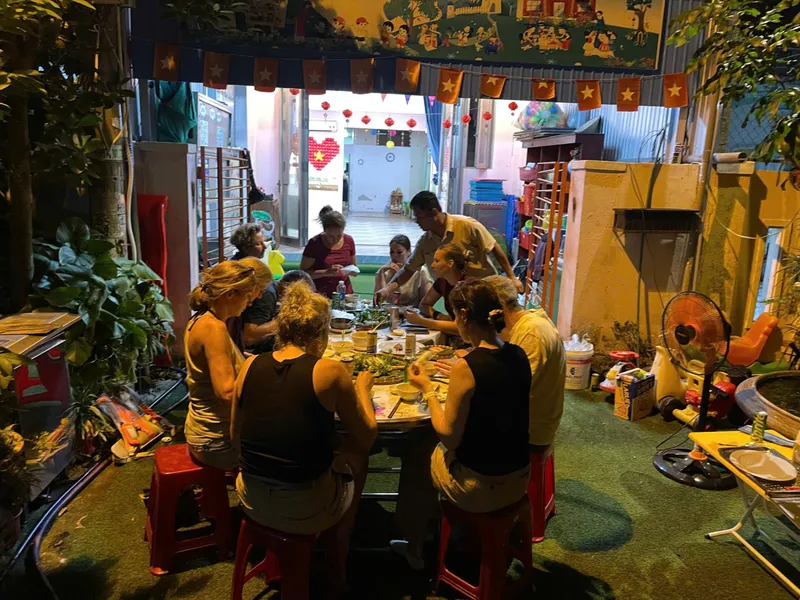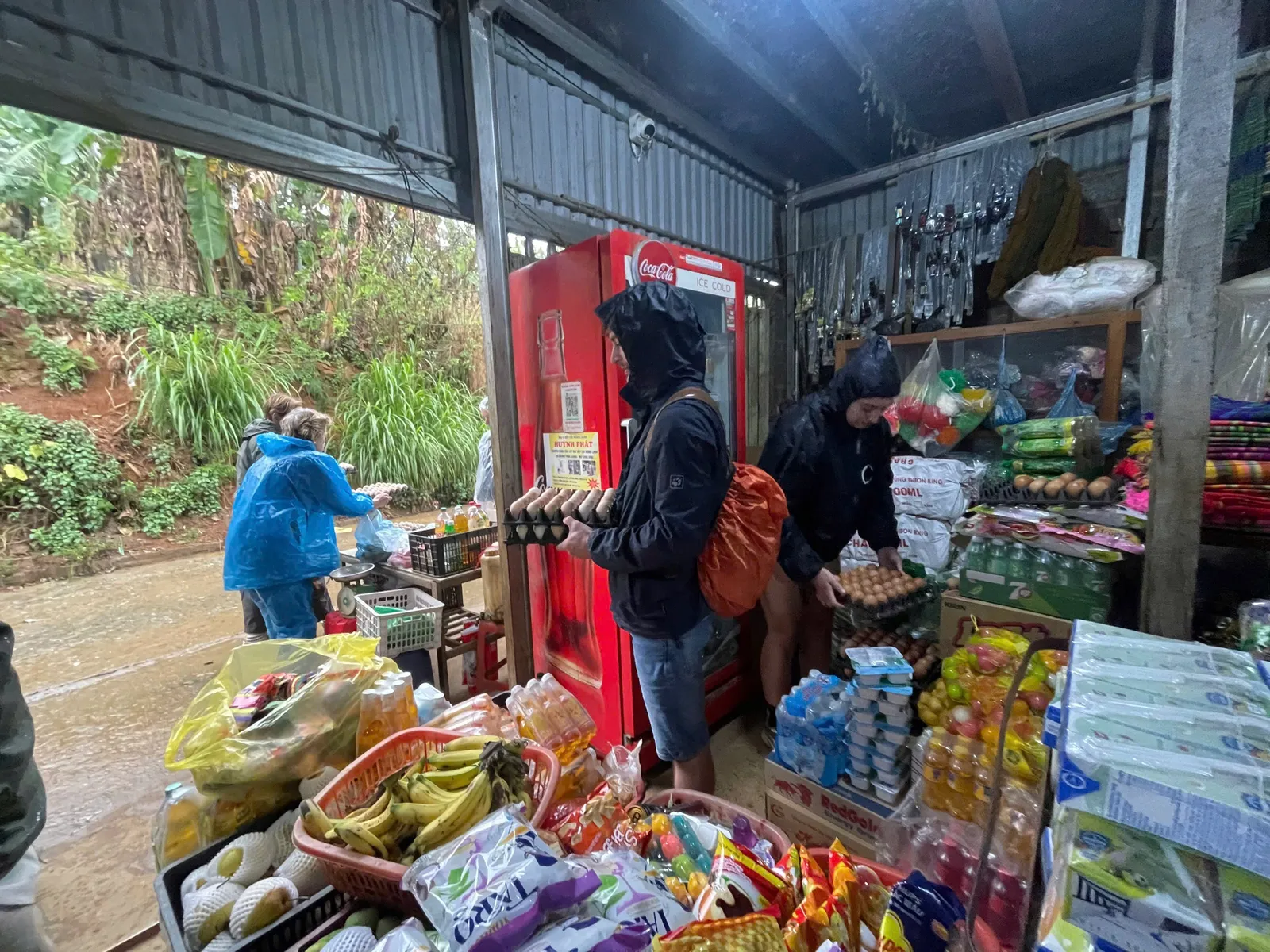
A one-day charity visit to a H’Mong village in Mu Cang Chai, Lao Cai. The group buys the donation at the village shop rather than bringing it from Hanoi, carries it to the houses on foot, spends an hour of English with the children, and ends the day around the hearth fire with a H’Mong family.
What is the Mu Cang Chai charity tour?
A day in one H’Mong village instead of a photo stop above it. The group buys rice, eggs, cooking oil and fruit at the shop in the village, walks it to the houses, spends time with the children at the school, and is invited to sit by the fire in a family home that evening. World Mate Travel runs it for small groups.
Mu Cang Chai is terraced-rice country. Almost everyone who comes here comes for the view from Khau Pha Pass. This day is about the households who cut those terraces into the hillside and still farm them by hand.
Why is the donation bought in the village instead of brought from Hanoi?
Because a sack of rice bought in Hanoi helps a Hanoi wholesaler. The same sack bought at the village shop pays the shopkeeper, who lives three doors from the family receiving it, and who restocks from the district market the following week.
This is the part most charity days get wrong. Gifts trucked in from the city arrive as charity. Goods bought two hundred metres away arrive as trade, and the money stays inside the commune. It also means the village decides what it actually needs — eggs, oil, rice, salt, exercise books — rather than receiving whatever a group in a city thought would be useful.
There is a practical reason too. Mu Cang Chai is a long drive on mountain roads, often in rain. Trays of eggs bought at the bottom of the lane arrive intact.
What does the day actually involve?
| Part of the day | What happens |
|---|---|
| Arrival | The group meets the village representative before anything is handed over |
| Buying the supplies | Rice, eggs, cooking oil, fruit and drinks bought at the village shop, with the household list agreed in advance |
| Carrying it in | Everything is walked up to the houses. Neighbours usually help carry |
| The school | An English hour with the children, alongside their own teacher |
| Walking the terraces | Through the fields with someone who farms them |
| The evening | Invited into a H’Mong home, sitting around the open hearth fire |
Where is Mu Cang Chai, and which province is it in now?
Mu Cang Chai sits in the north-west highlands, reached from Hanoi on Highway 32 through Nghia Lo and over the Khau Pha Pass. It is a full day’s drive, normally broken with a night on the way rather than driven straight through.
The province has changed, and most published guides have not caught up. Yen Bai no longer exists as a separate province. It was merged into Lao Cai under Resolution 202/2025/QH15, in force from 1 July 2025, and the district tier was abolished at the same time. Mu Cang Chai is now a commune of Lao Cai province. Anything still describing “Mu Cang Chai district, Yen Bai province” was written before July 2025.
How does the English session with the children work?
An hour with the village children alongside the teacher who works with them every week. The point is not to replace a teacher for an afternoon. It is listening and speaking practice with fluent and native speakers, which is the one thing a rural classroom in the highlands cannot manufacture: real listeners, real accents, real reasons to speak.
The rules we run it by:
- The children’s own teacher is present the whole time.
- No guest is ever alone with a child.
- Guests are visitors in a lesson, not substitute teachers.
- Photographs of children are not published without the parents’ and the school’s permission.
If a guest wants to bring something for the classroom, exercise books, pencils and chalk are worth more than sweets, and the teacher is the person to ask.
What is the evening around the fire like?
A H’Mong house in Mu Cang Chai is built around an open hearth on an earth floor. The fire is the kitchen, the heater and the light, and it is where the household sits. Being invited to sit at it is the real end of the day.
Expect a kettle on the coals, corn or sweet potato in the embers, smoke in your eyes, and a conversation that runs through two interpreters and still works. Nobody is performing anything, and there is no show to watch, which is exactly the point.
When is the best time of year to go?
| Period | What the terraces look like | What to expect |
|---|---|---|
| May to June | Water-pouring season — terraces flooded, mirroring the sky | Humid, frequent rain, fewer visitors |
| July to August | Full green | Heaviest rain of the year; landslides can close sections of road |
| Mid-September to early October | Golden, the famous harvest colour | Busiest weeks; accommodation books out early |
| November to February | Bare terraces, mist, woodsmoke | Cold and quiet; the easiest time to actually sit with a family |
Exact dates shift each year with the planting, so confirm before fixing travel dates. For a charity day specifically, the quiet months are often better: households are not out in the fields from dawn to dusk, and there is time to talk.
What should guests bring?
Rain gear, every month of the year. The photographs on this page were taken in steady rain, and that is normal rather than bad luck in the highlands.
- A poncho or rain jacket rather than an umbrella, if you will be carrying anything
- Shoes with grip — village lanes are wet concrete and mud
- Warm layers from November to February; the hearth is the only heating
- Cash for the village shop, since card payment does not exist here
- No sweets or money handed directly to individual children
Who is this day right for?
Travellers who would rather spend a day inside one village than photograph six from the roadside, and who are comfortable with rain, simple conditions and sitting on low stools on an earth floor. It suits small groups, families with older children, and repeat visitors to Vietnam who have already done the standard northern loop.
It is not the right day for anyone on a tight schedule, or for anyone who wants a scripted cultural show. Nothing here is staged, which also means nothing here runs to the minute.
How does the charity day fit into a northern Vietnam itinerary?
Mu Cang Chai is most often combined with Nghia Lo and the Khau Pha Pass, and continues north towards Sapa and Lao Cai or loops back to Hanoi through Phu Tho. The charity day works best as a full day in the village with a night nearby, rather than squeezed into a driving day. Travellers who like this kind of day usually also like the home host dinner in Hoi An further south.
Frequently asked questions
Both, and the order matters. The donation is bought and delivered first, with the village representative present, and the rest of the day — the school, the terraces, the evening by the fire — follows from being welcomed rather than from paying for access.
The village representative, agreed before the group arrives. Nothing is handed to individual children or chosen on the day by guests, which is what keeps it from setting households against each other.
You can, but buying in the village is better for the village and more reliable in practice. Books, pencils and chalk for the school are the exception worth carrying in. Sweets and cash handed to individual children are not.
No. Yen Bai was merged into Lao Cai province under Resolution 202/2025/QH15 with effect from 1 July 2025, and Mu Cang Chai is now a commune of Lao Cai province.
Small groups only. A village house has room for a dozen people around a hearth and no more, and a large group turns a visit into an event. Numbers are agreed with the village in advance.
Yes. It is run as a private day for small groups and is arranged in advance with the village rather than booked on arrival, so it needs lead time.
World Mate Travel is a licensed Vietnamese tour operator in Hanoi and arranges this day as part of private northern Vietnam itineraries. To ask about dates, group size or what the village currently needs, message us on WhatsApp at +84 988 660 505.