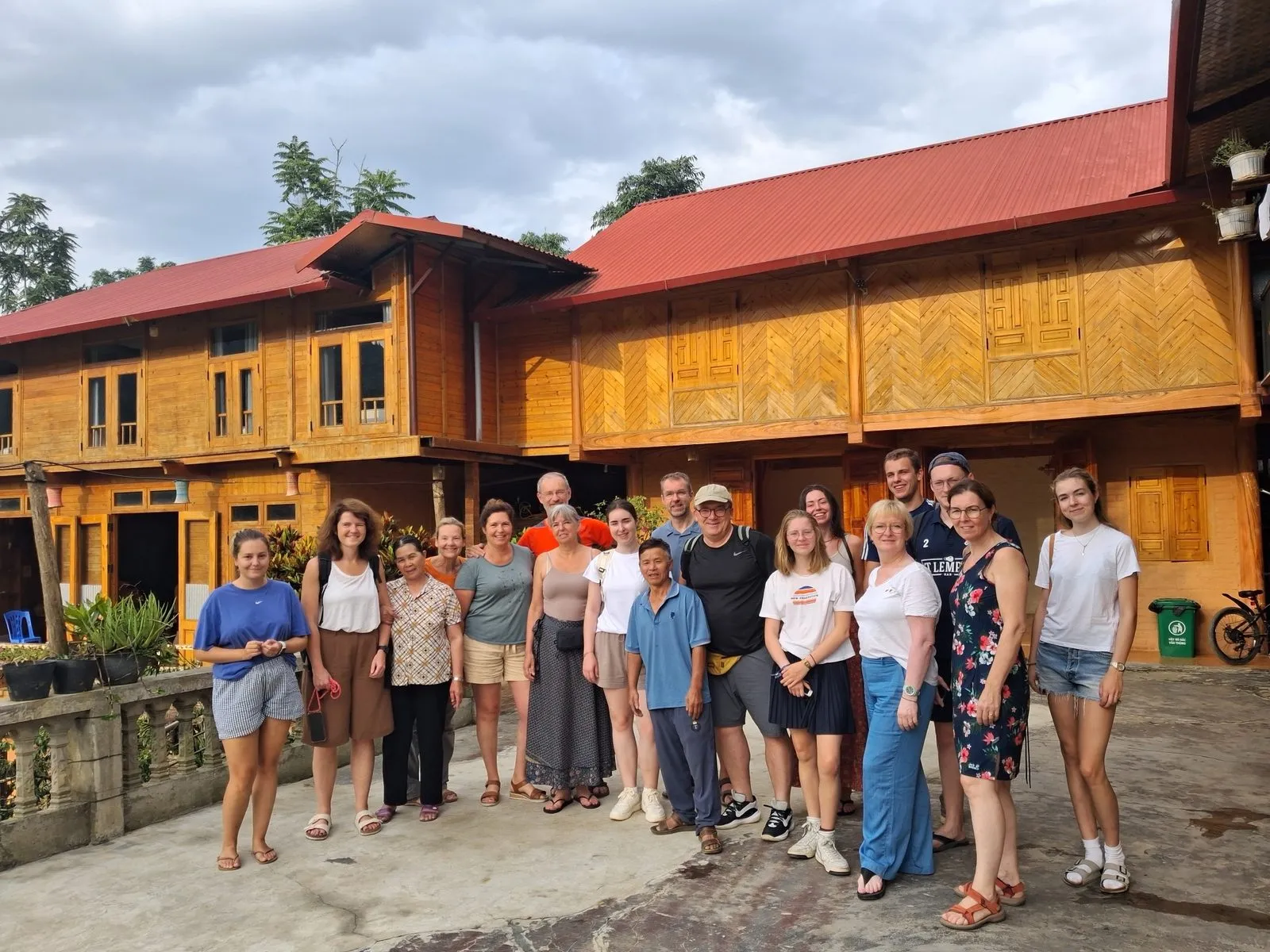
Bac Ha is known for one thing — the Sunday market — and that market takes a morning. What fills the rest of a Bac Ha trip is a night in a Tày stilt house, a walk through maize and tea terraces at 1,000 m, corn wine distilled in Bản Phố, and the livestock market where the actual trading happens. Two nights lets you have all of it.
Where is Bac Ha and what makes it different from Sapa?
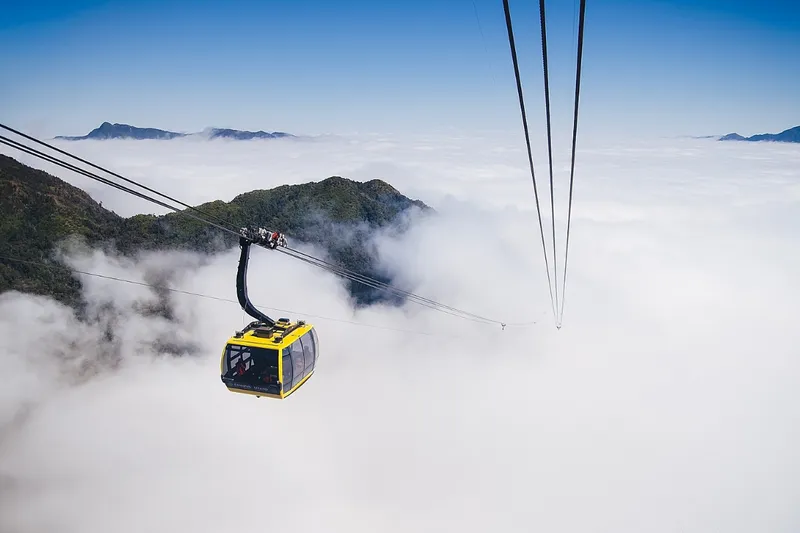
Bac Ha sits on a plateau at about 1,000 m in Lào Cai province, roughly 70 km east of Lào Cai city and 110 km from Sapa — two and a half to three hours by road. It is lower, drier and far quieter than Sapa. There is no cable car, no resort strip and no queue; the draw is weekly markets, Flower H'mong and Tày villages, and the white plum blossom that gives the plateau its nickname, the White Plateau (Cao nguyên trắng).
The practical difference for a traveller: Sapa is a destination you can enjoy on any day of the week, and Bac Ha is one you plan around a market day. Get that wrong and you arrive to a quiet town with the shutters down.
Since 1 July 2025 Vietnam has removed the district tier, so the former Bắc Hà district is now a commune of Lào Cai province. Older guides still call it a district town; nothing on the ground changed.
What can you actually do in Bac Ha?
| Experience | When | Time needed | Worth knowing |
|---|---|---|---|
| Bac Ha market | Sunday, about 06:00–14:00 | A morning | The big one; arrive by 08:00 |
| Livestock market (buffalo, horses) | Buffalo Saturday morning, horses early Sunday | 1 hour | About 2 km from the central market; real trading, not a show |
| Cán Cấu market | Saturday | A morning | About 20 km north of Bac Ha |
| Cốc Ly market | Tuesday | A morning | About 35 km south-east |
| Lùng Phình market | Friday | A morning | About 10 km from Bac Ha; the quietest of the four |
| Tày homestay night | Any night | One night | The reason to stay rather than day-trip |
| Bản Liền tea village | Any day | Half to full day | 23 km from Bac Ha; organic Shan tuyết tea |
| Bản Phố corn-wine village | Any day | 2 hours | Distilling is a household activity, not a show |
| Hoàng A Tưởng Palace | Any day | 45 min | Built 1914–1921 |
| Horse racing at the stadium | Festival dates | Half day | June festival and the November winter festival |
| Village walking | Any day | Half day | Na Hối, Bản Phố, Thải Giàng Phố |
When is the Bac Ha market and what is sold there?
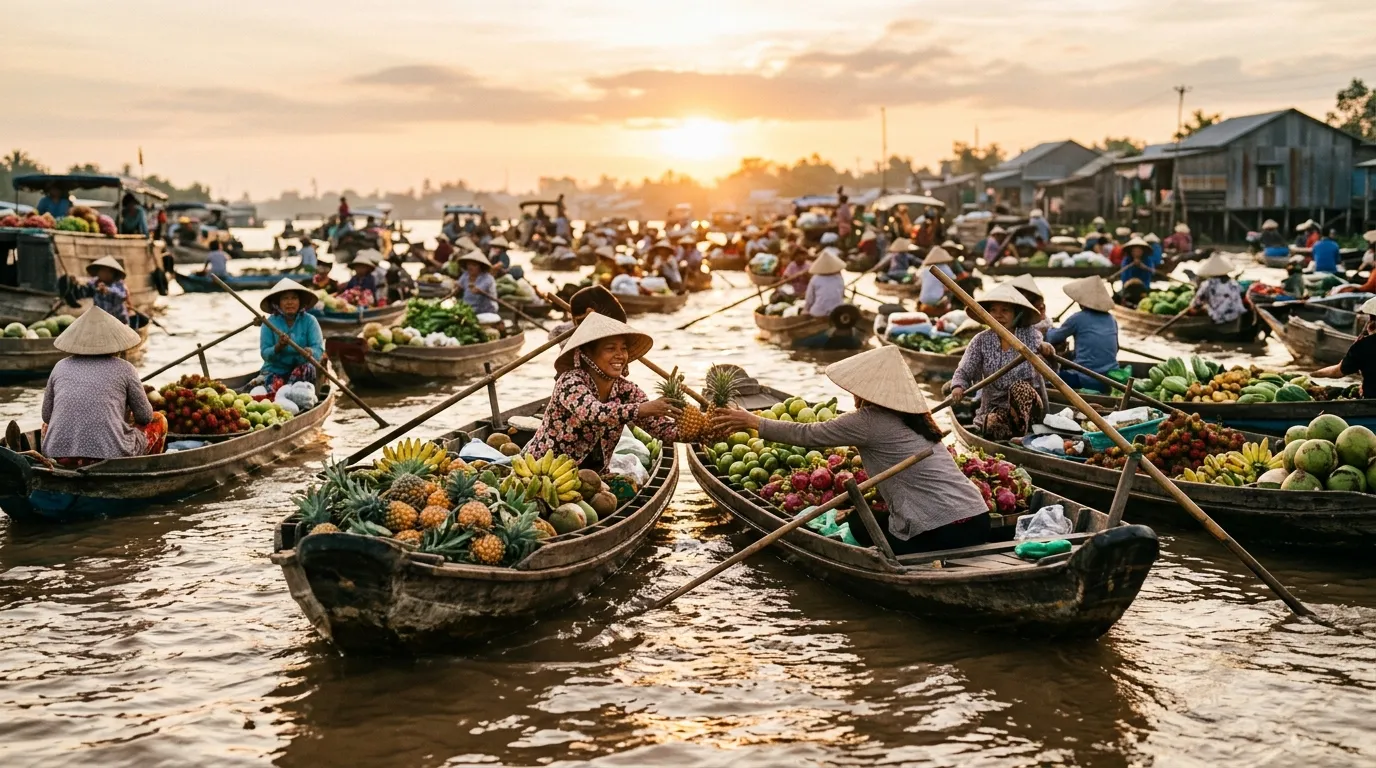
The main Bac Ha market runs every Sunday, roughly 06:00 to 14:00, in the centre of town. Around fourteen ethnic groups trade there — Flower H'mong in the greatest numbers, with Nùng, Dao, Tày and Giáy — and it divides into clear sections: the ethnic-minority produce area at its core, a Kinh section selling tools and household goods, food stalls that are the right place for lunch, and a souvenir corner that is the most expensive part of the market.
Go early. By 11:00 the tour vans from Sapa have arrived and the character of the place changes. Between 06:00 and 08:30 it is still a market that H'mong families came to for salt, thread, pork and a bowl of thắng cố, and that is the version worth seeing.
Where is the livestock market held?
About 2 km from the central market, on its own ground, and it is the part most visitors miss. Buffalo change hands on Saturday morning and horses early on Sunday, in cash, with the animals walked in before dawn. Nobody is performing for cameras here. It is also the loudest and muddiest place in Bac Ha, so wear shoes you do not mind.
Which other market days are worth planning around?
Three, and they let you build a trip that is not hostage to Sunday:
- Cán Cấu, Saturday, about 20 km north of Bac Ha — smaller, higher, far fewer visitors, with its own livestock section.
- Cốc Ly, Tuesday, about 35 km south-east — the quietest of the three and the one that still feels unvisited.
- Lùng Phình, Friday, about 10 km from Bac Ha — the smallest of the four, and the one where almost nobody is selling to visitors.
Pairing Cán Cấu on Saturday with Bac Ha on Sunday is the strongest two-day shape in the area, and it is what we book most often.
What is a Bac Ha homestay night like?
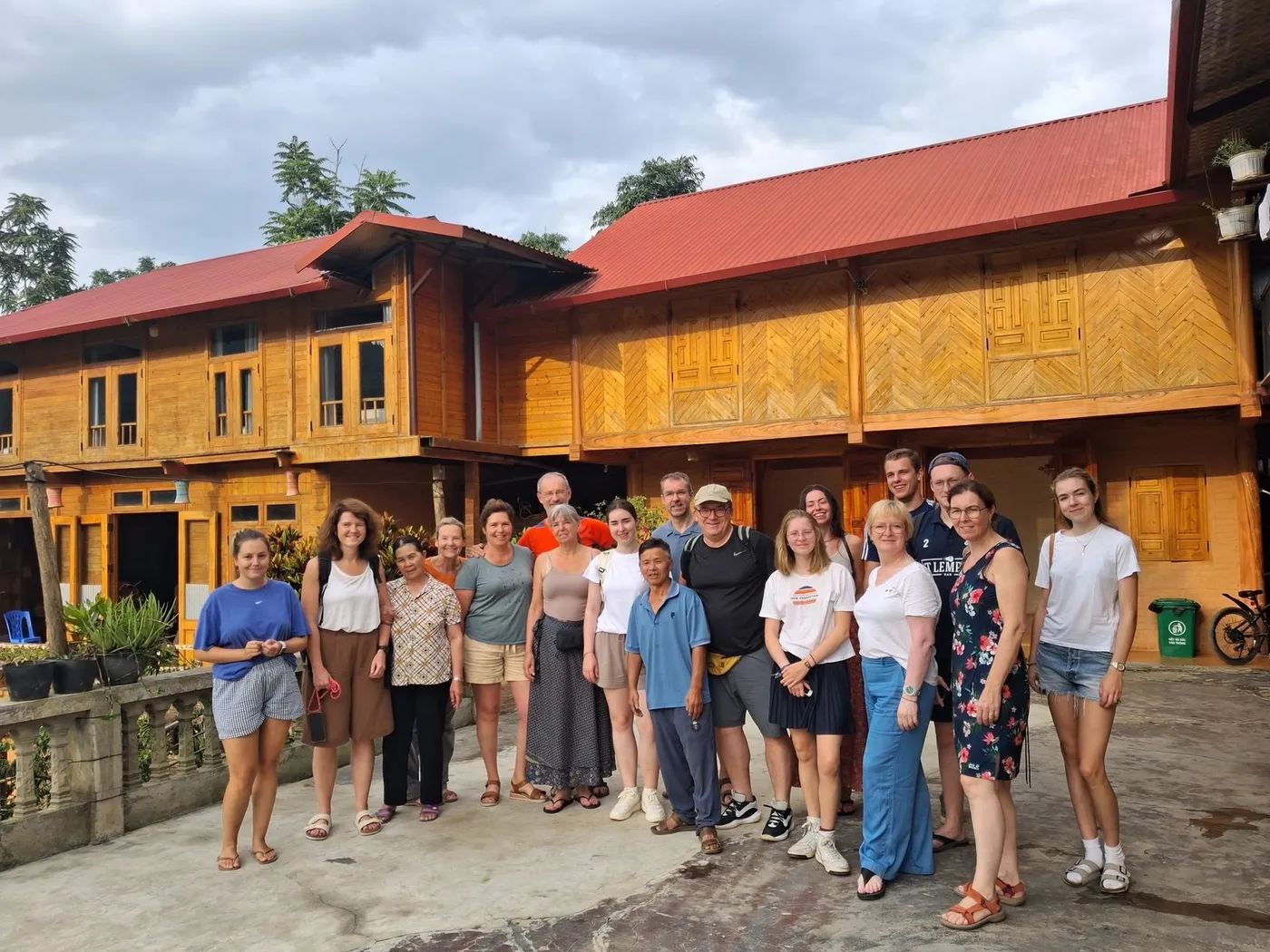
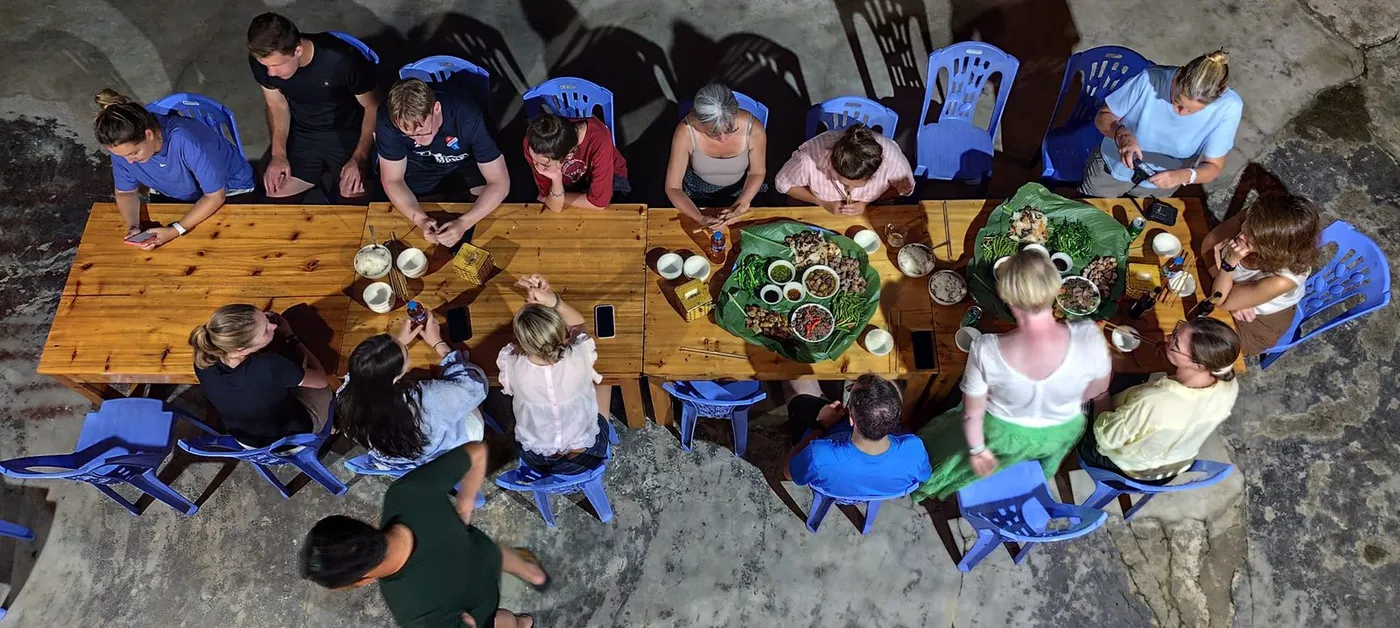
You sleep in a wooden stilt house belonging to a Tày family, usually on mattresses in a shared upstairs room with mosquito nets, and you eat downstairs with the household. Dinner is long, the host pours, and conversation runs through whoever in the room has the most English. It is not a hotel and it is not meant to be — the point is the evening, not the bedding.
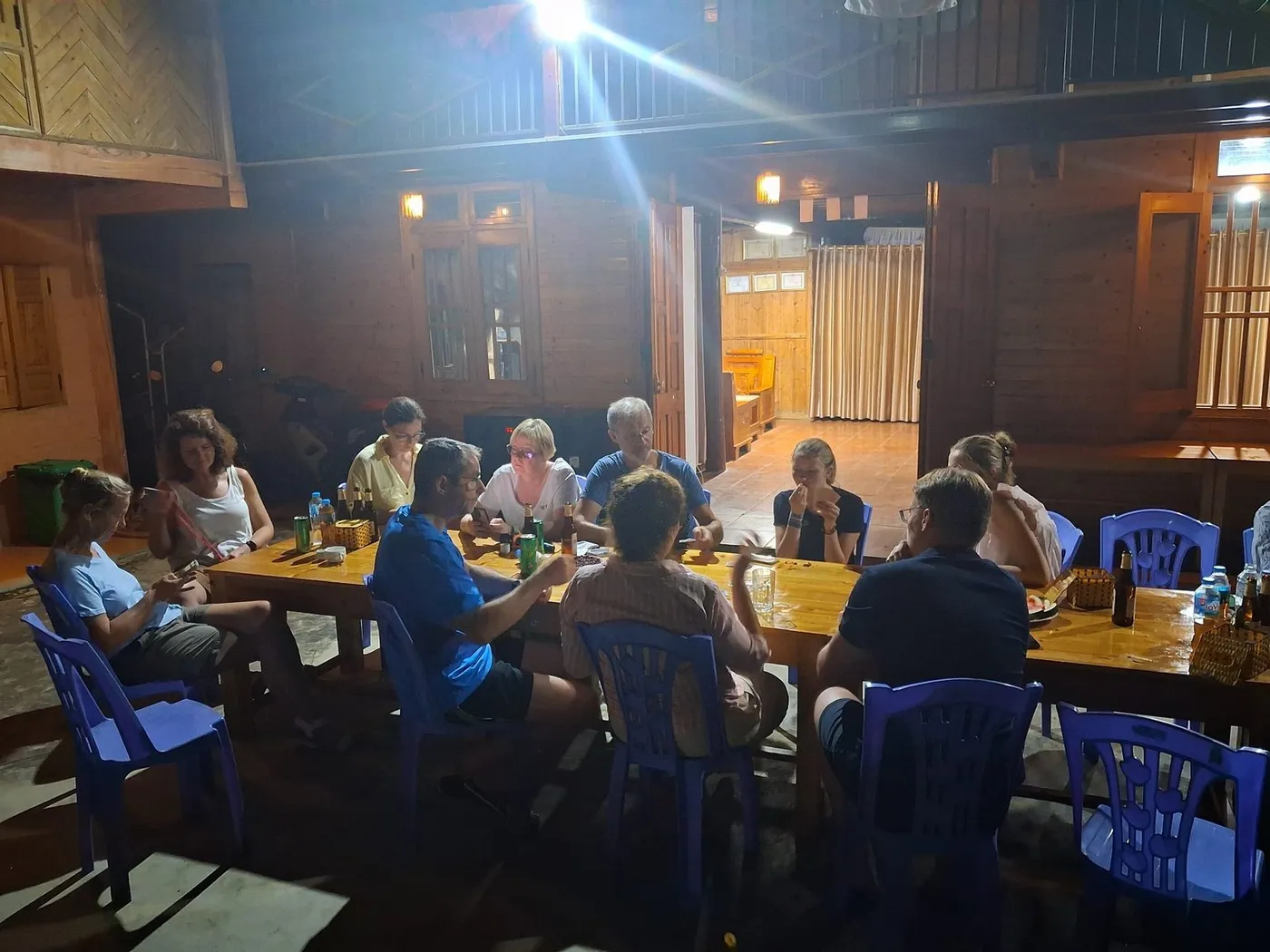
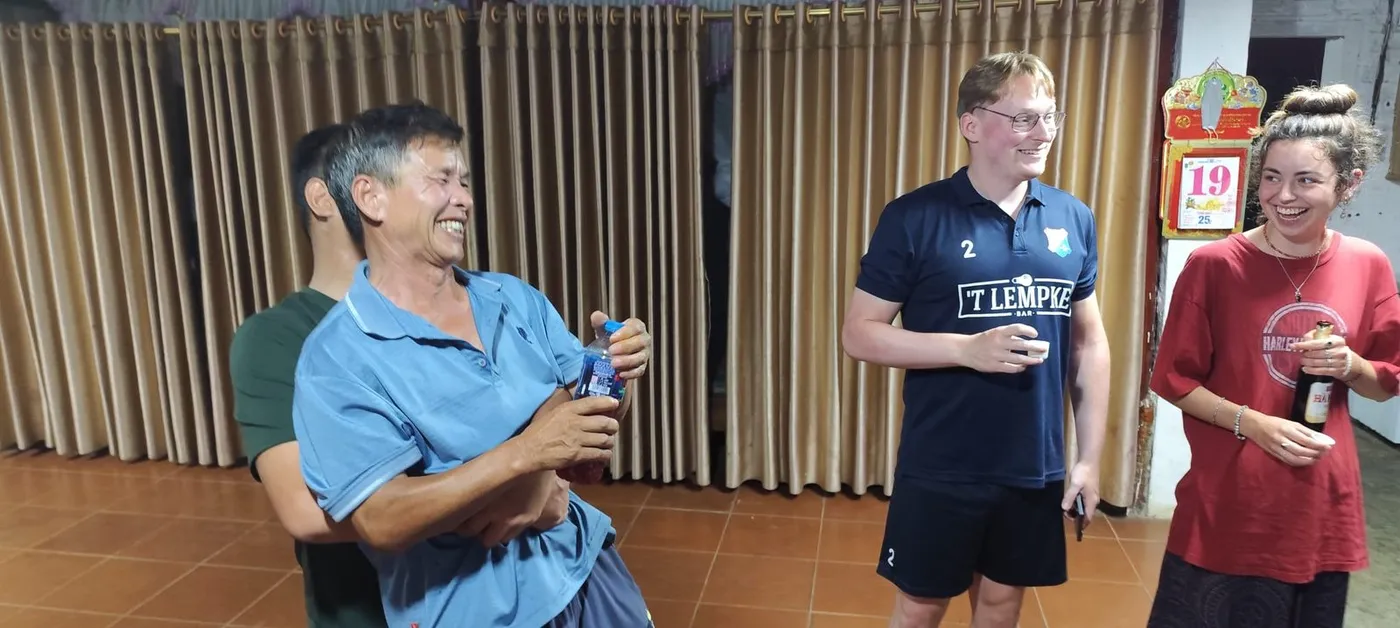
Practical notes from our own groups: bring a torch, expect a shared bathroom with hot water in the established homestays, pack a layer for the night even in summer, and do not plan an early start the next morning.
What do you eat at a Bac Ha homestay?
A single shared platter laid on banana leaves down the middle of the table — grilled pork, forest mushrooms, greens picked that afternoon, bamboo shoots, herbs, dipping bowls, and sticky rice in baskets. Everyone eats from the same platter, which is the point. There is usually corn wine; there is always tea.
If you have dietary restrictions, tell us at booking rather than at the table. Village kitchens cook what the household has, and a vegetarian version has to be arranged with the family a day ahead.
Is Ban Lien worth the extra 23 km?
If you have a second full day, yes. Bản Liền is a Tày commune 23 km from the centre of Bac Ha, built around organic Shan tuyết tea grown on the slopes, with palm-roofed and stilt houses along the valley. Its community tourism is built on doing things rather than looking at them: picking tea, ploughing and planting, harvesting, and local crafts — bamboo baby-carriers, basketwork, straw mats, blacksmithing.
It is a rough road in and the reward is a valley with almost no through traffic. Go for a night rather than an afternoon if the schedule allows.
What is Ban Pho corn wine?
Bản Phố is the H'mong village above Bac Ha that distils the plateau's corn wine, and its reputation in northern Vietnam rests on three things: local maize grown on the slopes, spring water, and a yeast starter made from a seed the H'mong call hồng mi. It is distilled in household kitchens, not a factory, and strength varies from house to house.
Visiting means standing in somebody's kitchen while they work, so we arrange it in advance rather than knocking on doors. Buy a bottle if you are offered one — it is the honest souvenir from Bac Ha, and it costs a fraction of what the souvenir stalls charge for embroidery.
Where does the Hoang A Tuong Palace fit in?
In the 45 minutes between the market and lunch. The palace was built between 1914 and 1921 for a Tày lord who governed the plateau under the French, and its architecture is the strange part — French colonial proportions, Chinese detailing, a courtyard the whole building faces. It is the only built history in Bac Ha, and it explains why the plateau was worth governing.
What is happening in Bac Ha in November 2026?
The Bac Ha Winter Festival runs from 14 to 24 November 2026 under the theme "Converging Colours – Warmth of Great Solidarity". The programme opens at 19:30 on 14 November at the Bac Ha night market and includes buffalo markets on the mornings of 14 and 21 November, the Sunday markets of 15 and 22 November, traditional horse racing at the central stadium, sunset horseback riding at Ngải Thầu hill, and an ethnic sports tournament on the closing day, 24 November.
Two things follow for travellers. Markets during a festival are busier and more photogenic but less ordinary. And accommodation in a town this small fills early, so a festival week needs booking well ahead.
When is the best time to visit Bac Ha?
| Period | What is happening | Worth knowing |
|---|---|---|
| Early February | Tam hoa plum blossom opens | The White Plateau at its most photographed |
| Late February – mid March | Tả Van plum and white pear blossom | The second and longer blossom window |
| Mid May – late June | Tam hoa plum harvest | The plum festival falls in June |
| June | Traditional horse racing festival | Book accommodation early |
| September – October | Rice ripens — Bản Liền in September, Tả Củ Tỷ in October | Two different harvest windows at two altitudes |
| November | Winter festival; clear, cold, dry | Best light of the year |
| December – January | Cold, some days down to 4–5 °C | Bring real winter clothing |
How do you get to Bac Ha?
From Lào Cai city it is about 70 km and roughly 1.5 hours by road. From Sapa it is 110 km and about 2.5 hours. From Hanoi it is roughly 320 km, reached either by road through Lào Cai or on the night train to Lào Cai station followed by the climb up to the plateau.
The route that works best for most itineraries is Hanoi – Sapa – Bac Ha – Hanoi, reaching Bac Ha on a Saturday evening so you have Cán Cấu behind you and the Sunday market in front of you.
How many days do you need in Bac Ha?
One night covers the market and a homestay dinner. Two nights lets you add Cán Cấu on Saturday, a village walk, and either Bản Liền or Bản Phố. Beyond two nights you are into serious trekking territory, which Bac Ha supports well but which needs a different kind of itinerary.
Bac Ha travel questions
Is the Bac Ha market touristy?
Partly, and the part that is touristy is easy to avoid. The souvenir corner and the main lane after 11:00 are aimed at visitors. The produce rows, the food stalls and the livestock ground are not, and none of them has changed much in the way they operate. Being early is the whole trick.
What should you bring to a homestay?
A torch, a travel towel, earplugs if you sleep lightly, a layer for the night, and a small gift for the household if you want to — fruit, or something from your own country. Bedding and mosquito nets are provided.
Where do you sleep in a Tay stilt house?
Usually upstairs in a shared sleeping room, on mattresses laid out side by side under individual nets. Some established homestays also have private rooms; tell us which you want at booking, because the answer changes which house we use.
Is it acceptable to photograph people at the market?
Ask first, every time, and accept no. Traders are at work, and older H'mong women in particular often decline. A bought bowl of noodles or a purchase from someone's stall changes the exchange entirely.
Do Bac Ha homestays have hot water and private bathrooms?
Hot water, yes, in the homestays we use. Private bathrooms, usually not — bathrooms are shared, and they are downstairs. This is the single thing to be clear with your group about before the night is booked.
Planning Bac Ha with us
Want Bac Ha built into a northern Vietnam itinerary around the right market day? Send us your dates and we will work backwards from the Sunday — sales@worldmatetravel.com or WhatsApp +84 988 660 505.