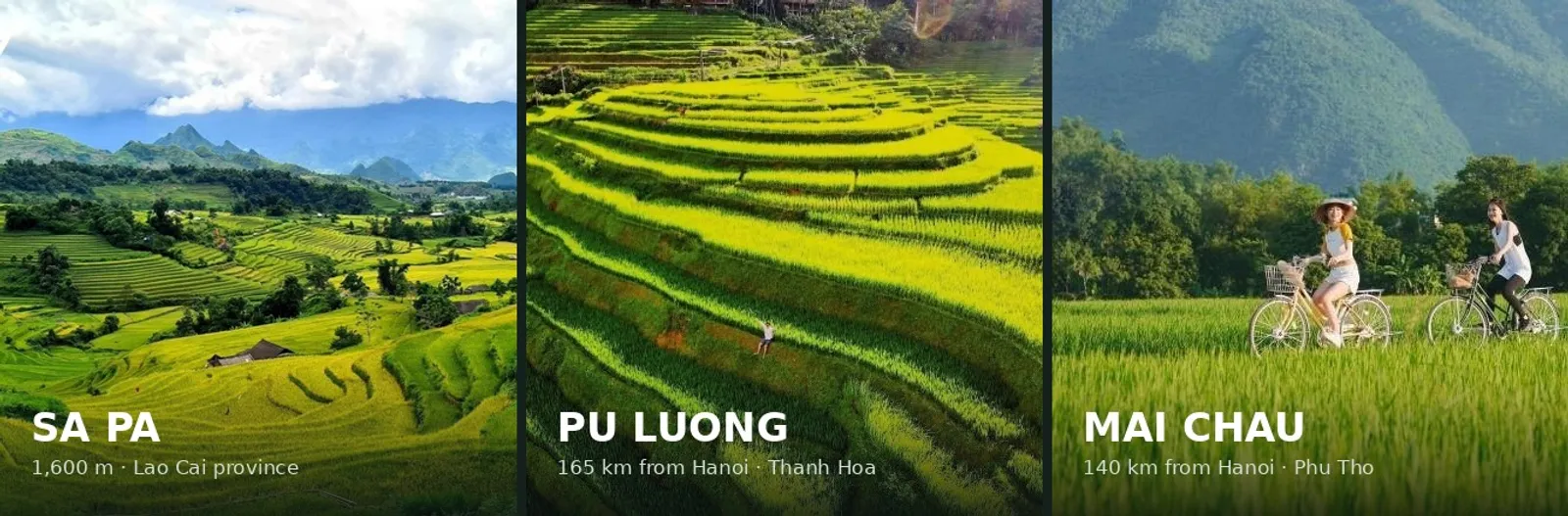
Pick Mai Chau if you have two or three days and want the shortest drive from Hanoi: 140 km and three to four hours. Pick Pu Luong if you want to walk between villages in a protected forest with very few other foreigners around. Pick Sapa if you want the highest mountain in Vietnam, a real town with hotels at every price, and you can give it five days or more.
All three are rice-terrace valleys with stilt-house homestays, and photos of them look alike. What separates them is the drive, the altitude, and how many other visitors you will share the view with.
What is the quick difference between Pu Luong, Sapa and Mai Chau?
Sapa is high, famous and busy. Pu Luong is low, quiet and spread out. Mai Chau is the closest and the easiest to reach, and the most used to visitors.
| Sapa | Pu Luong | Mai Chau | |
|---|---|---|---|
| Drive from Hanoi | 5–6 hours | 3.5–4 hours | 3–4 hours |
| Altitude | About 1,600 m | Valleys 500–600 m; peak 1,700 m | Flat valley floor |
| Province since 1 July 2025 | Lao Cai | Thanh Hoa | Phu Tho |
| Other visitors | Highest of the three | Fewest, but rising | Moderate; busy at weekends |
| Where you sleep | Hotels at every price, plus homestays | Eco-lodges and homestays | Stilt-house homestays |
| Best for | Fansipan, big views, short treks | Walking, pools over the paddies, quiet | Cycling, families, short trips |
| Realistic stay | 3–4 nights | 2–3 nights | 1–2 nights |
The numbers that matter most are the first two rows. An extra two hours each way on the Sapa road is half a day of a short trip, and 1,600 m is cold and foggy in months when Mai Chau is still warm.
How far is each one from Hanoi, and how do I get there?
Mai Chau is the shortest drive, Sapa the longest, and only Sapa has an expressway for most of the way.
| Route | By private car | Public option |
|---|---|---|
| Hanoi → Sapa | 5–6 hours, mostly on the Noi Bai–Lao Cai expressway | Sleeper bus, or the overnight train to Lao Cai then a 40-minute transfer |
| Hanoi → Pu Luong (about 165 km) | 3.5–4 hours | No direct tourist bus; private transfer, or a bus to Thanh Hoa then a local car |
| Hanoi → Mai Chau (about 140 km) | 3–4 hours on Highway 6 | Limousine van 300,000–450,000 VND; sleeper bus 150,000–250,000 VND one way |
The Noi Bai–Lao Cai expressway, opened in September 2014, cut the Sapa journey from eight or nine hours to five or six. Pu Luong and Mai Chau have no expressway; both run on Highway 6 and then onto mountain roads.
The Mai Chau road crosses the Thung Khe pass at about 1,000 m, a 20 to 30 minute stretch of steep grades and blind curves. Most tourist vehicles drop passengers at Lac village or Pom Coong village rather than in Mai Chau itself.
Which province is each one in now?
Sapa is in Lao Cai, Pu Luong is in Thanh Hoa, and Mai Chau is now in Phu Tho — a change that catches people out when they search for hotels.
Vietnam reduced its provinces and centrally-run cities from 63 to 34 under Resolution 202/2025/QH15, adopted on 12 June 2025, with the new units operating from 1 July 2025. Two of these three places were affected:
- Mai Chau was in Hoa Binh. Hoa Binh merged with Vinh Phuc and Phu Tho into a new, larger Phu Tho province. The former Mai Chau district was dissolved and Mai Chau is now a commune managed directly by the province.
- Sapa was a district-level town in Lao Cai. Lao Cai merged with Yen Bai, keeping the name Lao Cai, and Sa Pa is now a ward within it rather than a town.
- Pu Luong did not move. Thanh Hoa is one of the eleven provinces left unchanged by the merger.
Nothing about access, permits or prices changed — only the administrative label. Plenty of travel pages, including official-looking ones, still list Mai Chau under Hoa Binh. Our full guide to Vietnam’s 34 new provinces has the complete list if you are cross-checking an itinerary.
Who should choose Sapa?
Choose Sapa if you want Fansipan, the 3,143 m peak that is the highest in Vietnam and the one thing the other two valleys cannot offer.

Above the cloud line at Fansipan. Below it, Sapa town can be in fog all day.
The cable car covers 6.3 km and climbs 1,410 m in about 15 to 20 minutes. An adult round trip costs 800,000–850,000 VND depending on the day, children between 1.0 m and 1.4 m pay 550,000 VND, and children under 1 m ride free. The Muong Hoa funicular from Sun Plaza up to the cable car station is about 200,000 VND return.
Plan the timing around the last ascent, not the closing time. The park runs 07:30 to 17:00, but the last ride up is 14:30 Monday to Thursday and on Sunday, and 15:30 on Friday and Saturday. Bad weather stops the cable car at short notice.
The trade-offs are real. Sapa town is a construction site in places, Vietnamese visitors fill it at weekends and on public holidays, and spring fog can sit in the valley for days. The walking between Lao Chai and Ta Van is still some of the best in the north.
Who should choose Pu Luong?
Choose Pu Luong if you want to walk for hours between villages and see almost no other foreign travelers.
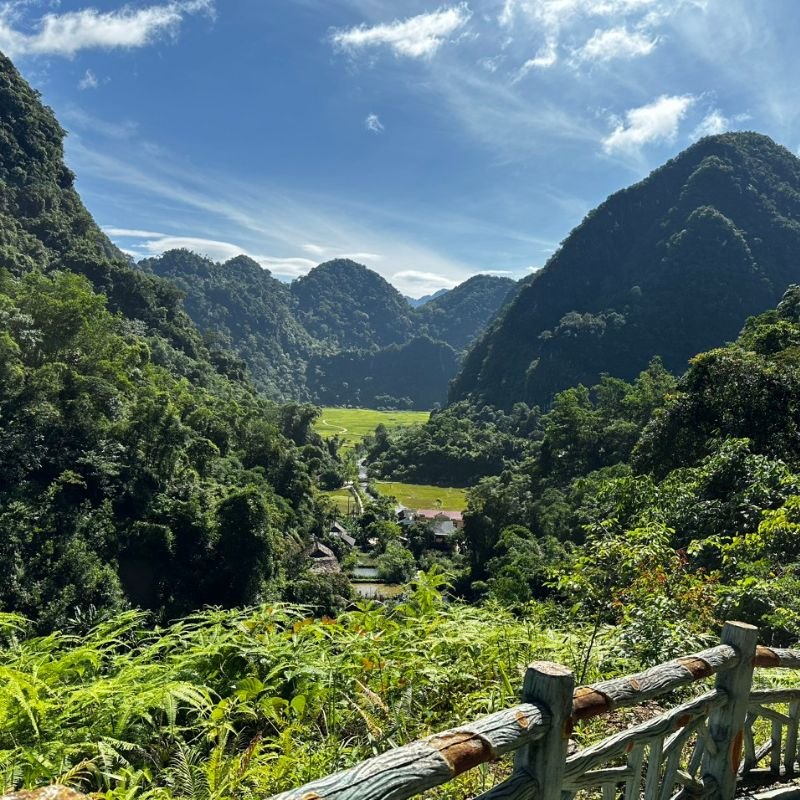
Pu Luong has no single headline attraction. The valley is the attraction.
Pu Luong Nature Reserve was established in 1999 and covers 17,662 hectares of limestone karst and evergreen forest in Thanh Hoa province, across the communes of the former Ba Thuoc and Quan Hoa districts. Mount Pu Luong itself reaches 1,700 m; the villages sit far below it, which is why the valleys stay warm when Sapa is cold.
What people actually do here: half-day and full-day treks between White Thai villages, the cascades at Hieu waterfall, the cave at Kho Muong, and long afternoons in the infinity pools that most of the eco-lodges have built facing the terraces.
What it does not have: an international five-star hotel, a town, nightlife, or a short transfer. The final stretch of road is narrow and winding, and if someone in your group gets carsick they will feel it.
Who should choose Mai Chau?
Choose Mai Chau if you have a short trip, young children, or anyone in the group who does not want a long drive.
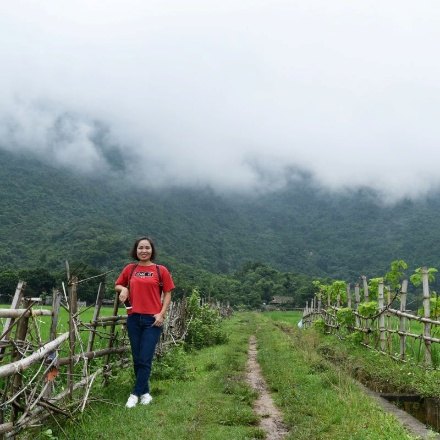
The Mai Chau valley floor is flat, which is what makes the cycling work for every age.
The valley floor is flat, so a bicycle loop through the paddies and villages suits a six-year-old and a seventy-year-old equally. Bicycles rent for 50,000–100,000 VND a day and motorbikes for 100,000–200,000 VND, usually straight from the homestay.
Mai Chau is also the most practiced of the three at receiving guests. Lac and Pom Coong have been hosting visitors for decades, the stilt houses are comfortable, the brocade weaving is genuine and the evening dance shows are a performance put on for guests. Some travelers love that and some find it staged — it is worth knowing which you are before you book two nights.
For families, our top 10 tips for a Vietnam family trip covers the pacing questions that come up on this route.
When is the rice green, and when is it golden?
Pu Luong harvests twice a year, so it has two golden windows; Sapa and Mai Chau follow the same broad northern calendar.
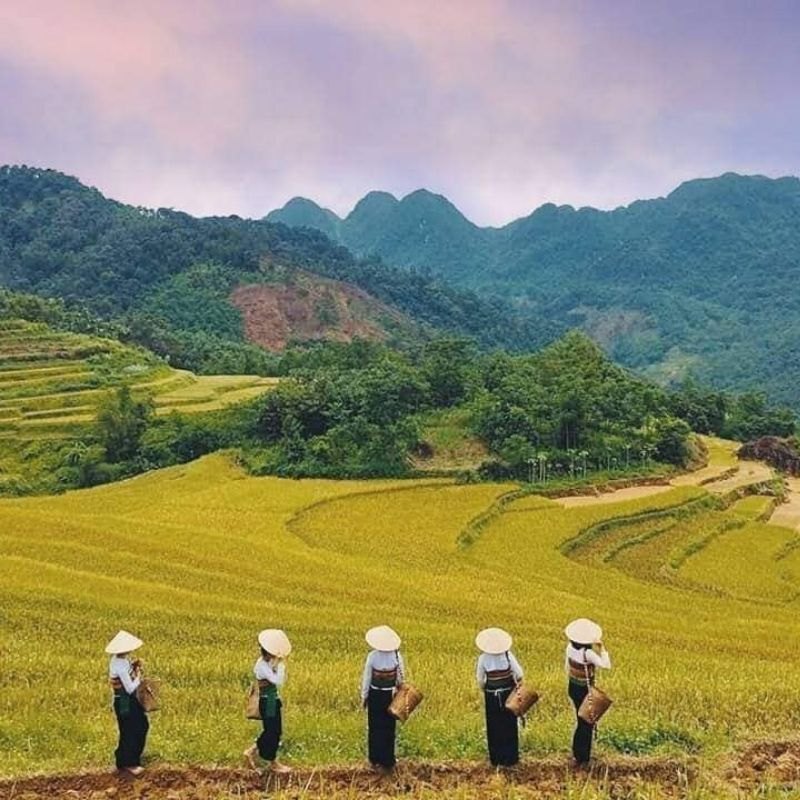
The late-May harvest in Pu Luong is the quieter of the two golden windows.
| Period | What the fields look like | Notes |
|---|---|---|
| March – early April | Green, newly grown | Fewest visitors, mild weather |
| Mid-May – early June | Golden, first harvest | Pu Luong’s quieter golden window |
| July – early August | Green again, second crop | Hot and wet; afternoon rain is normal |
| Mid-September – early October | Golden, second harvest | The busiest and most photographed weeks |
| November – February | Bare or newly planted | Cold and often foggy at altitude in Sapa |
Pu Luong’s lower altitude is what allows two crops a year. If your dates are fixed and you want golden terraces without the September crowds, the May window is the one to ask about.
For the wider picture across the country, see our month-by-month guide to the best time to visit Vietnam by region.
Can I combine two of them in one trip?
Yes, and for most itineraries of a week or more we do, because Mai Chau and Pu Luong are close to each other while Sapa is not close to either.
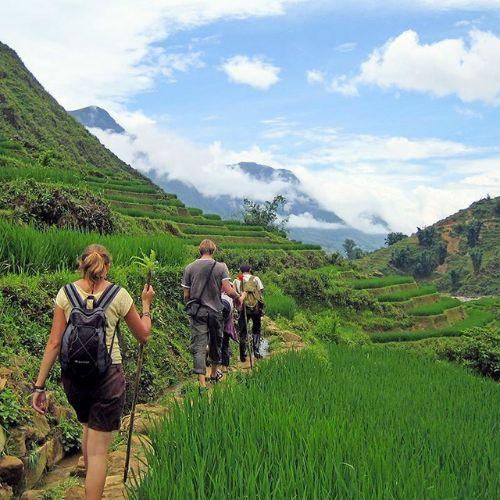
The Muong Hoa valley walk is the reason to give Sapa a proper three nights rather than one.
Mai Chau and Pu Luong pair naturally. They share the Highway 6 corridor, the transfer between them is short, and the two valleys feel different enough that the second does not repeat the first. A common shape is two nights in Mai Chau, three in Pu Luong, then down to Ninh Binh, which is 95 km from Hanoi and about 90 minutes on the expressway.
Sapa is the one that needs committing to. With fewer than five days in the north, adding Sapa means spending most of a day in the car in each direction, and the trip becomes a driving holiday. With seven days or more it fits comfortably.
Local tip from our guides
- Check the Fansipan last-ascent time before you plan the day, not the closing time. The gap between them is up to two and a half hours, and arriving at 15:00 on a Tuesday means you do not go up.
- In Pu Luong, ask which side of the valley your lodge is on. The transfer between the Ban Don and Kho Muong sides is longer than the map suggests on those roads, and it decides which treks start at your door.
- In Mai Chau, the weekend is a different place. Domestic groups fill Lac village on Saturday nights. Arrive midweek and the same valley is quiet.
- Fog is the one thing that ruins a Sapa trip, and it is seasonal. If your dates fall between February and April and the view matters more than the altitude, Pu Luong is the safer booking.
Frequently asked questions
Neither is better; they answer different questions. Pu Luong is quieter, warmer, closer to Hanoi and built around walking. Sapa has Fansipan, a real town and far more hotel choice, at the cost of two extra hours on the road each way and more crowds.
Yes. They sit on the same Highway 6 corridor and the transfer between them is short, which is why they are usually sold together. Three to five nights covers both without rushing.
No permit is required for the usual village walks and viewpoints that lodges arrange. Individual sites inside the area, such as caves or waterfalls, may charge a small local fee collected on the spot.
Sapa sits at about 1,600 m, so winter nights are cold and snow on Fansipan is possible. Mai Chau and the Pu Luong valleys are several hundred meters lower and stay noticeably warmer in the same week.
Mai Chau. The drive is the shortest, the valley floor is flat enough for family cycling, and the homestays are set up for groups. Pu Luong works for older children who will walk; Sapa’s long transfer is the hardest part for small children.
No. Hoa Binh merged into the enlarged Phu Tho province on 1 July 2025, and Mai Chau is now a commune of Phu Tho. Many booking sites and travel pages still show the old province name; the place itself has not moved.
Three or four nights in Sapa, two or three in Pu Luong, one or two in Mai Chau. Anything less in Sapa and the driving outweighs the visit.
Still not sure which one fits your dates?
Send us the dates you have and who is traveling, and we will tell you which of the three fits — including when the answer is to skip one. We would rather talk you out of a bad fit than sell you a long drive. Message David Ng on WhatsApp at +84 988 660 505 or email sales@worldmatetravel.com.
If you are planning the trip alone, our complete guide to solo travel in Vietnam covers the practical side of these routes.