Vietnam's Historic Administrative Restructuring: From 63 to 34 Provinces and Cities
Published on Jan 30, 2026
On June 12, 2025, Vietnam embarked on a transformative journey by officially adopting a resolution to consolidate its provincial administrative framework, reducing the number of provinces and cities from 63 to 34. This landmark decision, made by the National Assembly, signifies a crucial step towards enhancing the efficiency of local governance and establishing a more coherent administrative structure. The new system comprises six centrally governed cities and 28 provinces, with 23 of these units newly formed.
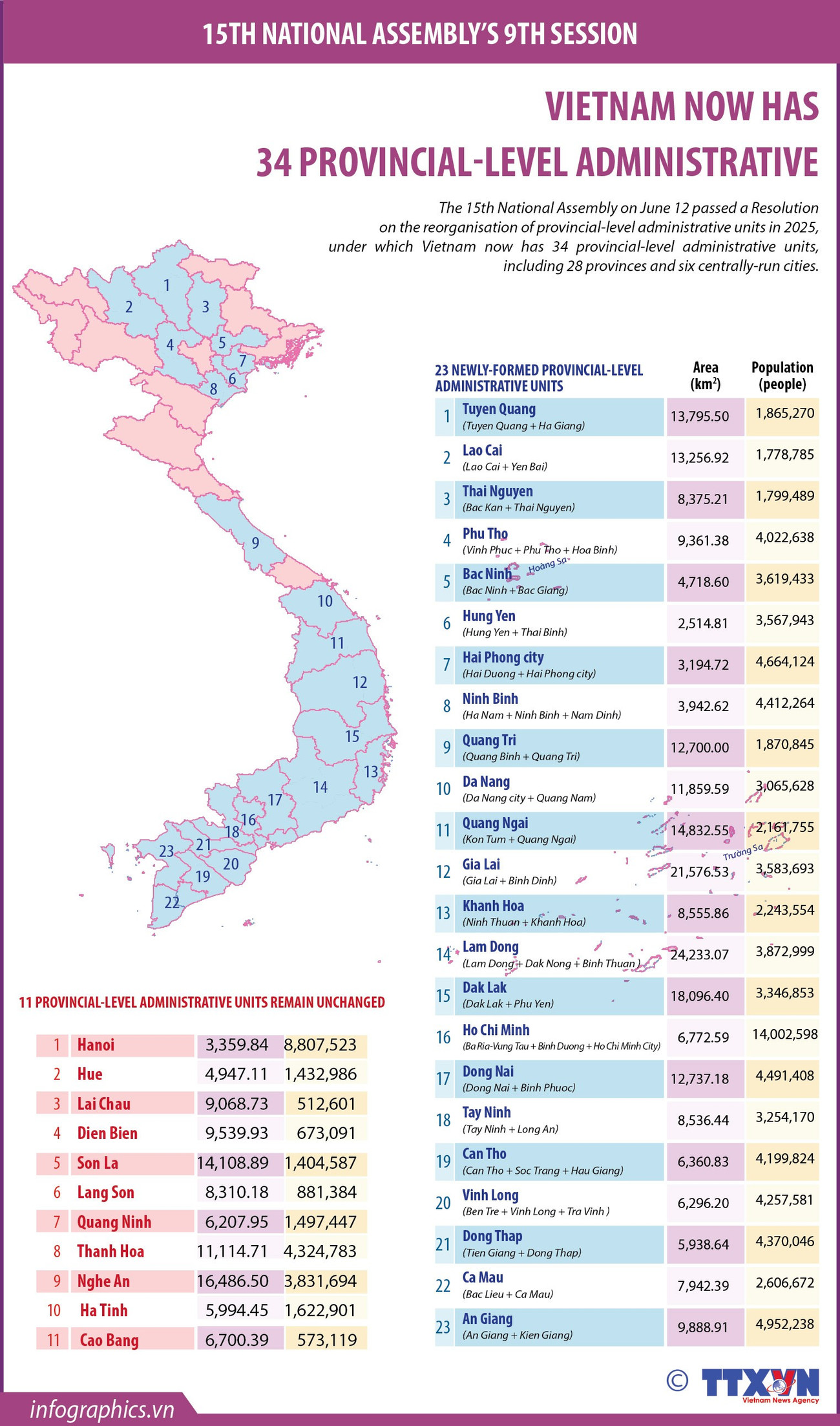
Map of Vietnam illustrating the new provincial structure.
The Purpose Behind the Restructuring
The rationale behind this significant restructuring is multifaceted. It aims to streamline bureaucratic processes, eliminate redundancies within the government, and provide a robust framework for sustainable economic growth. With the new administrative units officially operational by July 1, 2025, local authorities are expected to implement this reform while ensuring minimal disruption to public services and maintaining social welfare for affected citizens and employees.
Key Tasks and Implementation
Key tasks outlined in the restructuring plan include a thorough rearrangement of local agencies, where the central government will cooperate with regional leaders to address any challenges arising from the merger. In doing so, authorities will prioritize workforce stability and the well-being of civil servants during this transition. Accurate identification of new administrative boundaries is essential, ensuring clarity and consistency in leadership structures.
A Two-Tier Local Government Model
This strategic overhaul builds on earlier plans established in April 2025. The 13th Party Central Committee approved a proposal for local government restructuring, which merges provincial units and abolishes district-level entities. The simplified two-level local government model comprises:
- Provincial Level: Encompassing the newly formed provinces and centrally managed cities.
- Commune Level: Including communes, wards, and special zones, effectively replacing previous district and town units.
This approach is expected to reduce the total number of administrative units at the commune level by approximately 60-70%, allowing for a more focused and effective governance model.
Impact on Vietnam's Coastal Provinces
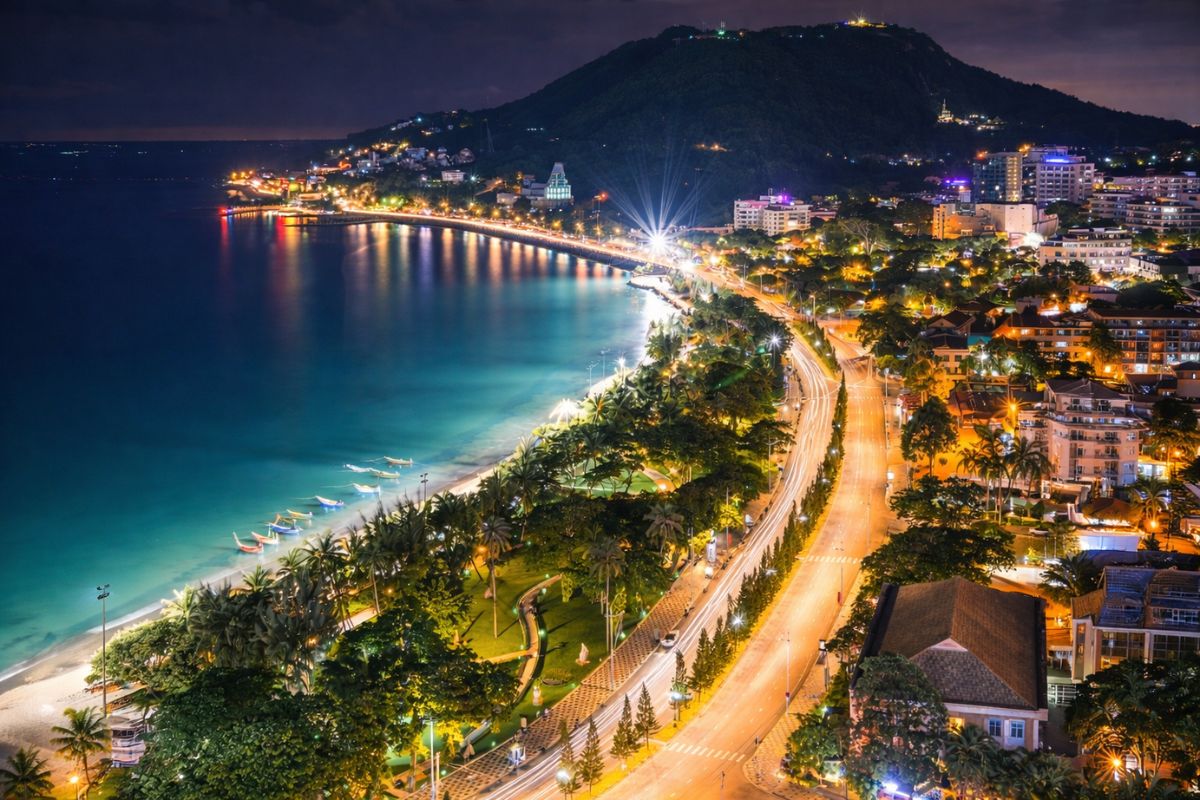
Reduction of coastal provinces from 28 to 21 following the mergers.
The merger will notably impact Vietnam’s coastal regions, decreasing the number of coastal provinces from 28 to 21. This shift increases the proportion of coastal regions from 44% to an impressive 62%. Significantly, all 21 coastal provinces post-merger will be equipped with seaports, which will enhance Vietnam's logistical capabilities and encourage investment in previously underserved areas.
Establishing Mega-Port Hubs
The merger’s structural changes will create opportunities to establish mega-port hubs, particularly in regions like Ho Chi Minh City (HCMC). HCMC will merge with Binh Duong and Ba Ria – Vung Tau, leading to a network of nearly 99 seaports, surpassing the current largest port system in Haiphong.
Additionally, Can Tho City will gain enhanced maritime capabilities through the integration of Soc Trang and Hau Giang, transitioning to a coastal city despite its prior inland status. This change will significantly advance the maritime economy of the Mekong Delta region.
Robust Performance in the Maritime Sector
Overview of the maritime sector's growth in Vietnam, highlighting increased cargo and container volumes.
The Vietnam Maritime Administration reported a vibrant performance in the maritime sector in 2024. Cargo volumes saw a 14% increase, with container cargo rising by 21%, reflecting the growing potential of the maritime economy. The new administrative framework is set to foster a competitive logistics network, aligning with governmental goals for economic development.
Beauties of Vietnam's Landscapes

Ban Gioc Waterfall, one of Vietnam's most stunning natural attractions, located on the border with China.
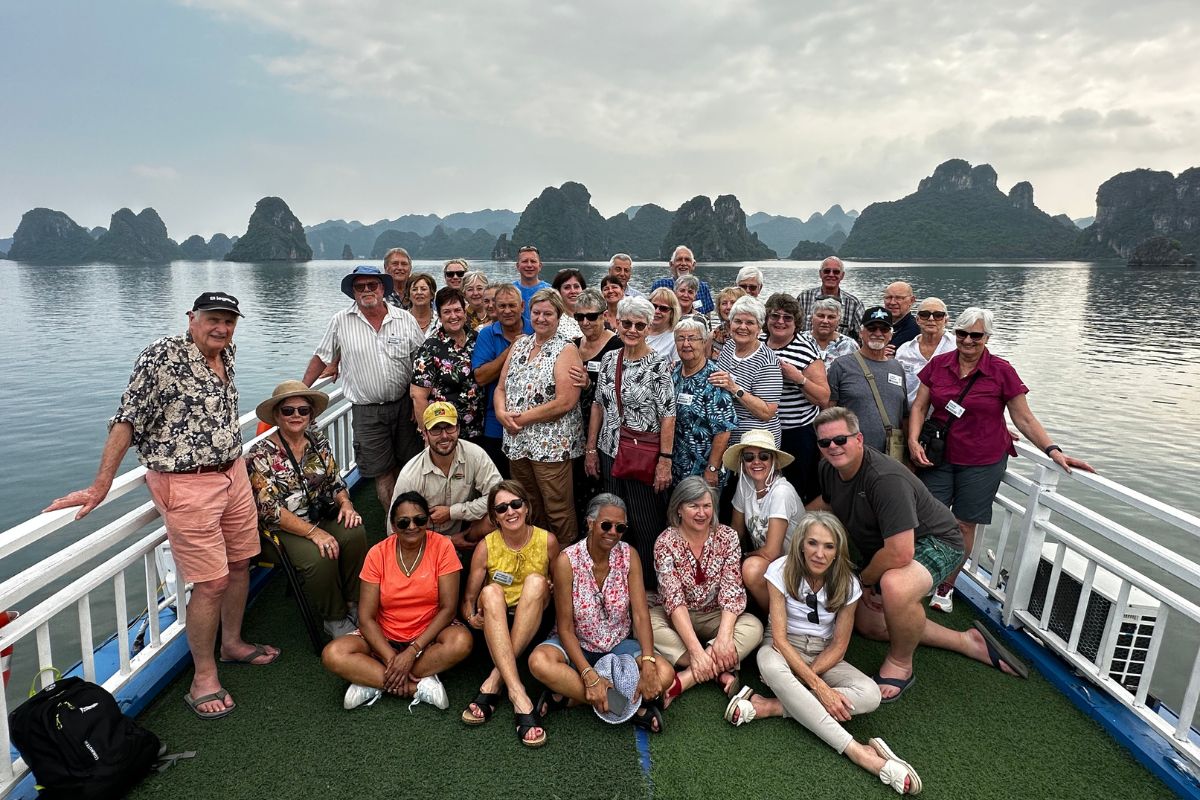
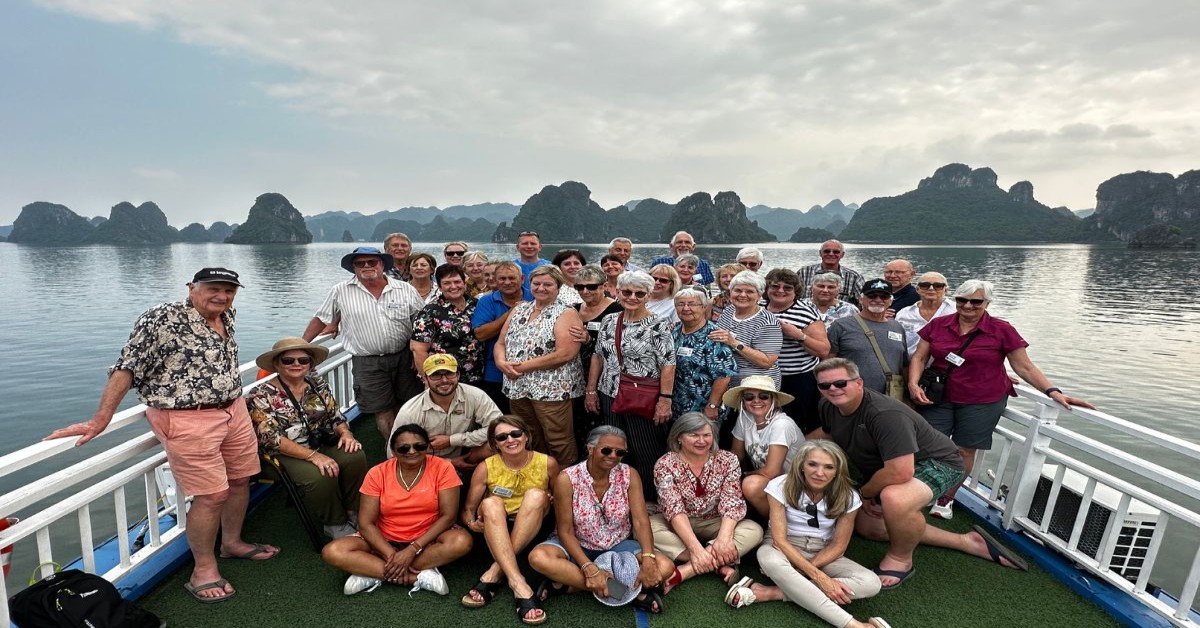
Ha Long Bay, a UNESCO World Heritage Site known for its emerald waters and thousands of towering limestone islands topped with rainforests.

The stunning rice terraces in Sapa, renowned for their breathtaking views and cultural diversity.

The picturesque landscapes of Trang An, offering beautiful boat trips through scenic caves and waterways.

The vibrant skyline of Ho Chi Minh City, representing the bustling economic hub of Vietnam.

The picturesque waterways of the Mekong Delta, rich in biodiversity and cultural heritage.
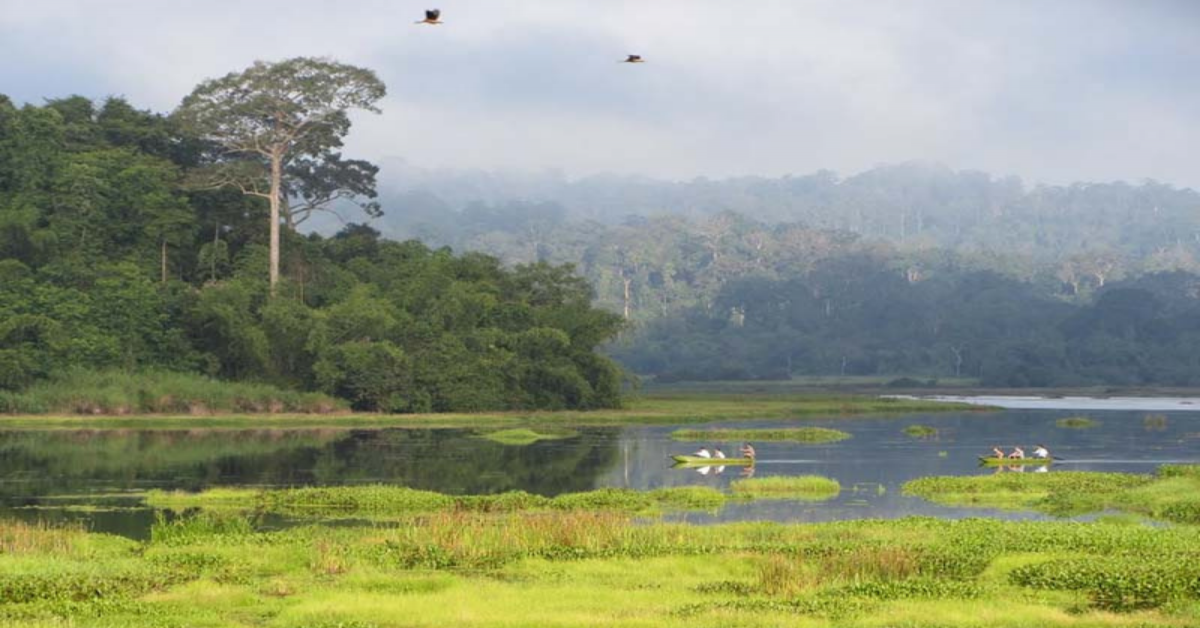
As Vietnam continues to modernize its administrative framework, its stunning landscapes—from the emerald waters of Ha Long Bay to the lush rice terraces of Sapa—remain integral to its cultural identity and economic growth.
World Mate Travel: Your Gateway to Explore Vietnam
With the administrative restructuring and the diversification of local governments, tourism is poised for remarkable growth in Vietnam. World Mate Travel offers customized travel experiences that allow visitors to immerse themselves in the country’s diverse landscapes, rich history, and vibrant culture. Whether you’re exploring the bustling streets of Hanoi, taking a cruise in Ha Long Bay, or trekking through Sapa's mountains, there’s something for every traveler.
World Mate Travel specializes in:
- Cultural Tours: Discover Vietnam's rich history through guided tours of significant landmarks and cultural sites.
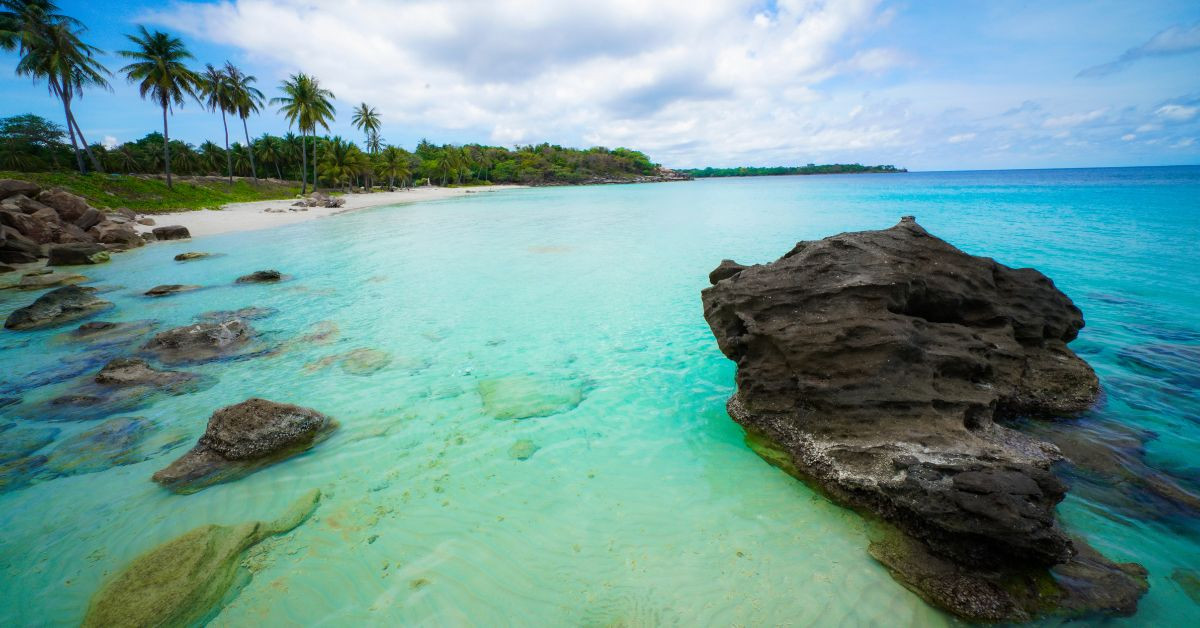
- Adventure Travel: Experience outdoor activities, from hiking in the northern hills to kayaking in beautiful coastal areas.
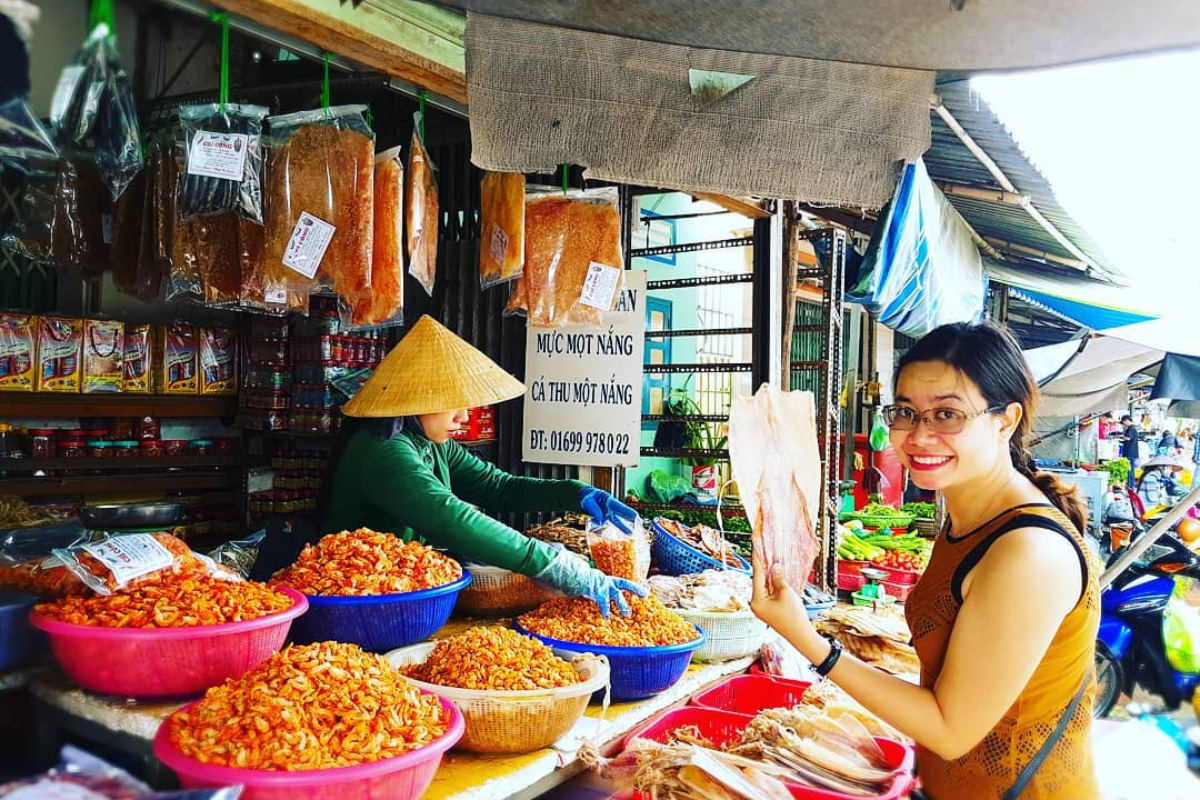
- Food Experiences: Enjoy culinary tours that introduce you to Vietnam's famous street food and traditional dishes.
- Custom Itineraries: Tailor your vacation based on interests and travel preferences with personalized itineraries.
Explore Vietnam with World Mate Travel and discover the stunning landscapes and vibrant culture that make this country a unique destination.
Contact World Mate Travel for More Details
For inquiries and to plan your next adventure in Vietnam, reach out to us:
- WhatsApp: +84988660505
- Email: Sales@worldmatetravel.com
A Forward-Thinking Governance Model
As Vietnam officially shifts to this two-tier local government model through Resolution 60 and Resolution 202, this restructuring initiative serves as a clear blueprint for modern governance. By reducing the number of provincial-level units and enhancing administrative efficiency, the government aims to empower local authorities to implement policies more effectively while fostering greater responsiveness to community needs.
Conclusion
This historic reform represents a significant leap towards modernizing Vietnam’s administrative framework. It not only simplifies governance but also strategically positions the nation for future economic growth, ultimately benefiting both local and national interests.