Most good Sapa trips are built from three things: the cable car up Fansipan, a walk into a H'mong or Giáy village in the Mường Hoa valley, and a hotpot dinner in town. Two nights covers all three without rushing. Add the Rồng Mây glass bridge on the Ô Quy Hồ pass if you want one more half day and a view of the range from the Lai Châu side.
Where is Sapa and what is it like?
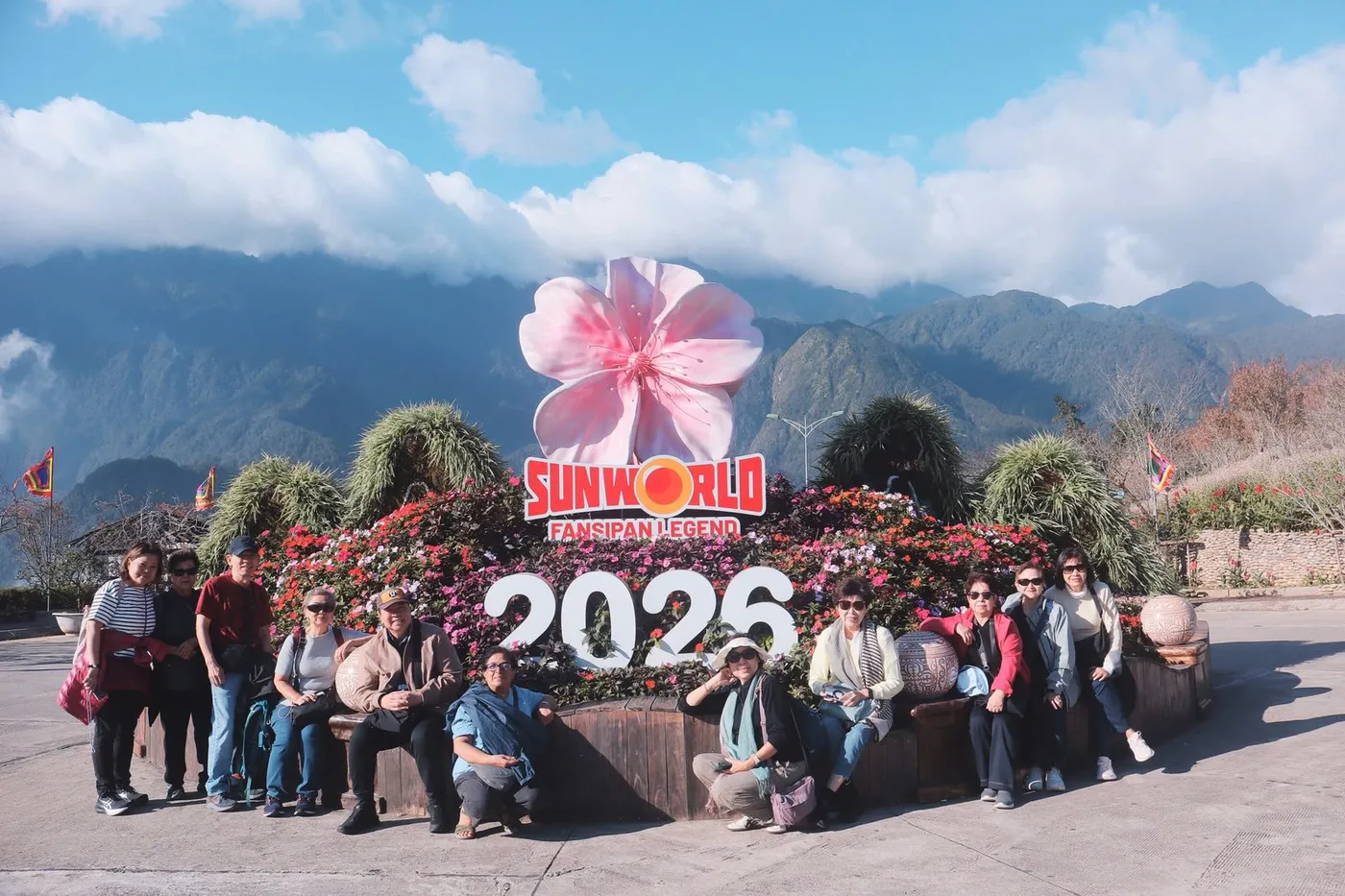
Sapa is a mountain town in Lào Cai province in north-west Vietnam, sitting at roughly 1,500 m on the eastern flank of the Hoàng Liên Sơn range. Fansipan, the highest summit in Vietnam and mainland South-East Asia, rises above it at 3,147.3 m. The drive from Hanoi takes about five to six hours. The weather is cool all year and cloud moves through the valley daily.
One naming point worth knowing before you read older guides: since 1 July 2025 Vietnam has removed the district tier. The former Sa Pa town is now phường Sa Pa inside Lào Cai province, which absorbed Yên Bái province under Resolution 202/2025/QH15. Hotels, drivers and maps still say "Sapa", and nothing about the destination itself changed.
What are the best things to do in Sapa?
The table below is what we actually sequence for clients, with the ticket prices published as of November 2026. Gate prices in Lào Cai change without much notice, so we confirm every one of them on the day we book.
| Experience | Time needed | Published ticket (Nov 2026) | Best for |
|---|---|---|---|
| Fansipan cable car (return) | 3–4 hrs with the summit | 800,000 VND adult / 550,000 VND child 1.0–1.4 m | Everyone; the one unmissable thing |
| Fansipan summit funicular | Included in the Fansipan half day | 150,000 VND up / 120,000 VND down / 270,000 VND return | Anyone who would rather not climb the summit steps |
| Mường Hoa funicular (town → cable car station) | 10 min each way | 180,000 VND | Skipping the rough access road |
| Cát Cát village | 2 hrs | 150,000 VND adult | Short, paved, closest village |
| Lao Chải – Tả Van valley villages | Half day | 70,000 VND | Terraced-field scenery, real walking |
| Rồng Mây (Dragon Cloud) glass bridge | Half day incl. the pass | 490,000 VND (agent price, Nov 2026) | Heights, the Ô Quy Hồ pass, photographs |
| Thác Bạc (Silver Waterfall) | 30 min | 20,000 VND | A stop on the way to the pass |
| Thác Tình Yêu (Love Waterfall) | 1.5–2 hrs | 75,000 VND | A short forest walk |
| Hàm Rồng mountain garden | 2 hrs | 70,000 VND adult / 30,000 VND child | Town views without leaving town |
| Sapa Stone Church and the square | 30 min | Free | Evening stroll, local market stalls |
| Bắc Hà market (Sundays only) | Full day | Free | Markets; needs a third night |
Sources: Sun World Fansipan Legend's own ticket pages; Vietravel (23 October 2026) for Cát Cát; the VnExpress Sa Pa guide (updated 16 April 2026) for the waterfall, Hàm Rồng and village fees. Some resellers advertise the cable car below the operator's own price during promotions, so treat 800,000 VND as the standard gate rate rather than the only one you will see quoted.
Is the Fansipan cable car worth it?
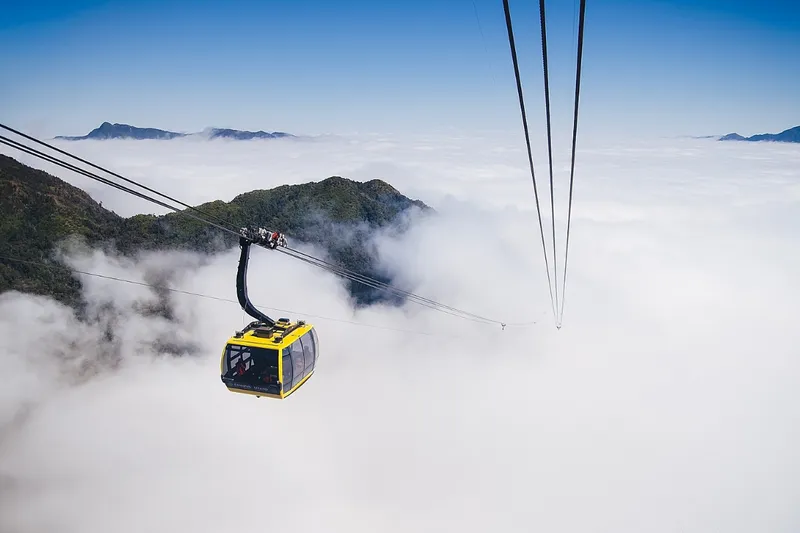
Yes — it is the single experience that justifies the journey from Hanoi. The Fansipan cable car runs 6,292.5 m from Sa Pa to the summit area in about 20 minutes, climbing 1,410 m on the way. Guinness World Records recognised it in February 2016 as the longest non-stop three-rope cable car and the greatest elevation difference by a three-roped cable car.
What you get at the top is a complex, not just a viewpoint: a Buddhist temple group, the Great Buddha statue, viewing terraces and the summit marker itself. On a clear morning you see across the Hoàng Liên range into Lai Châu. On a cloudy afternoon you see white, which is why we put Fansipan first thing in the morning rather than after lunch.
The summit height is 3,147.3 m. That figure comes from a 2019 satellite re-measurement by Vietnam's Department of Survey, Mapping and Geographic Information, announced on 26 June 2019; it replaced the 3,143 m figure French surveyors recorded in 1909, which many signs and guidebooks still print.
How do you reach the summit marker after the cable car?
Two ways: a long stone staircase that climbs the last stretch of the ridge, or the short funicular that runs from the upper cable car station to the summit platform. The funicular costs 150,000 VND one way up, 120,000 VND down, or 270,000 VND return, and children under 1 m ride free. For travellers in their sixties and seventies we book the funicular up and let people walk down at their own pace, which is the comfortable combination.
Where do you stop for coffee on the mountain?
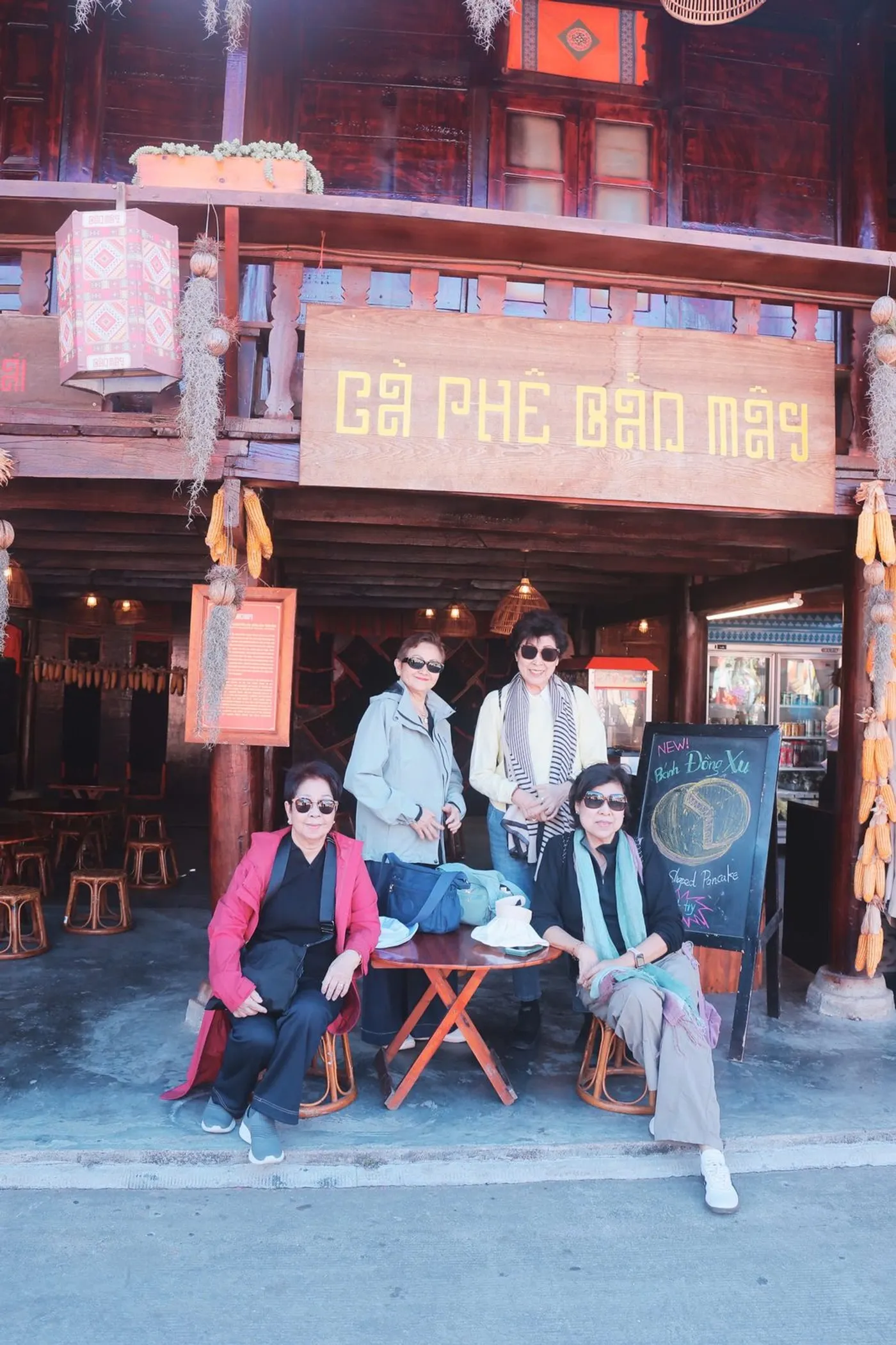
Cà Phê Bản Mây, the timber coffee house in the hill-tribe village setting at the Fansipan station, is the natural pause between the cable car and the funicular. It is a working café in a reconstructed stilt house — corn cobs hung along the eaves, low rattan stools, coffee and seasonal snacks. Twenty minutes here fits neatly into the Fansipan half day.
Is the Rong May glass bridge worth adding?
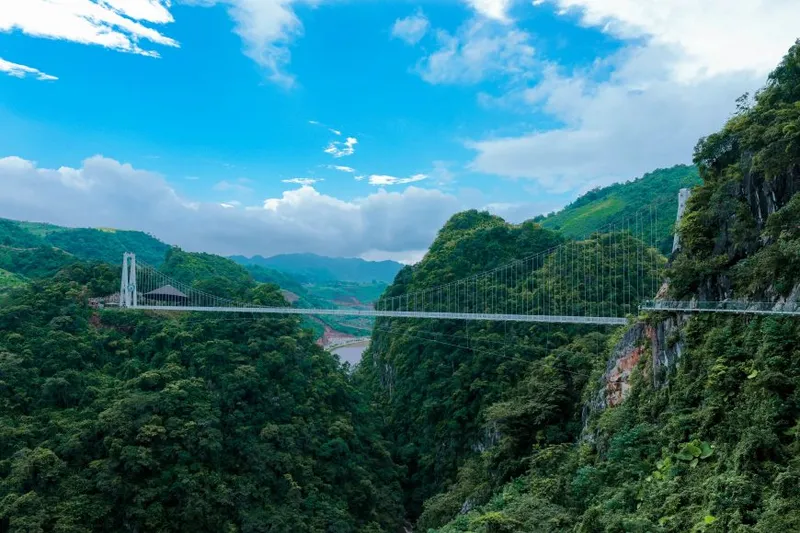
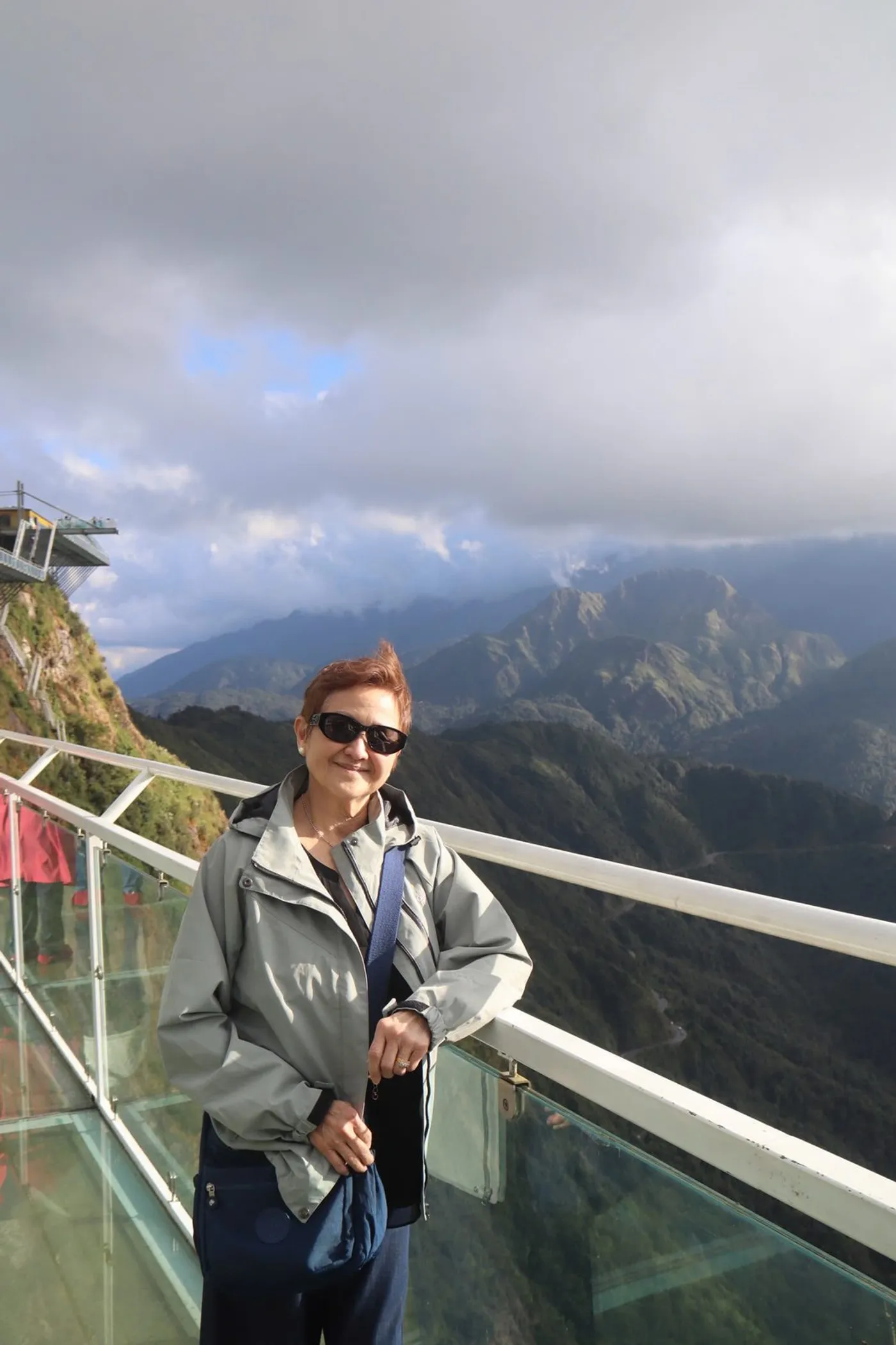
It is, if your group likes heights and you have a spare half day. The Rồng Mây (Dragon Cloud) glass bridge stands at the top of the Ô Quy Hồ pass in Sơn Bình, Lai Châu province, 17 km from Sa Pa — about 40 minutes by road over one of Vietnam's highest passes. Lai Châu's provincial tourism portal puts the deck at 2,200 m above sea level, projecting 60 m out from the cliff face, built from three bonded glass layers more than 7 cm thick, with a lift carrying 30 visitors at a time up the rock. It is usually open 07:00–18:00.
On price: the operator publishes none. A Sa Pa ticket agent lists admission at 490,000 VND online as of November 2026, and sells the Cloud Walk Bridge, Sky Bike and Extreme Swing separately on site. We confirm the rate on the day we book, and weather closes the deck more often than anything else up there.
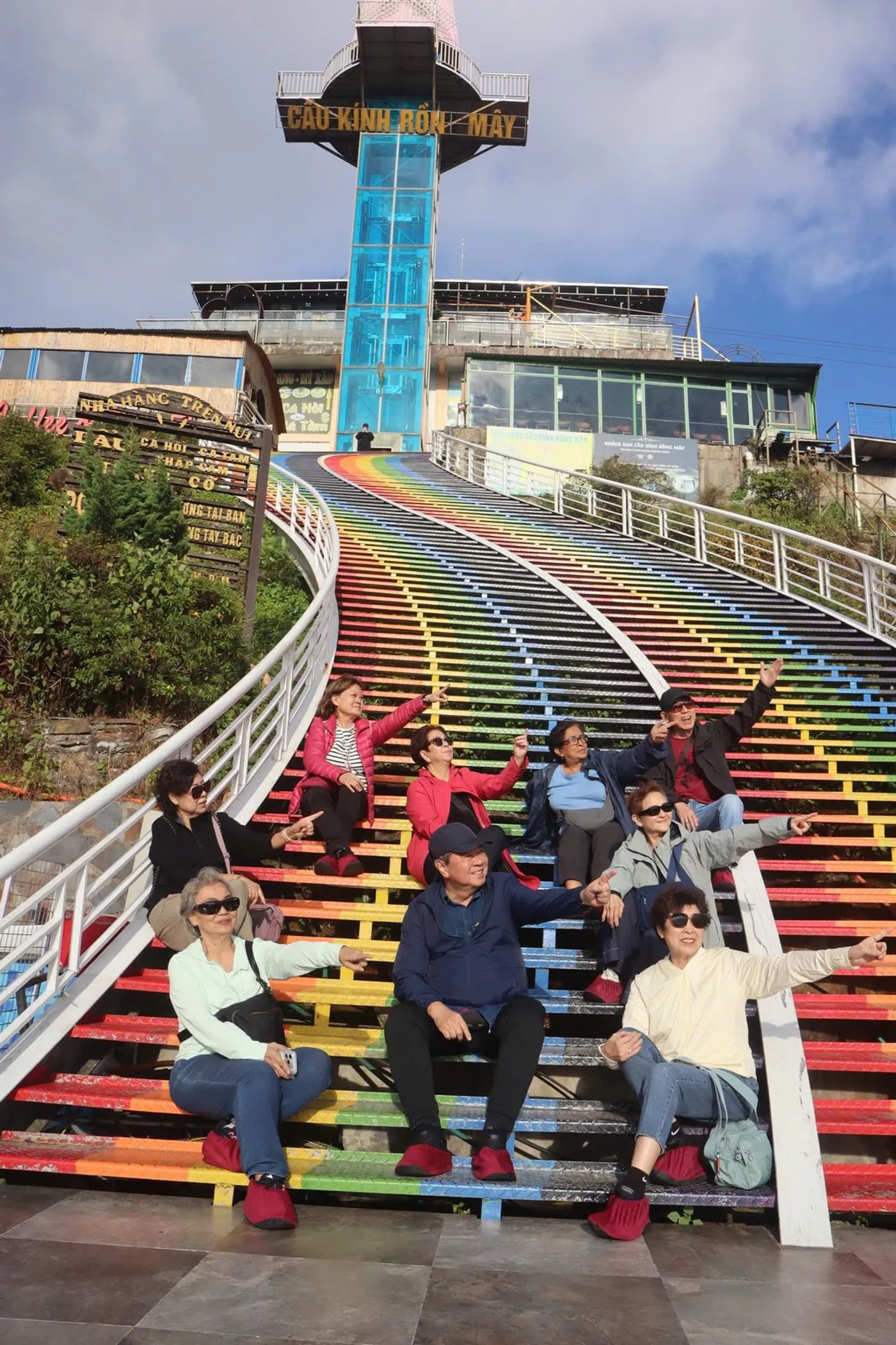
The rainbow staircase below the tower is the other photograph everyone takes. Shoe covers are issued at the entrance — the red covers in the picture below are theirs, not ours.
The drive itself earns its place: the Ô Quy Hồ pass road (QL4D) crosses the range between Lào Cai and Lai Châu and passes Thác Bạc on the way, so the waterfall and the bridge make one outing rather than two.
Which villages in the Muong Hoa valley are worth walking into?
Four are worth your time, and they differ by how much walking they ask of you:
- Cát Cát — H'mong, 2–3 km below the Stone Church, paved paths and steps, about two hours. The easiest and the busiest.
- Lao Chải — H'mong, down in the valley with the terraces rising on both sides. The classic walk starts above it and descends.
- Tả Van — Giáy, further down the same valley, the usual lunch stop and the best homestay village.
- Giàng Tả Chải — Red Dao, on the far side of the Mường Hoa stream, quieter than the other three.
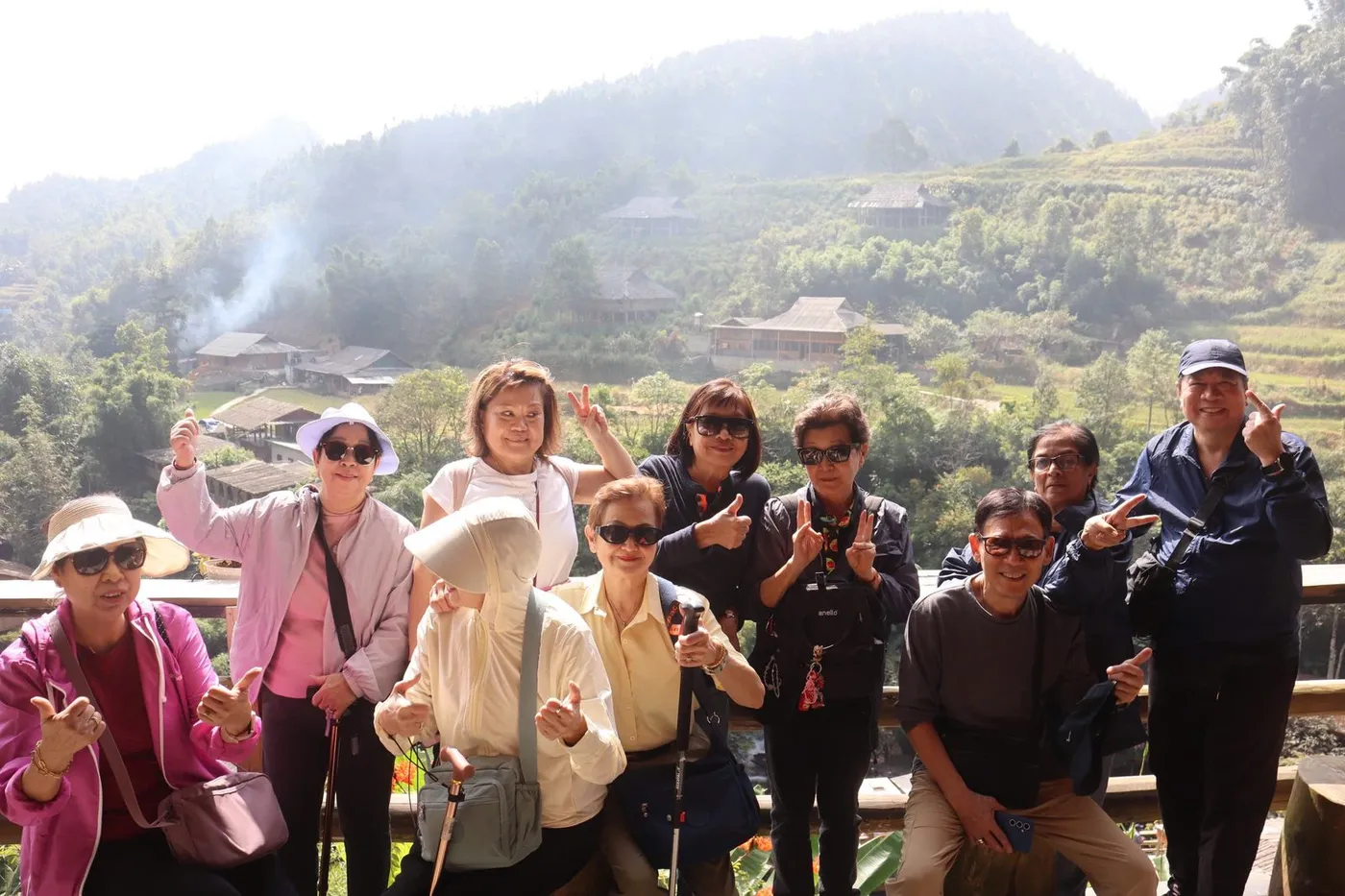
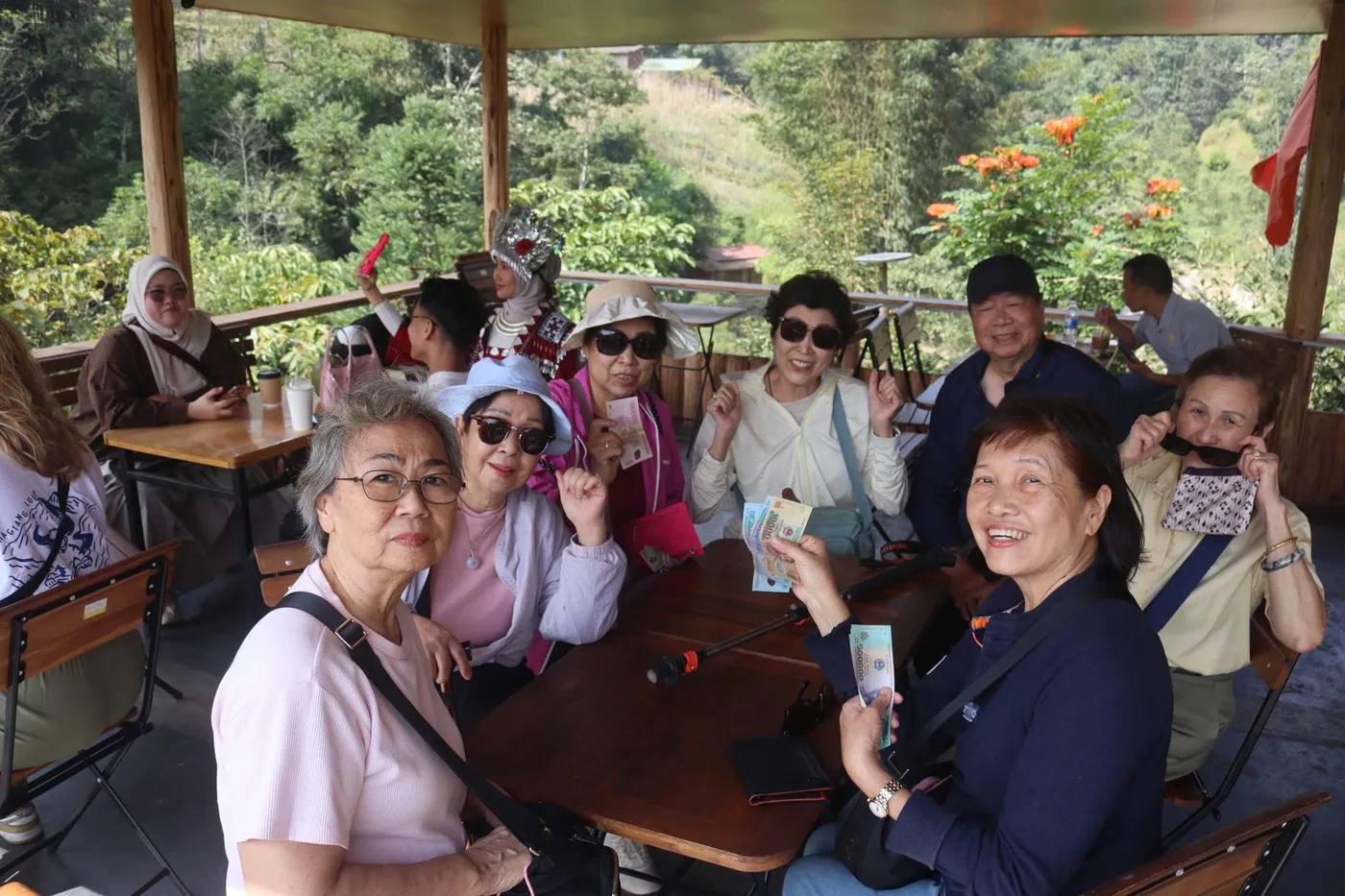
You do not have to trek to see this. The valley road has viewpoint cafés with terraces facing the fields, and for groups who prefer not to walk down into the valley we stop at one, order coffee, and let the view do the work.
What should you eat in Sapa?
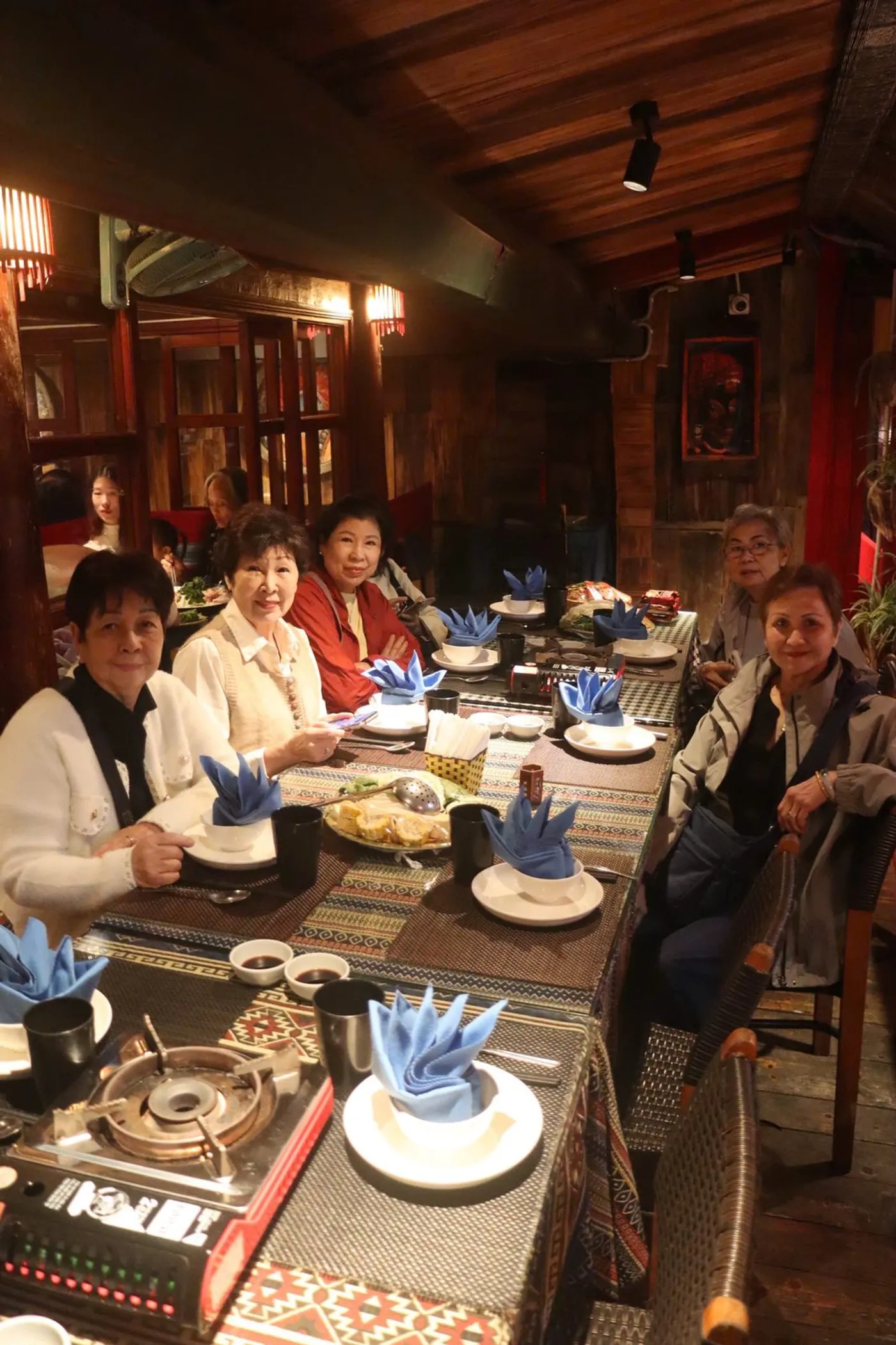
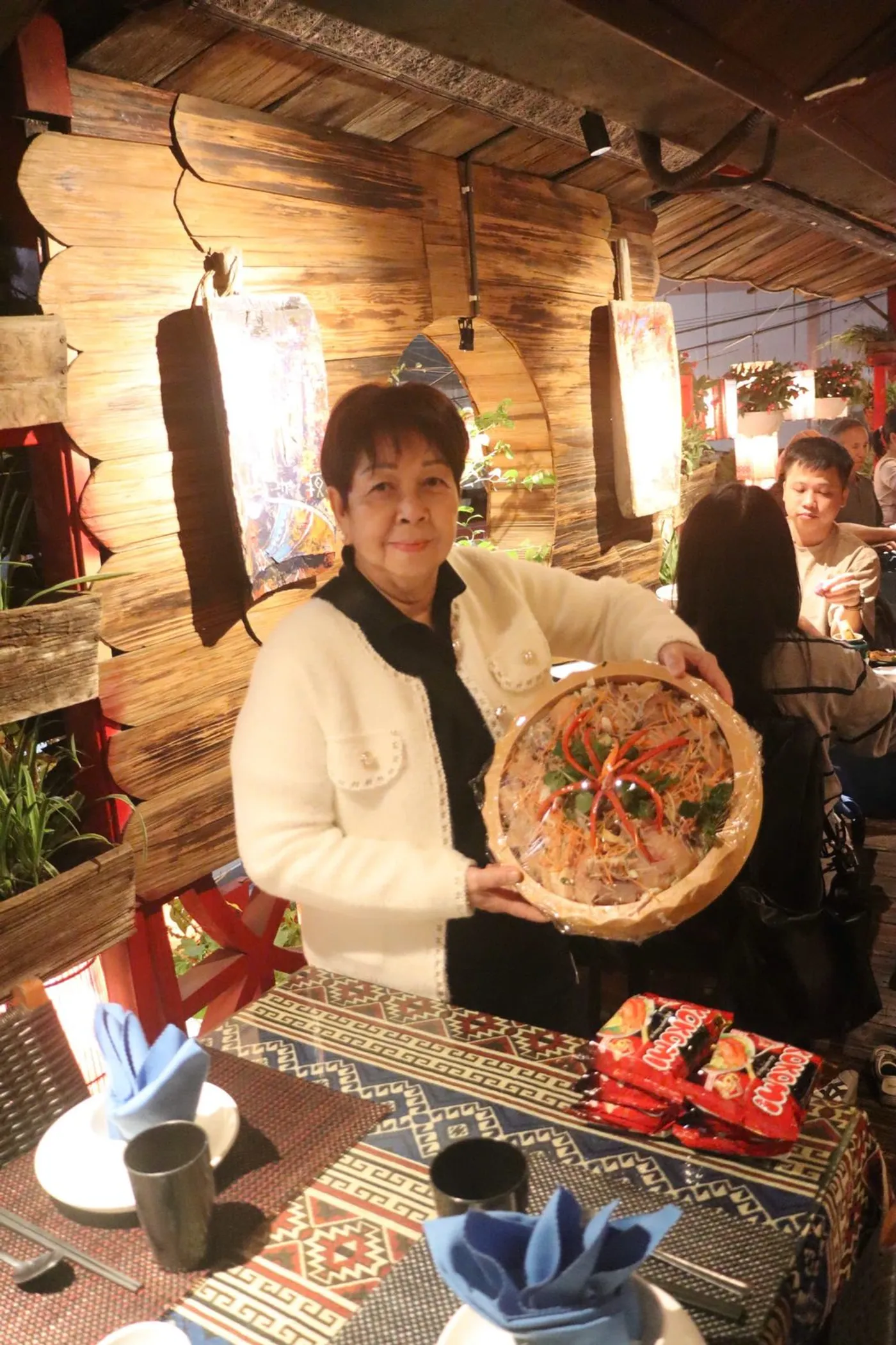
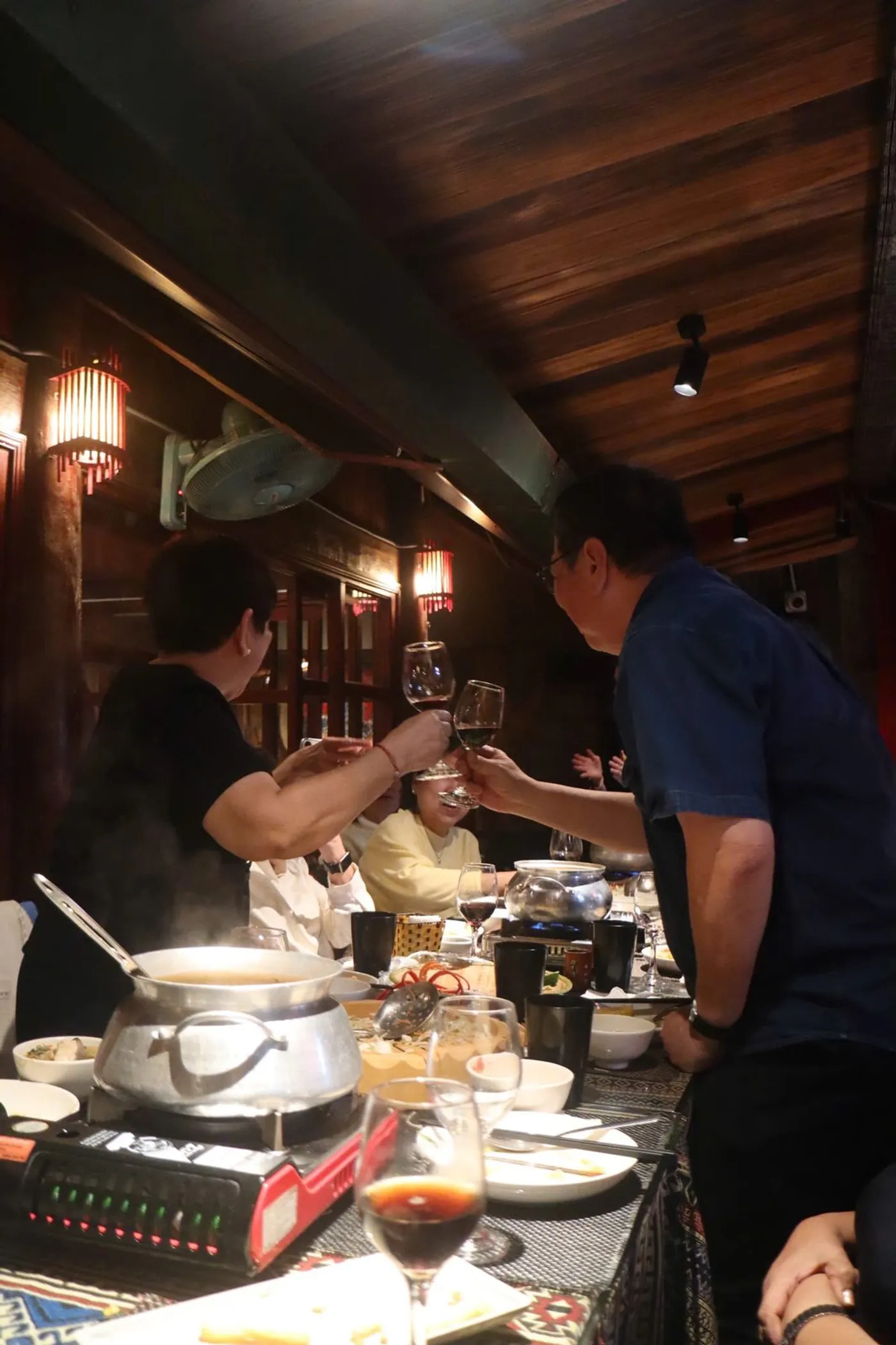
Eat hotpot. Sapa evenings are cold enough that a table-top hotpot is the right dinner nine months of the year, and the local versions are built on things farmed within a few kilometres: salmon and sturgeon raised in the cold streams below Thác Bạc, chayote greens (rau su su) picked on the slopes above town, black chicken, and bamboo-tube rice. At the markets you will also see thắng cố, the H'mong stew — order it if you are curious, but do not order it for a whole group's first dinner.

Grilled skewers — pork belly, chicken wings, corn, sweet potato, egg — appear on braziers around the church square after dark. That is a street-food supper, not a restaurant one, and it is good.
When is the best time to visit Sapa?
| Months | What it is like | Worth knowing |
|---|---|---|
| March – May | Mild, plum and pear blossom, fields being prepared | Comfortable walking weather |
| June – August | Warmest and wettest; terraces green and flooded | Afternoon rain; landslide risk on mountain roads |
| Late August – September | The terraces turn gold | Harvest timing shifts year to year and runs earlier in the Mường Hoa valley than on the higher terraces, so a date fixed months ahead can miss it by a fortnight |
| October – November | Driest, clearest skies, best Fansipan visibility | Our preferred window for first-time visitors |
| December – February | Cold, frost at altitude, occasional snow on Fansipan | Pack real winter clothing; cloud can close the view for days |
How do you get from Hanoi to Sapa?
By road in about five to six hours, using the Nội Bài–Lào Cai expressway (CT.05) and then QL4D up the mountain. Private car, limousine van and sleeper coach all run this route daily. The alternative is the night train from Hanoi to Lào Cai station followed by about an hour by road, which takes seven to nine hours in total but lets you sleep through the journey.
For groups we use a private vehicle and leave Hanoi early enough to be in Sapa for lunch, which protects the first afternoon.
How many days do you need in Sapa?
Two nights is the honest answer. One night means a long drive, one attraction and another long drive. Two nights gives you a full Fansipan morning, a valley afternoon, and a second day for the glass bridge or a village walk. Three nights makes sense if you want Bắc Hà market, which runs on Sunday mornings and is a two-hour drive each way.
Is Sapa suitable for older travellers?
Yes, and we run groups in their sixties and seventies here regularly — but the sequencing matters more than the itinerary. The things that make it work: the funicular instead of the summit steps, a hotel in the town centre so nobody faces a hill after dinner, the valley seen from a road-level café rather than from the bottom of a descent, warm layers even in June, and no more than one attraction before lunch. Cát Cát is the one to watch — it is short but it is all steps.
Where should you stay in Sapa?
We have written up the Sapa properties we book most often, with what each one actually offers:
- Silk Path Grand Sapa Resort & Spa — the large five-star above town, heated indoor pool
- Pao's Sapa Leisure Hotel — big rooms, indoor pool, strong for groups
- Amazing Hotel Sapa — central, valley-facing rooms
- Bamboo Sapa Hotel — the outdoor pool with the valley view
- KK Sapa Hotel — mid-range, town centre
- Sapa Highland Resort & Spa — quieter, out of the centre
Sapa travel questions
Is there snow in Sapa?
Sometimes, and not every winter. Frost and ice on Fansipan are more common than snow in the town itself, and both arrive in December, January or February. When snow does fall it is news in Vietnam and the roads fill with domestic visitors within a day.
Do you need a permit or a guide to walk to the villages?
No permit. The villages charge an entrance fee at a gate on the road, and you can walk in without a guide. We send a guide with groups because the path network is not signed and the interesting parts of what you are looking at — who farms which terrace, why the houses face the way they do — are not written anywhere.
Is Sapa worth doing as a day trip from Hanoi?
Technically it is possible, and we advise against it. Ten to twelve hours of driving for a few hours in the mountains is a bad trade, and if the cloud is down that day you will have seen nothing. One night is the minimum that makes sense.
What should you pack for Sapa?
A warm layer in every season, a waterproof shell, and shoes with grip — village paths are stone and mud, and they are slippery after rain. From December to February add a proper winter coat, gloves and a hat; the summit is far colder than the town.
Is the Fansipan summit cold even in summer?
Yes. The summit sits more than 1,600 m above the town, and the temperature difference is large enough that visitors in shorts regularly buy a jacket at the station. Take a layer up with you even on a hot August morning in Sapa.
Where do you pay the village entrance fees?
At a ticket booth on the access road, in cash. On our tours these tickets are included and our guide handles them, so no one in the group queues at a booth.
Planning Sapa with us
Planning Sapa as part of a northern Vietnam trip? Tell us your dates and how much walking suits your group, and we will send a routing that fits — sales@worldmatetravel.com or WhatsApp +84 988 660 505.