Hanoi in Autumn: When to Go, What to Expect, and Where to Combine It
Published on Jul 01, 2026 · Updated on Jul 01, 2026
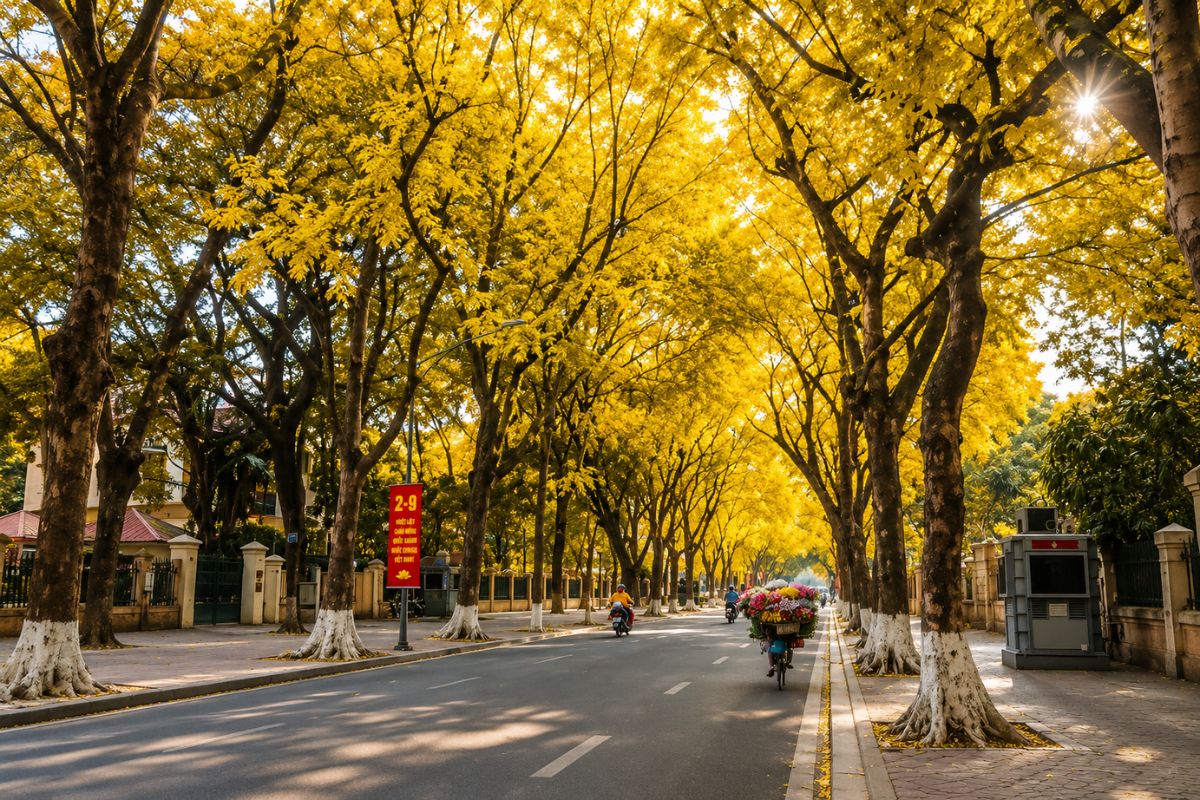
Autumn is the calendar window most locals in Hanoi would pick if they had one week to show the city off. Temperatures drop from the July heat, the sky turns a solid pale blue for weeks at a time, and the trees along Phan Dinh Phung and Hoang Dieu Streets go yellow. This guide is written from Hanoi — what actually happens in each of the three autumn months, what to pack, and how to combine Hanoi with Sapa and Halong Bay for a five-day trip.
When does autumn actually happen in Hanoi?
Autumn in Hanoi runs September through November. The three months feel different from one another:
- September — the transition month. Summer heat lifts. There is still humidity and short rain in the first two weeks. By mid-month the sky opens up.
- October — the sweet spot. Daytime highs sit around 26–29 °C, mornings drop to 20–22 °C, and rainfall is at its lowest for the year.
- November — the cool end. Daytime highs are 22–25 °C. By late November, mornings and evenings need a light jacket. The plane trees along Phan Dinh Phung go yellow in the last week.
If you want a shorthand, the second half of October to the middle of November is the most reliable window for cool, dry, blue-sky travel across the whole north.
What the weather is like — the real numbers
| Month | Daytime | Morning / Night | Rainy days | Feel |
|---|---|---|---|---|
| September | 28–32 °C | 24–26 °C | 10–12 | End of the wet season; humid start, dry finish |
| October | 26–29 °C | 20–22 °C | 5–7 | Cool, dry, clear — the best month |
| November | 22–25 °C | 15–18 °C | 3–5 | Light jacket in the mornings; peak yellow-leaf window |
Temperatures cited are the daily average range for Hanoi from Vietnam's National Center for Hydro-Meteorological Forecasting data. If you have Google-searched "Hanoi weather October" and seen 30 °C figures, those are usually the daily maximum on a hot day, not the average.
What Hanoi looks like in autumn — the concrete version
Autumn in Hanoi is not a "postcard" — it is a specific set of details that show up together:
- Milk-flower season (hoa sữa). The white-flowered trees on Nguyen Du Street bloom for two or three weeks in October and November. The scent is heavy and sweet, most noticeable at night.
- Yellow-leaf boulevards. Phan Dinh Phung, Hoang Dieu, and the streets around the Ho Chi Minh Mausoleum turn yellow in the last week of November. Local wedding photographers block these streets on weekends.
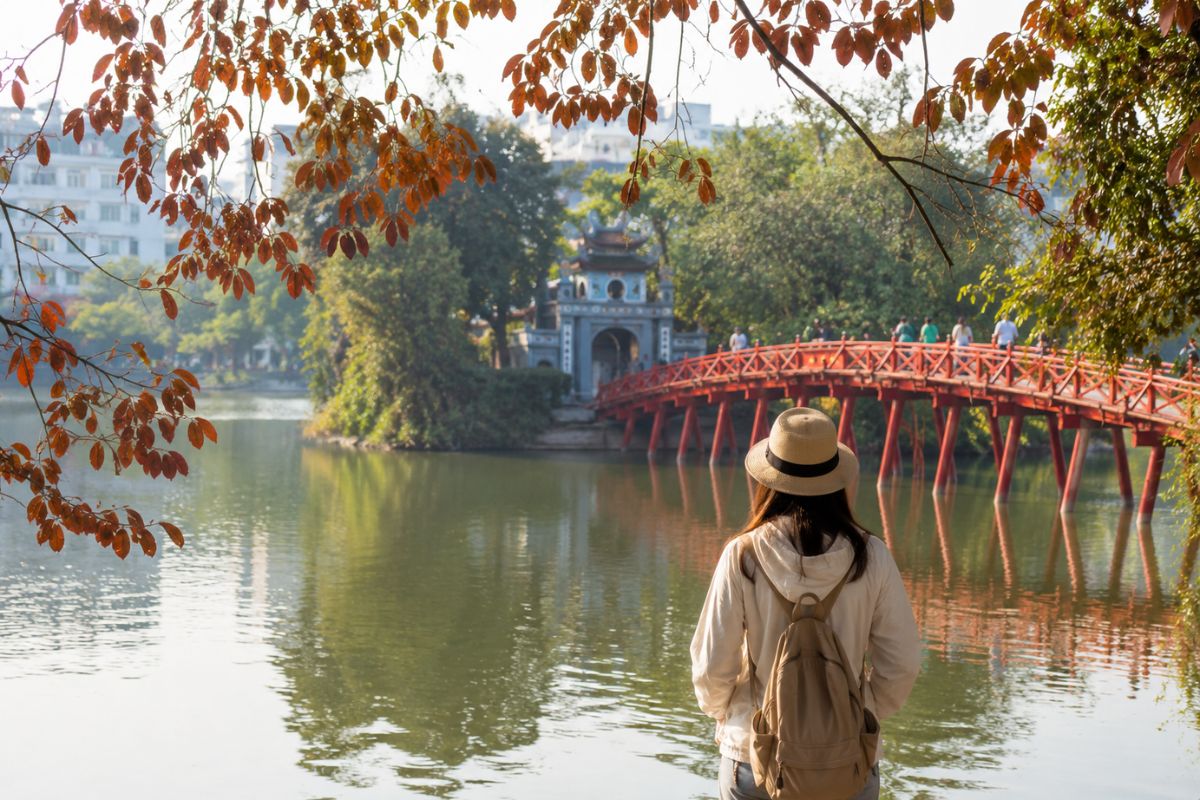
- Morning steam over Hoan Kiem Lake. When the water is warmer than the air, mist sits on the surface until about 07:30. Best seen from the eastern edge near Ngoc Son Temple.
- The cốm season. Green young rice, pounded flat, sold from bamboo baskets by the older women in the Old Quarter. Mid-October is peak.
- Persimmons and pomelos. Autumn fruit shows up on every street corner. The Yen Phu Street market above West Lake is where locals go.
The best neighbourhoods to walk in autumn
The Old Quarter
The 36 old streets, each historically named for what it sold (Hang Bac was silversmiths, Hang Ma was votive paper). Best walked in the morning. Coffee at Cafe Giang on Nguyen Huu Huan for the original egg coffee.
The French Quarter
The wide tree-lined streets south of Hoan Kiem, built between 1902 and 1954. Trang Tien, Ly Thai To, and the streets around the Opera House. Bookstores, patisseries, colonial hotels.
The Ba Dinh embassy quarter
Phan Dinh Phung and Hoang Dieu Streets. Walkable in an hour, quietest early morning or late afternoon.
West Lake (Ho Tay)
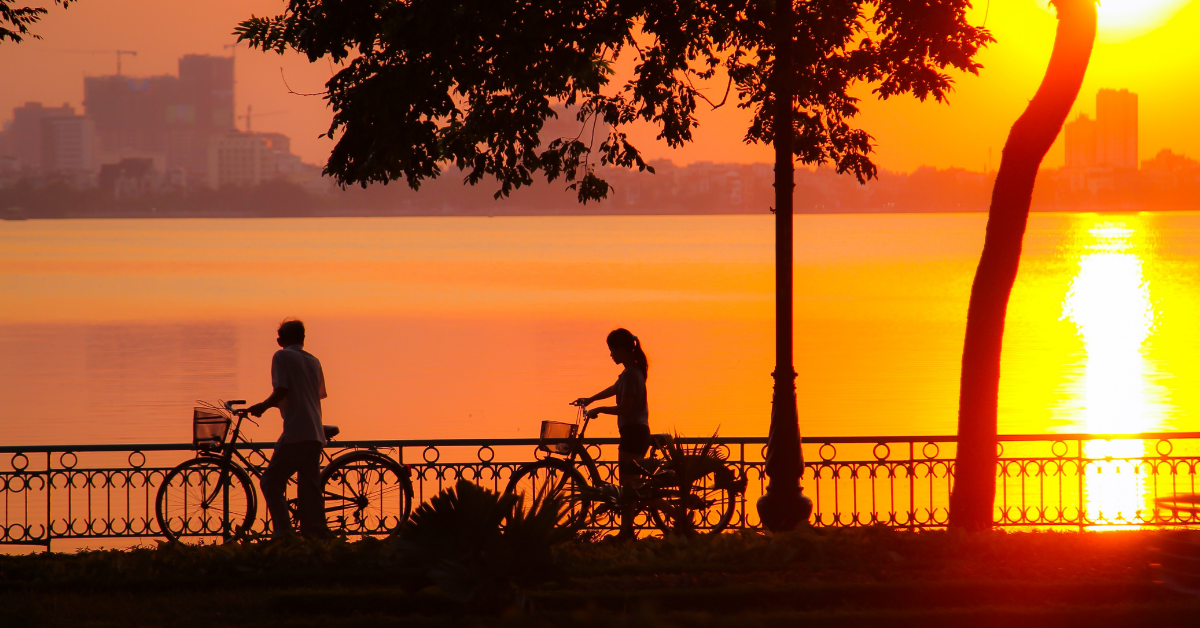
17 km around the shore. Best cycled in October when the wind is calm. The Nghi Tam flower village on the north-east side is where the city buys its cut flowers.
For a guided walk, our Hanoi Old Quarter tour covers the Old Quarter and the French Quarter in half a day with a local guide.
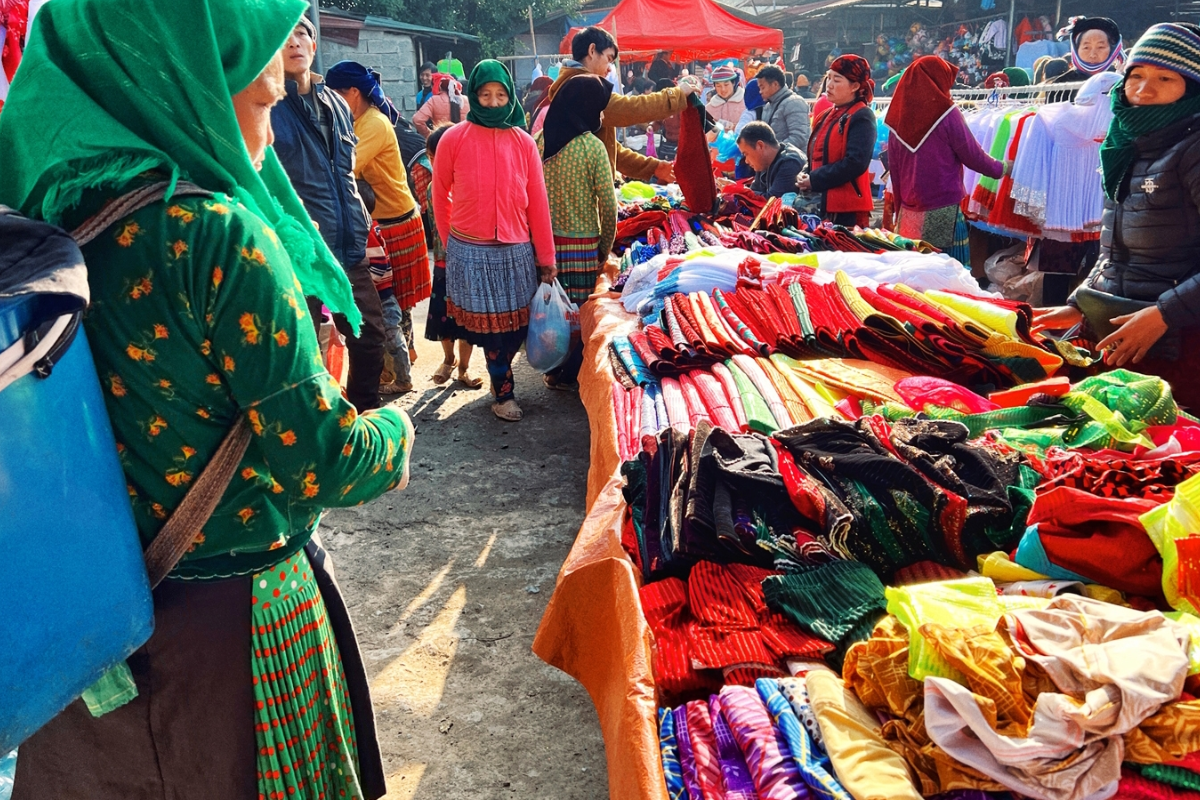
 sold in Hanoi during autumn.jpg-image-odbkibir.jpg)
What to eat in autumn in Hanoi
Autumn food in Hanoi is the food locals eat every year at this time — not a "must-try" list.
- Bún ốc nguội (cold snail vermicelli). Served at room temperature with a tamarind broth. Best at Bún Ốc Bà Sáu on Đặng Dung Street.
- Chả rươi (fried sandworm patties). Only sold in October and November when the sandworms are in season. Try the family-run stalls on Hàng Chiếu.
- Cốm dishes. Green rice mixed into desserts, folded into fried chả cốm, or eaten simply with a slice of ripe banana. Nghi Tam village makes the best cốm in Vietnam.
- Bún chả. Not seasonal, but the smoky grilled-pork smell moves outside in autumn when charcoal braziers can sit on the street without a canopy.
- Roasted chestnuts and sugarcane juice. Sold from carts near the Old Quarter after dark once the temperature drops.
Our Hanoi food street tour runs a small-group evening walk from 17:30 covering seven dishes.
Combine Hanoi with Sapa and Halong Bay — a 5-day route
The best three-city loop in the north — and the reason most travellers come in autumn — is Hanoi, Sapa, and Halong Bay. Autumn is the only time of year all three are consistently good at once. Summer is hot and humid in Hanoi and Halong; winter is grey and cold in Sapa; spring is misty at the Sapa summit.
Our five-day route:
| Day | Route | Overnight |
|---|---|---|
| Day 1 | Hanoi arrival · airport pick-up · Old Quarter walking tour · Ho Chi Minh Complex or the Temple of Literature | Hanoi |
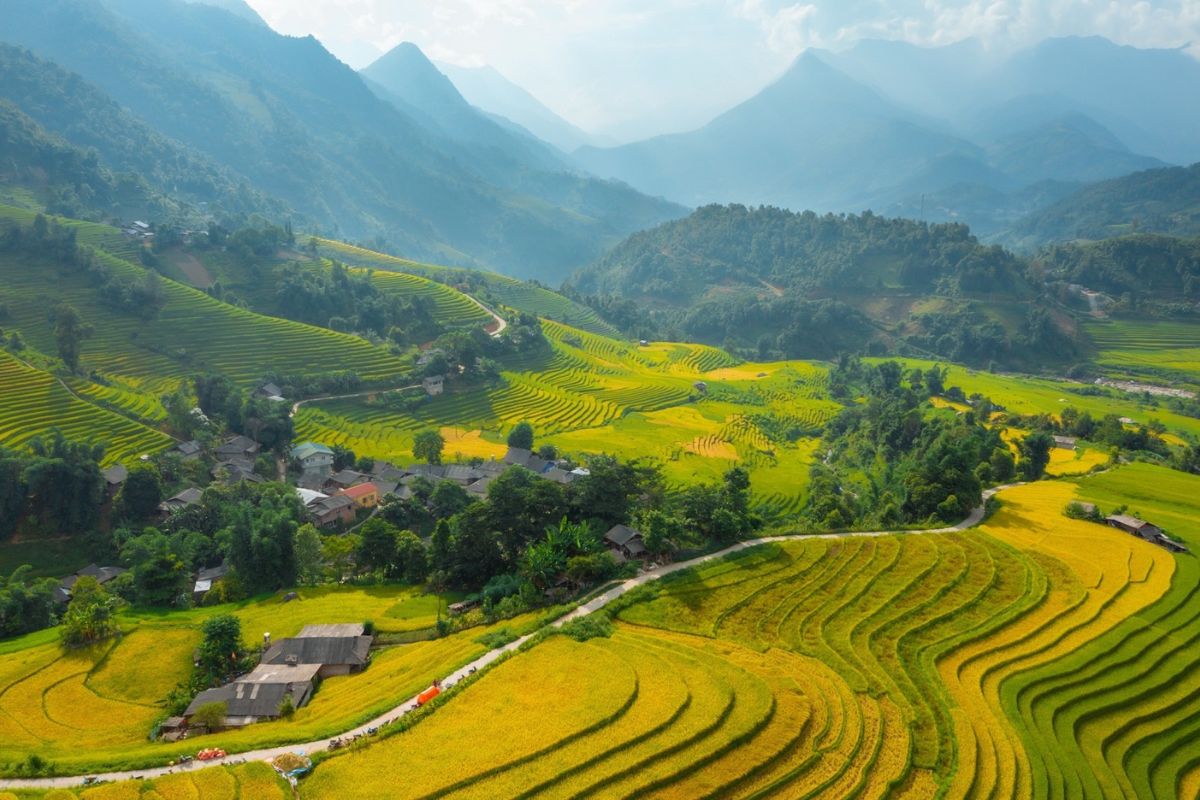
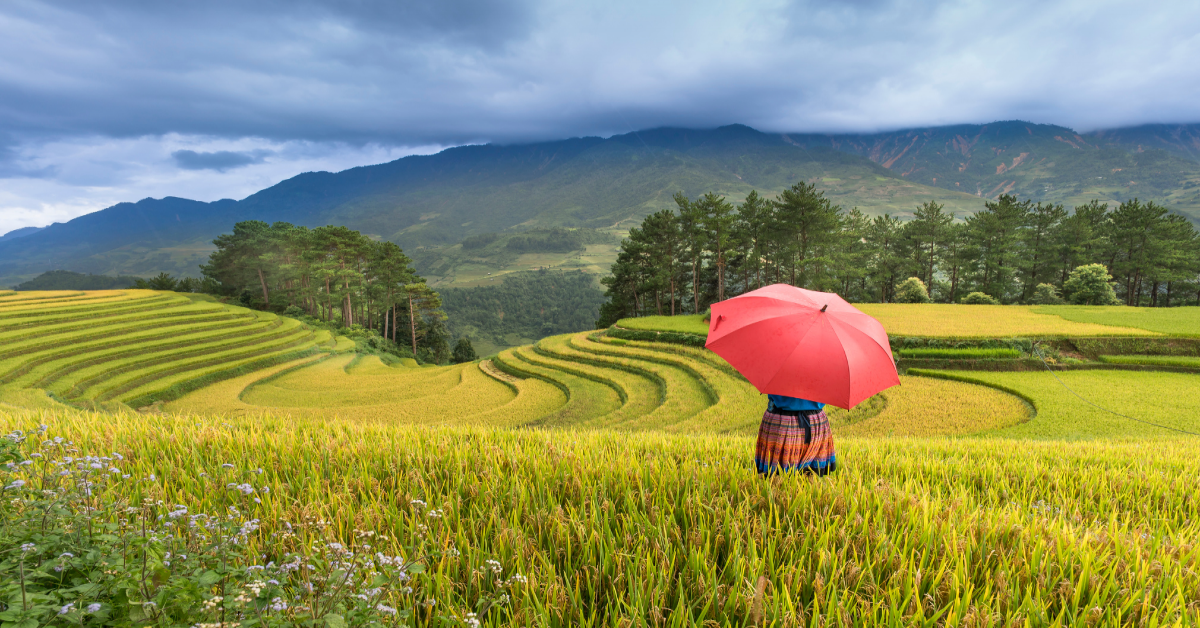
| Day 2 | Hanoi → Sapa on the new Noi Bai–Lao Cai expressway (~5 hrs) · Muong Hoa Valley terraced rice fields | Sapa |
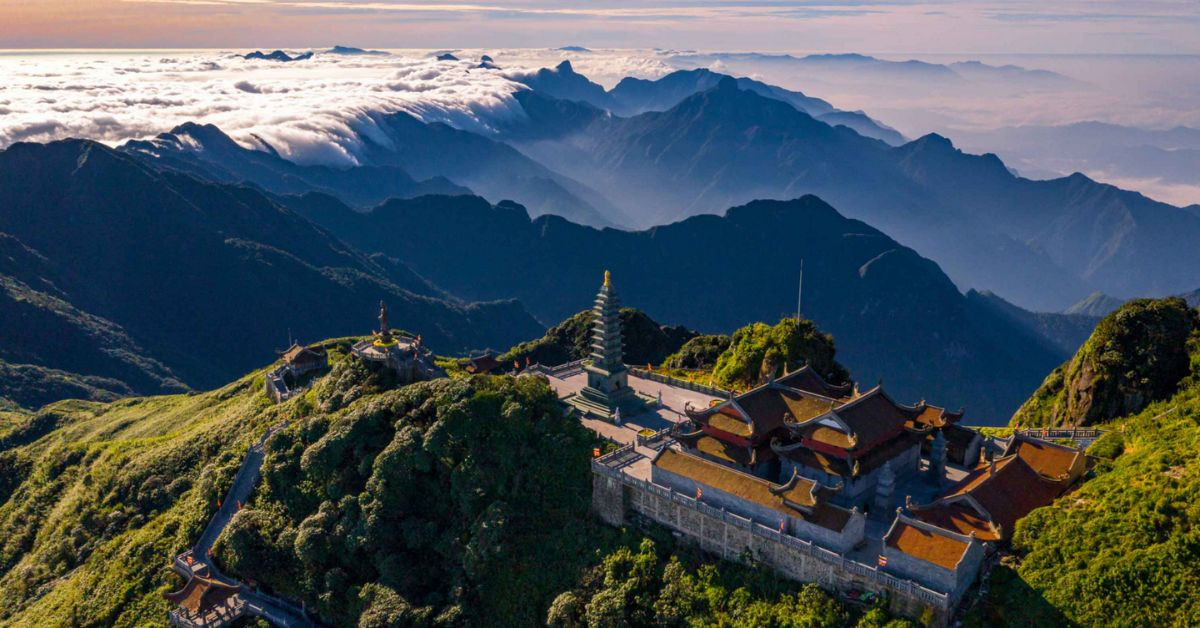
| Day 3 | Fansipan cable car to the 3,143 m summit (Roof of Indochina) · Cat Cat H'Mong village in the afternoon | Sapa |
| Day 4 | Sapa → Hanoi → Halong Bay (~7 hrs split by a lunch stop) · overnight cruise with kayaking and Tai Chi | Halong cruise |
| Day 5 | Morning cruise activities · return to Hanoi for the departure flight | — |
5D4N Hanoi – Sapa – Halong Bay
From USD 275 / pax
3-Star tier, twin share, 10+ pax group. 4-Star and 5-Star tiers, and smaller-group private rates, are quoted on request.
Included: private transport with English-speaking driver, English-speaking guide on all guided days, all hotel nights, all meals listed in the day-by-day, Fansipan cable-car ticket, Halong Bay overnight cruise, entrance tickets, mineral water on the vehicle.
VIP Tour Package bonus. Book our VIP version of this route and the Hanoi Old Quarter Tour is included on Day 1 at no extra cost — normally USD 43 per person. It shifts the Old Quarter from "free time" to a guided half-day with a local historian.
For the full itinerary — including a Sapa homestay option and a Ninh Binh add-on — see our Hanoi–Sapa–Halong 5D4N tour page.

Practical tips for autumn travel in Hanoi
- Pack a light jacket — even a windbreaker — from mid-October onwards. Mornings and evenings need it. Afternoons rarely do.
- Book Fansipan cable car tickets ahead on weekends and Vietnamese public holidays (2 September and 20 November fall inside autumn).
- Avoid the Vietnam National Day holiday (2 September) for city sightseeing if crowds bother you — Hanoi hosts the annual parade in Ba Dinh Square.
- Check if you need a Vietnam e-visa. Most Western passports are eligible for the 90-day multiple-entry e-visa. Apply at least 5 working days before travel via evisa.gov.vn.
- Fly into Hanoi (HAN) rather than Ho Chi Minh City if the north is your focus. The domestic connection to Ho Chi Minh City is a 2-hour flight, but starting north saves you a return domestic leg.
What we'd do
If we had a client landing in Hanoi in the second week of October with five days, this is exactly the route we would put together. October gives you the clearest views on Fansipan, the smoothest sea for the Halong overnight cruise, and the yellow-leaf window just starting in Ba Dinh. It is the shortest way to see the three places most people fly to Vietnam to see.
Frequently asked questions
When is autumn in Hanoi?
Autumn in Hanoi runs from September to November. October is the peak month for cool, dry weather, and mid-November is the best window for the yellow-leaf photography along Phan Dinh Phung Street.
What is the weather in Hanoi in October?
Daytime temperatures in Hanoi in October average 26–29 °C, with mornings around 20–22 °C. Rainfall is at its lowest for the year at 5–7 rainy days on average. Humidity drops sharply from September.
Is October a good time to visit Vietnam?
Yes — October is the most consistent month for travel across northern Vietnam. Hanoi is cool and dry, Sapa has clear summit views for the Fansipan cable car, and Halong Bay is past the summer typhoon risk. Central Vietnam (Hue, Hoi An) starts its own rainy season in October, so northern-Vietnam-only trips are best in October.
Is Sapa nice in November?
Yes. November brings clear skies to the Sapa summit and daytime temperatures around 15–20 °C in Sapa town. Rain drops to 2–3 days per month. Bring a warm jacket — nights fall to 8–12 °C.
What should I pack for Hanoi in autumn?
For October: light long-sleeve layers, a compact rain jacket for early-month showers, comfortable walking shoes, and a scarf for the evenings. For November: add a warm jacket or fleece, especially if you are combining Hanoi with Sapa or the Fansipan summit.
How many days do you need in Hanoi in autumn?
Two full days are enough for the Old Quarter, the French Quarter, and the Ho Chi Minh Complex. Three days lets you add a Bat Trang pottery village trip or the West Lake temples. Most autumn travellers combine two days in Hanoi with two nights in Sapa and one overnight cruise in Halong Bay — the standard five-day route.
Is Halong Bay good in autumn?
Autumn is one of the two best seasons for a Halong overnight cruise (the other being spring). The sea is calm, mornings are misty for atmospheric photography, and October–November is past the typhoon season that closes the bay in August and September.