How to Visit Ban Gioc Waterfall from Hanoi: A Practical Guide
Published on Jun 03, 2026
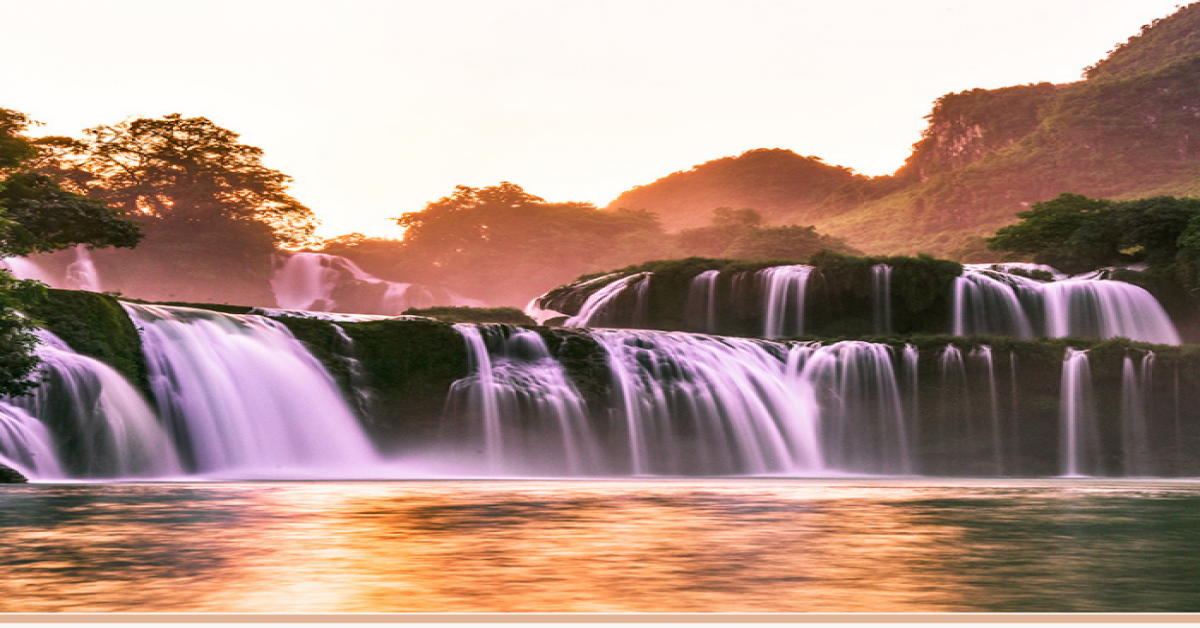
Ban Gioc is the largest waterfall in Vietnam by water volume. It's also one of the most awkward to reach — 335 km northeast of Hanoi, in Cao Bang province, on the border with China's Guangxi (where the same fall is called Detian on the Chinese side). Most foreign visitors to Vietnam never see it. The ones who do tend to come back saying it was the highlight of their trip.
This is a practical guide for travellers planning the visit themselves, and for travel agents looking at the logistics. We've been running this route for clients for over fifteen years.
Where Ban Gioc is
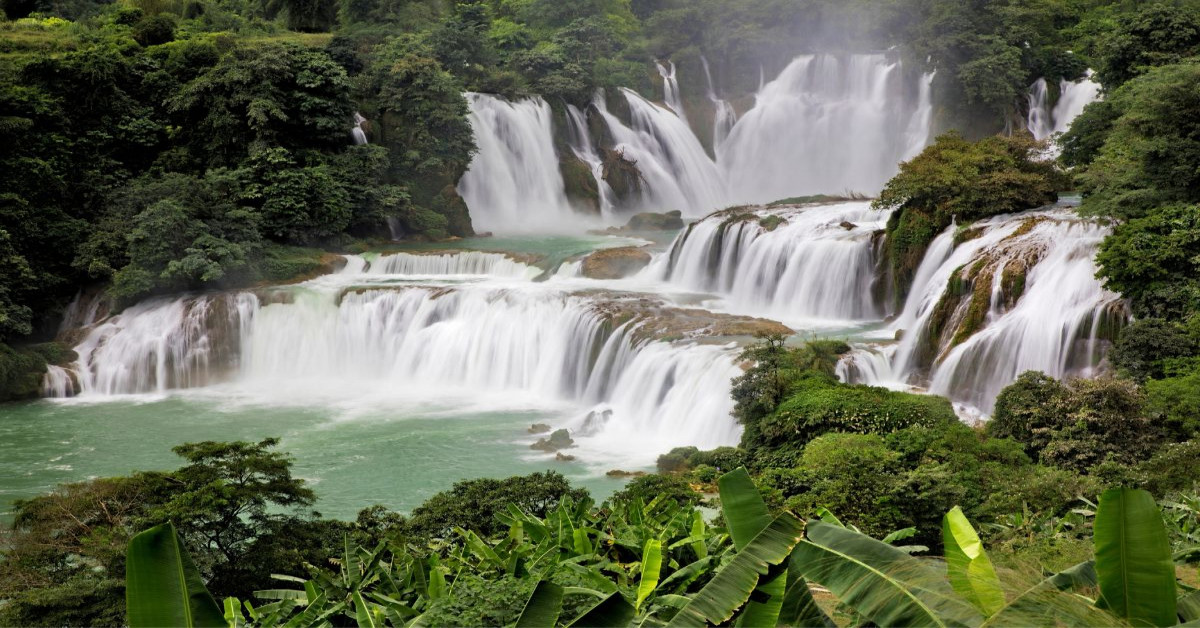
Ban Gioc Waterfall sits in Dam Thuy commune, Trung Khanh district, Cao Bang province — northeast Vietnam, on the Quay Son River, which marks the international border with China. The waterfall has two halves: a main fall on the north (three tiers across roughly 100 m of width, dropping ~70 m), and a smaller southern fall that runs dry outside the wet season. Travel + Leisure put it in their top 25 most beautiful waterfalls in 2021; SCMP listed it among the most beautiful natural borders in the world in 2023.
It's the only large waterfall in Vietnam that's straightforward to visit by road from Hanoi. There is no train, and no airport in Cao Bang town.
How to get to Ban Gioc from Hanoi
Three options:
1. By private car or van (with an operator). This is what we'd recommend for most foreign visitors. The drive is around 6 to 7 hours via QL3 and QL4A — mountain roads through Lang Son and Cao Bang provinces. The road is paved throughout but narrow and winding in the final two hours. A car or van with driver costs roughly USD 250 to 350 per day for a small group, including fuel and tolls.
2. By sleeper bus. Daily sleeper buses run from My Dinh terminal in Hanoi to Cao Bang town (around 7–8 hours, ~250,000 VND / USD 10 per seat). From Cao Bang town, the waterfall is another 90 km / 2 hours, reached by local bus, taxi, or motorbike. Total travel time door-to-door: 10 to 11 hours. Workable for budget travellers, less comfortable for families.
3. By car rental + self-drive. Possible but not recommended for foreign visitors — the road is winding, speed limits are inconsistently posted, and roadside breakdowns are slow to resolve outside the larger towns.
In all cases, plan two nights minimum once you commit to the drive. A day trip from Hanoi is not possible.
When to go
The waterfall runs year-round but the volume varies a lot:
- May to September — the rainy season. The waterfall is at its highest volume, with all three cascades of the main fall in full flow. This is the best time to see Ban Gioc at its scale. Watch for landslides on the mountain road in heavy rain.
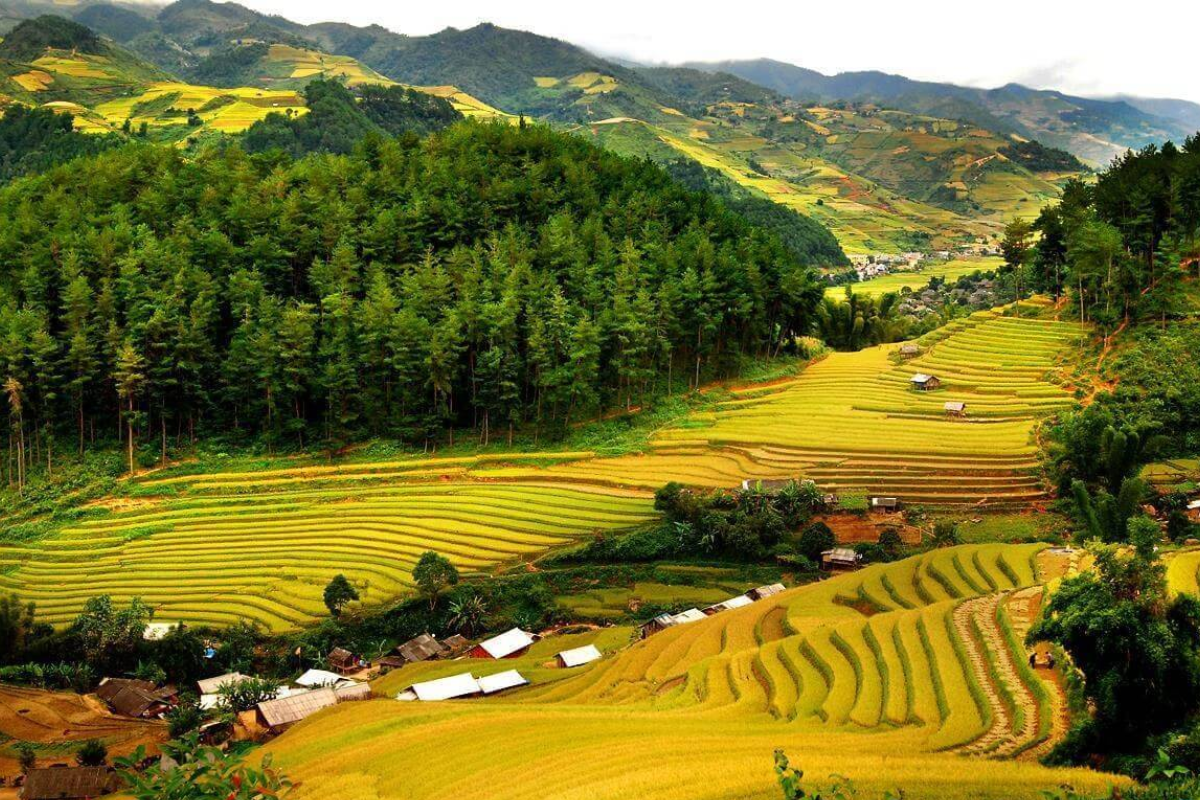
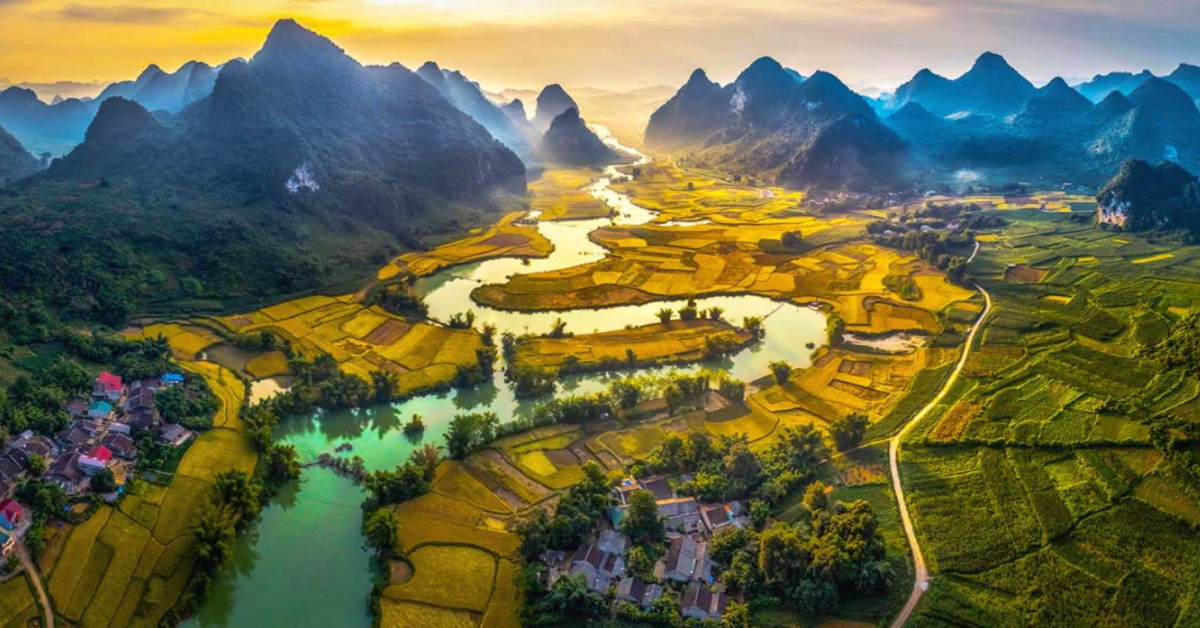
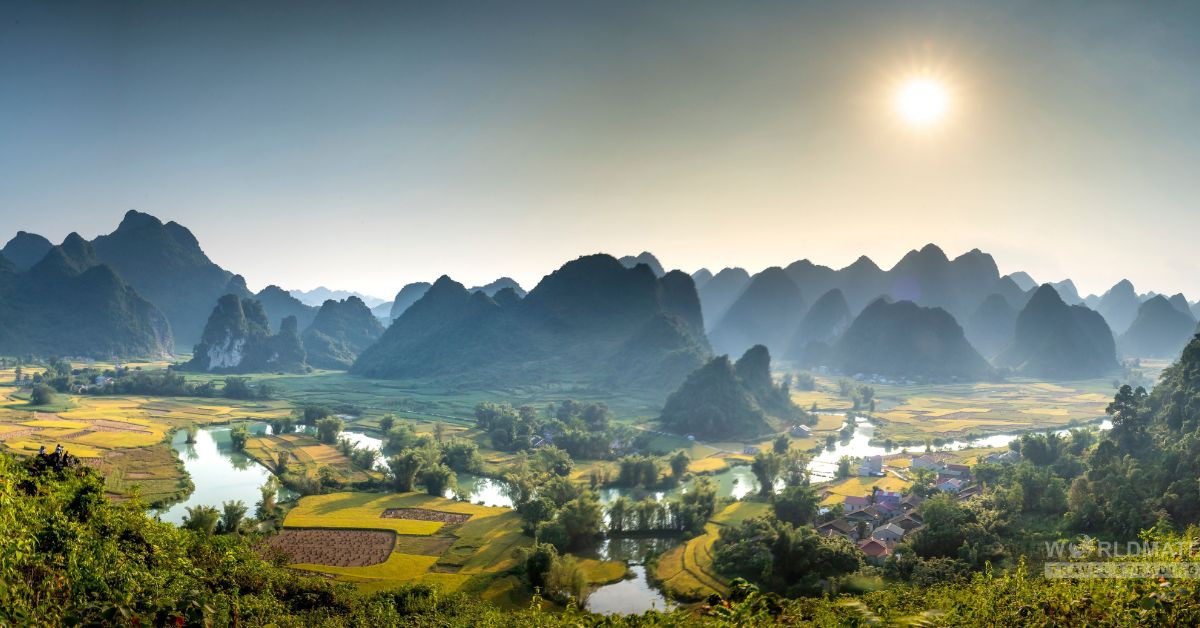
- Late September to mid-October — the rice harvest in the surrounding Phong Nam valley. The paddies between Cao Bang town and the waterfall turn gold for about three weeks. Good photography light, water still high from the wet season.
- November to April — the dry season. Water volume is lower; the southern fall typically runs dry. The landscape is still impressive but less dramatic. Fewer crowds.
We avoid the second half of July and August in some years — Vietnamese summer holidays mean Ban Gioc gets a heavy domestic-visitor crowd, especially on weekends.
.jpg-image-smphkbkb.jpg)
Entrance and on-site fees
Standard fees (verify on arrival — Cao Bang tourism authority updates these periodically):
| Item | Price (VND) | Notes |
|---|---|---|
| Entrance — adult | 45,000 | |
| Entrance — child 100–130 cm | 20,000 | |
| Entrance — child under 100 cm | Free | |
| Bamboo raft tour | 50,000 / person | 20–30 minutes to the foot of the main fall |
| Mat rental | 30,000 | For sitting on the grass |
| Photos with horses | 20,000 / person | |
| Motorbike parking | 10,000 / motorbike |
Opening hours: 7:00 AM – 6:00 PM in summer; 7:30 AM – 5:30 PM in winter.
The bamboo raft is the part most travellers come for. It takes you out across the Quay Son River to the foot of the main fall. The Chinese side runs the same kind of raft on their bank; the two operations pass each other on the river without interaction. There is no border crossing involved.
What to do at and around Ban Gioc
The waterfall itself is a 30-to-90-minute stop depending on whether you take the raft tour. Most visitors combine it with two or three other sites nearby to make the trip worth the drive:
- Nguom Ngao Cave — 5 km from the waterfall. One of the longest cave systems in northeast Vietnam (~2,144 m of explored passage). Walked on a lit concrete path through stalactite chambers, about an hour inside. Easy to combine on the same day as the waterfall.
- Phat Tich Pagoda — 500 m from Ban Gioc. A working Truc Lam Zen monastery with a vista terrace overlooking the waterfall from the side. Good combination with the late-afternoon light.
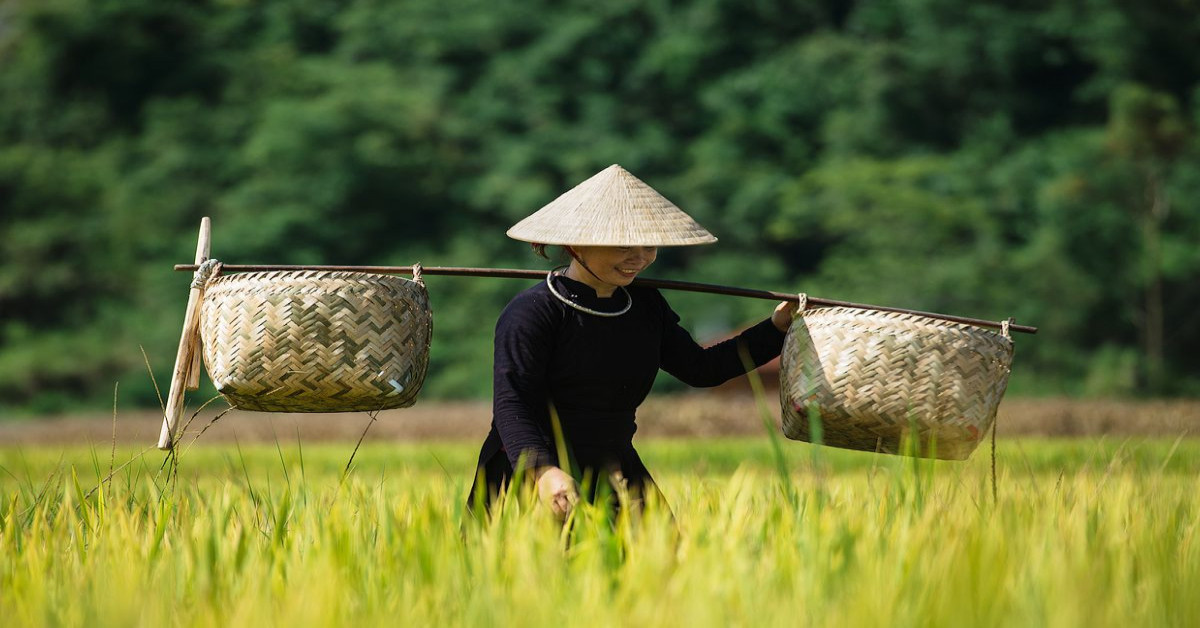
- Khuoi Ky stone village — a Tay ethnic community where most houses are built from local limestone. Around 25 minutes from the waterfall.
- Thang Hen Lake — about 90 minutes from the waterfall. A karst-ringed lake with rowboat trips, less visited than the waterfall itself.
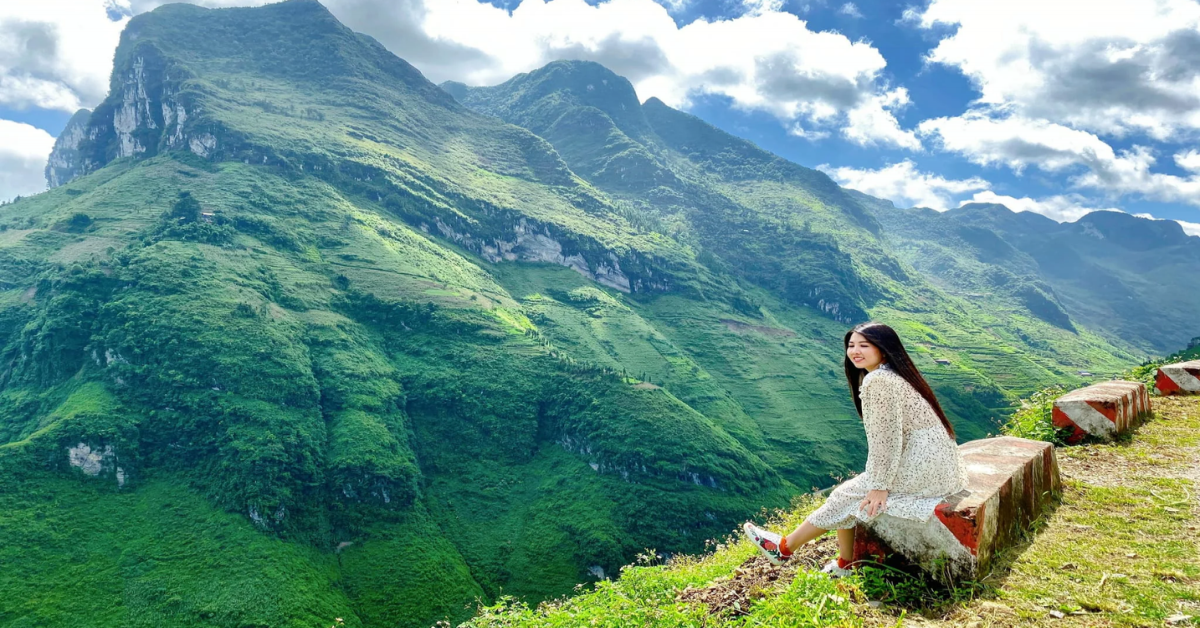
- Angel Eye Mountain (Mat Than / Nui Thung) — between Cao Bang town and Ban Gioc. A karst peak with a natural circular hole punched through its summit. 20-minute photo stop.
- Ban Gioc Waterfall Festival — annual, October. Local food, folk performances, traditional games. Confirm exact dates each year before planning around it.
We covered most of these in our [Northeast Vietnam Travel Guide ], which packages them with Bac Son and Ba Be Lake on a 5-day loop.
Where to stay
Two practical options:
- Saigon Ban Gioc Resort — the only 4-star property in the immediate area, around 1 km from the waterfall. Pool, river-view rooms, restaurant on site. Around USD 80–120 per night depending on season. Worth booking ahead in October.
- Homestays and guesthouses — a dozen or so options between Nguom Ngao Cave and the waterfall, around USD 10–15 per night per person. Tay-family-run, basic but clean. Recommended for budget travellers who want the community-stay experience.
In Cao Bang town (90 km from the waterfall), Muong Thanh Cao Bang and the Jeanne Hotel are reliable 3-star options if you'd rather base in town and day-trip to the waterfall.
What to eat locally
Cao Bang cooking is distinct from the rest of Vietnam. Worth trying on this trip:
- Vit quay 7 vi — roasted duck marinated in seven local spices. The signature Cao Bang dish.
- Banh cuon Cao Bang — rice rolls served with bone broth rather than the usual fish sauce dip.
- Banh trung kien — ant-egg rice cake. Niche, seasonal (May–June), worth trying if you're up for it.
- Hat de Trung Khanh — Trung Khanh chestnuts. The road from Cao Bang town to Ban Gioc runs through chestnut country.
- Ca tram huong nuong — grilled river fish from the Cao Bang rivers.
How we'd plan the trip
The honest minimum is 3 days, 2 nights:
- Day 1: Hanoi → Cao Bang town (~7 hrs drive). Overnight Cao Bang.
- Day 2: Cao Bang → Angel Eye Mountain → Ban Gioc + Nguom Ngao + Phat Tich Pagoda. Overnight near Ban Gioc.
- Day 3: Ban Gioc → Hanoi (~7–8 hrs drive).
Or as part of a wider 5-day northeast loop, combining Ban Gioc with Bac Son valley and Ba Be Lake. We package this as our [5-day Northeast Vietnam Loop ], with private vehicle, guide, and accommodation booked end-to-end.
Either way, two driving days are unavoidable. Ban Gioc rewards the effort.