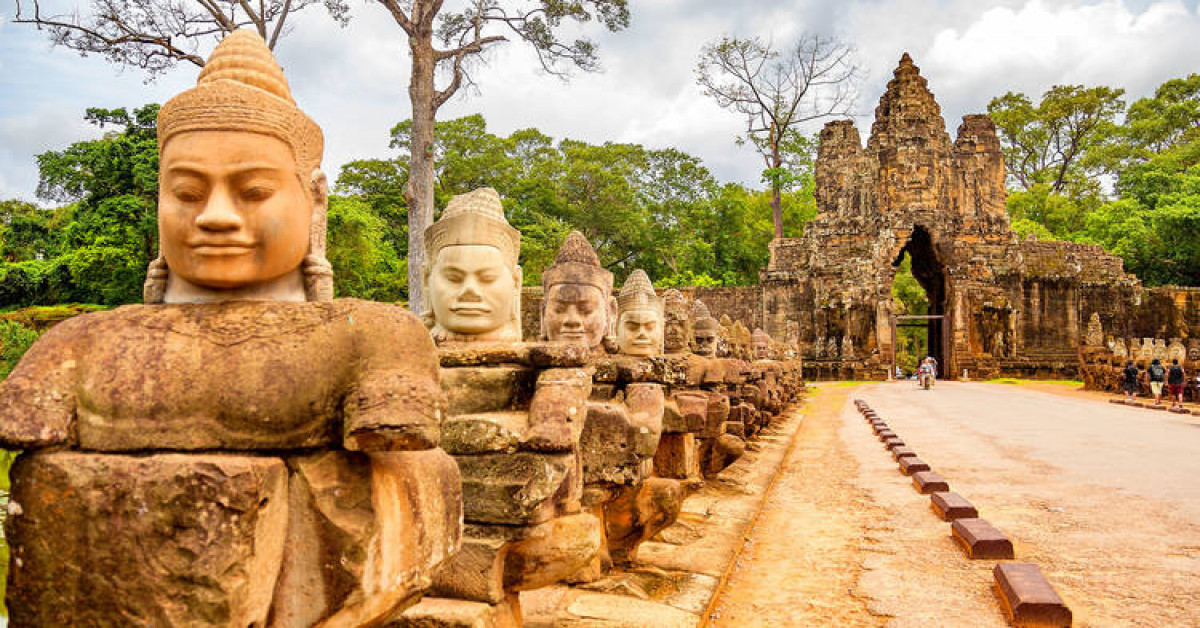
Top 10 Unique Souvenirs & Gifts to Buy in Siem Reap
Published on Jul 01, 2026 · Updated on Jul 01, 2026
Siem Reap is Cambodia's shopping capital. Most travellers fly in for Angkor Wat and spend two or three days at the temples — the markets around them sell some of the most distinctive craft souvenirs in Southeast Asia. This is a local tour operator's guide to what to buy in Siem Reap, where to find it, and how much to pay. All ten items are available within a 10-minute tuk-tuk ride of the Old Quarter.
Why Siem Reap is Cambodia's best shopping city
Two reasons. First, Siem Reap has the highest concentration of craft workshops in Cambodia. Artisans Angkor — the state-recognised programme training young Khmer artisans in silk, silversmithing, lacquerware, and stone carving — has been operating in Siem Reap since 1992 and now runs 42 workshops in villages across the province. Second, the Angkor Wat visitor volume created a market that supports specialist boutiques that would not survive in smaller Cambodian cities. Sombai rice liqueur, Bodia Cambodia Apothecary, and Confirel Kampot pepper all opened flagship stores here because Siem Reap is where the buyers are.
The result: the same 10 Cambodian souvenirs sold across the country are often better made, more varied, and easier to find in Siem Reap than in Phnom Penh.
1. Cambodian silk
Cambodian silk is hand-dyed and hand-woven. A single formal scarf can take an artisan weeks to complete. Golden silk is the prized variety — soft, high-lustre, produced from a rare heirloom silkworm variety kept in only a few Cambodian villages.
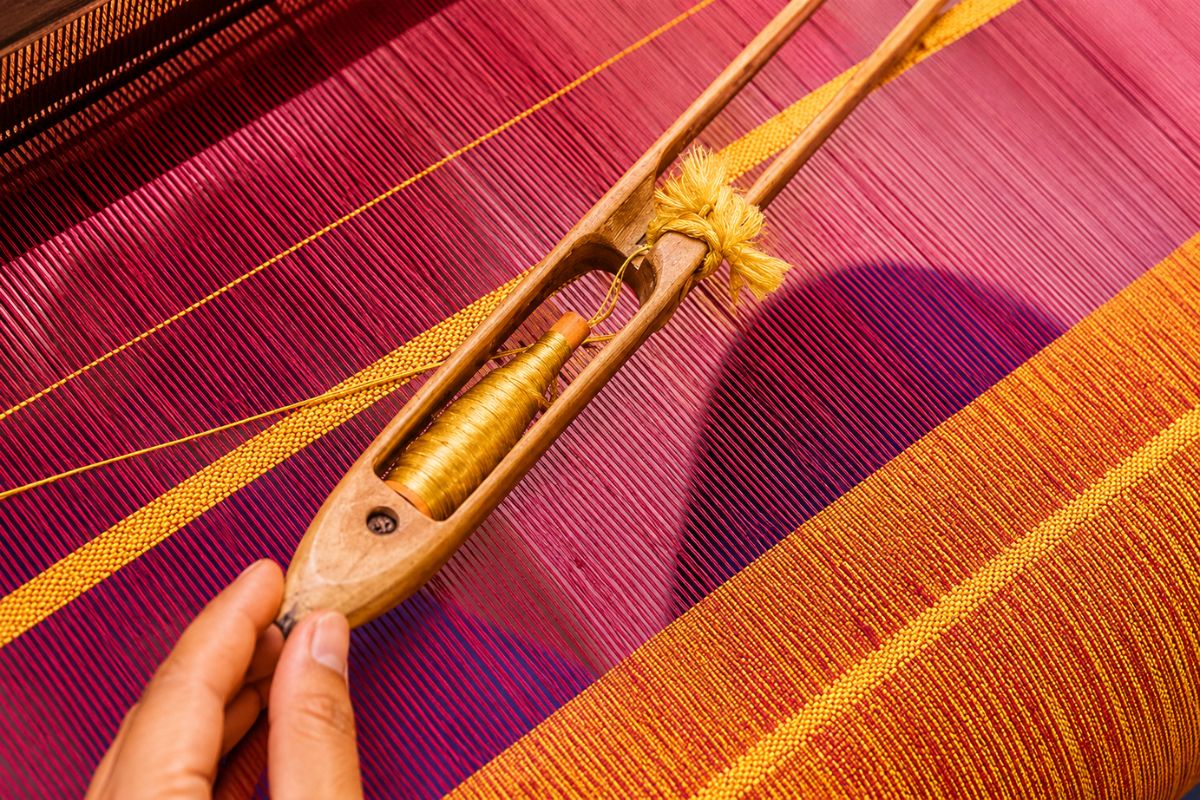
Where to buy in Siem Reap:
- Artisans Angkor Boutique — 30 Achar Sva Street, near the Old Market. Flagship store of the state-backed training programme; all silk sold here is traceable to specific workshops.
- Angkor Silk Farm — Puok village, 15 km west of Siem Reap. Free shuttle from town. See the full process from silkworm to finished scarf.
- IKTT (Institute for Khmer Traditional Textiles) — smaller, artisan-focused shop preserving traditional weaving techniques.
Prices: silk scarves from $15 (small, printed), $40-70 (mid-quality golden silk), $150+ (formal hand-woven pieces).
2. Krama — the traditional Khmer scarf
The krama is Cambodia's most versatile piece of cloth. Cambodian farmers wear it as a headscarf, use it as a hammock for infants, wrap it around the waist as a work belt, or tie it around the head to absorb sweat. The classic pattern is red-and-white gingham, but modern krama comes in every colour combination.

Where to buy in Siem Reap:
- Old Market (Psar Chas) — the largest krama selection at market prices ($1-3 for cotton, $5-8 for silk).
- Angkor Night Market on Sivatha Boulevard — evening browsing, similar prices.
- IKTT for handwoven silk krama at higher quality ($15-25).
Krama is the best budget-friendly souvenir out of Siem Reap — small, packable, culturally significant, and every recipient will actually use it.
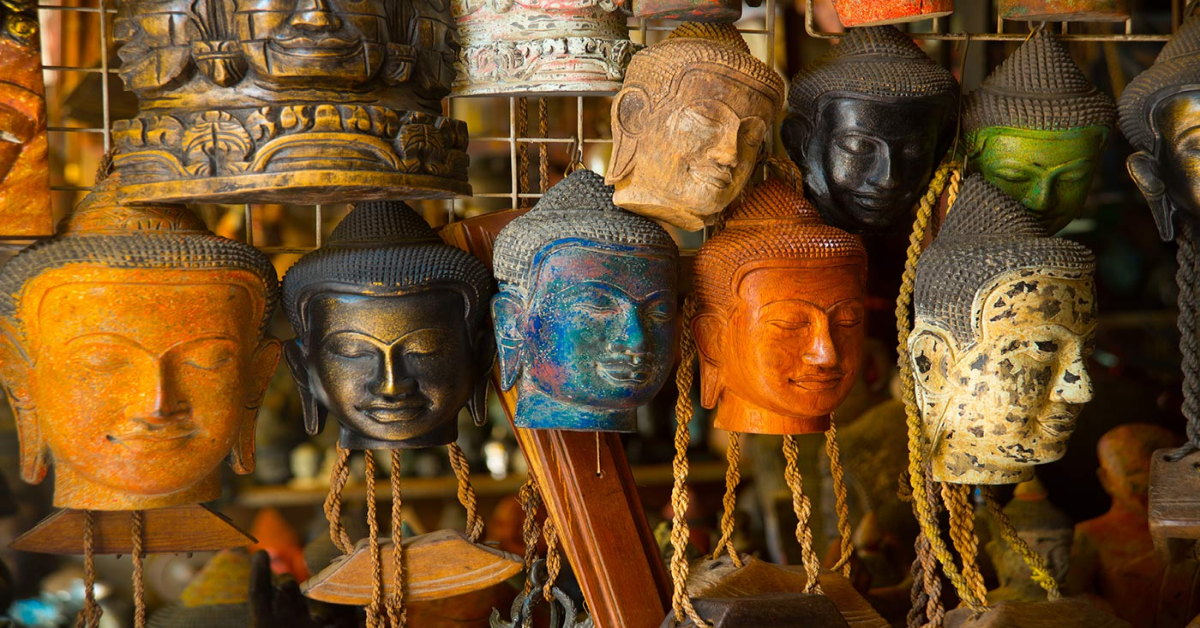
3. Sculpture reproductions
Cambodian stone and wood carving is world-class — the bas-reliefs at Angkor Wat, Bayon, and Banteay Srei are proof. Modern craftsmen sell reproductions at every scale: miniature Buddhas, dancing Apsaras (the celestial dancers carved into every Angkor temple), Ganesha and Vishnu figures, and full temple-wall replicas.
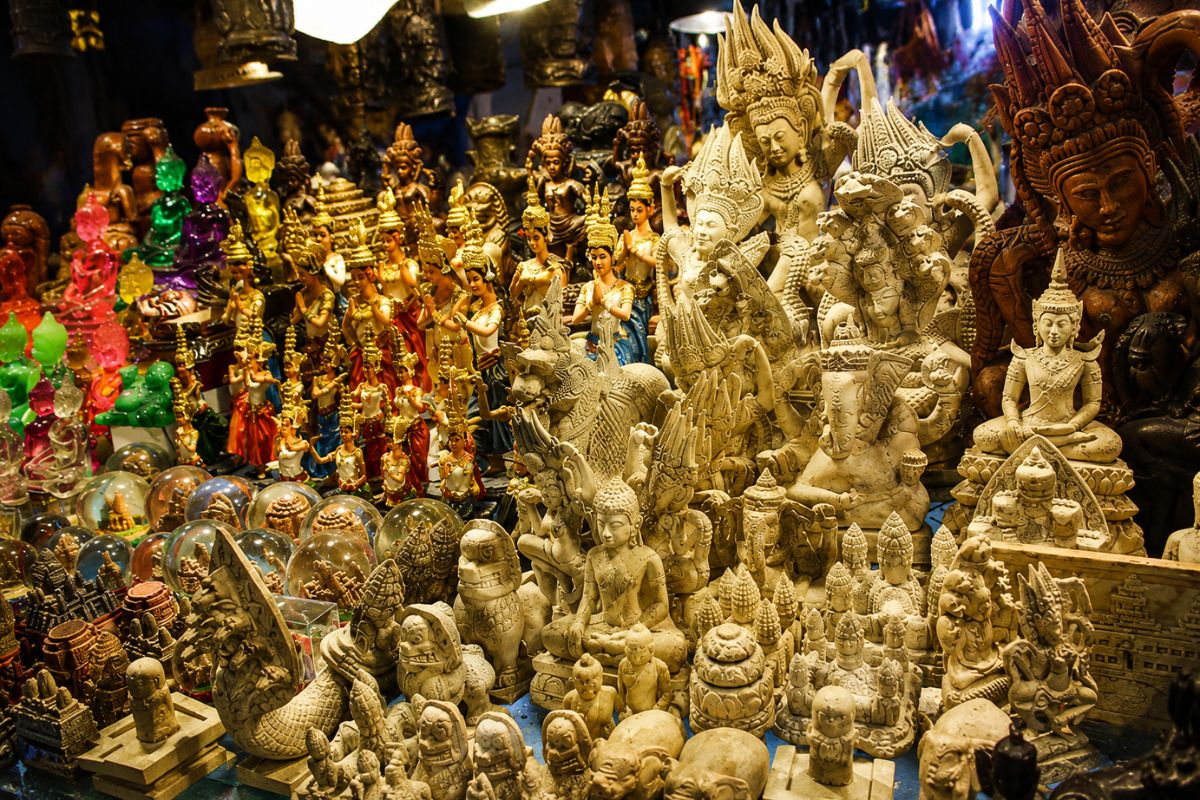
Where to buy in Siem Reap:
- Old Market — miniatures from $5-15.
- Angkor Night Market — larger stone reproductions from $30 up.
- Artisans Angkor — the premium option, museum-quality reproductions in stone and wood ($50-500).
4. Lacquerware
Cambodian lacquerware dates to the 12th century — the same period as the great Angkor temples. Master craftsmen build up 20+ layers of black lacquer on wood, then carve, gild, and inlay each layer to create boxes, bowls, Buddha images, and decorative panels. It is one of the slowest craft traditions in Cambodia — a single decorated box can take six months.
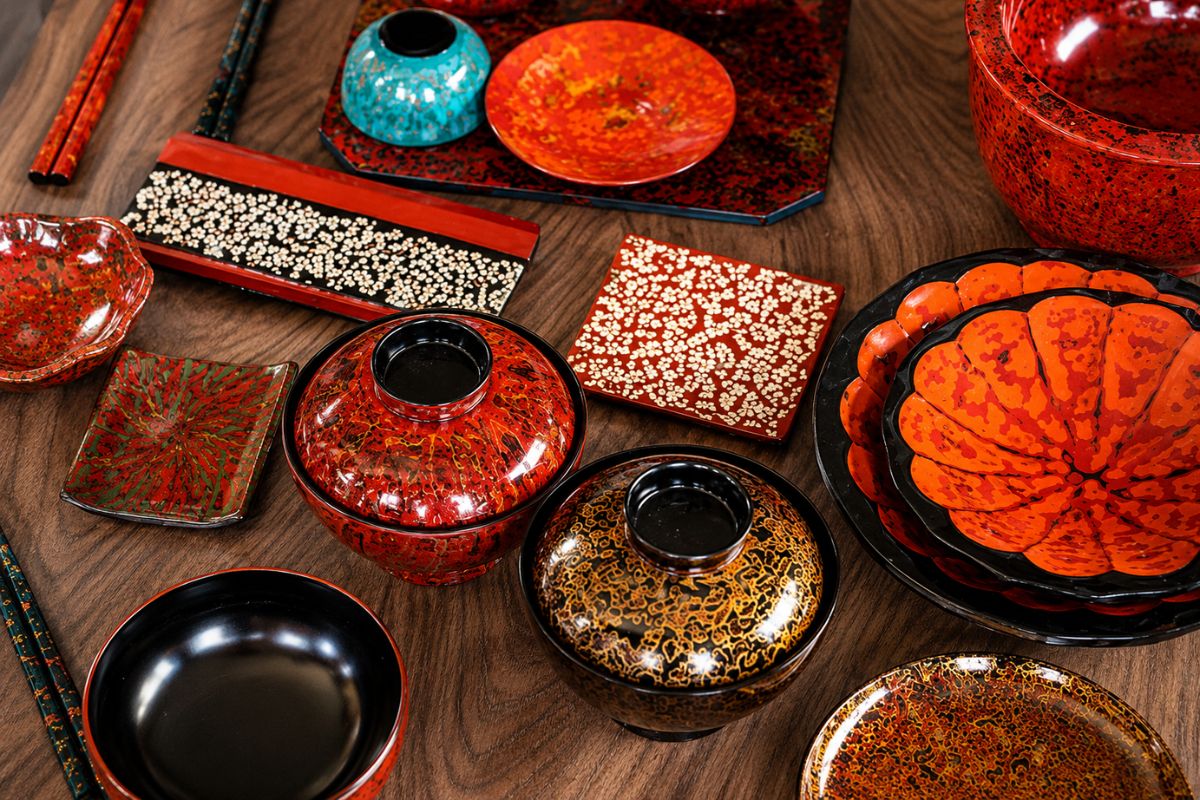
Where to buy in Siem Reap:
- Theam's House — Veal Village, 3 km east of town by tuk-tuk. The workshop and gallery of master craftsman Lim Muy Theam. You can watch pieces being made, walk the on-site gallery, and buy directly from the studio. This is the premier lacquerware address in Cambodia.
- Artisans Angkor — smaller lacquered pieces (boxes, keychains, wall art) at more accessible prices.
5. Silverware & silver jewelry
Khmer silversmithing dates to the 11th century. Court silversmiths originally worked for the Angkor royal court, creating ceremonial betel-nut boxes, jewelry, and coins. Today's Siem Reap silversmiths use the same hand-hammering techniques their grandfathers used.
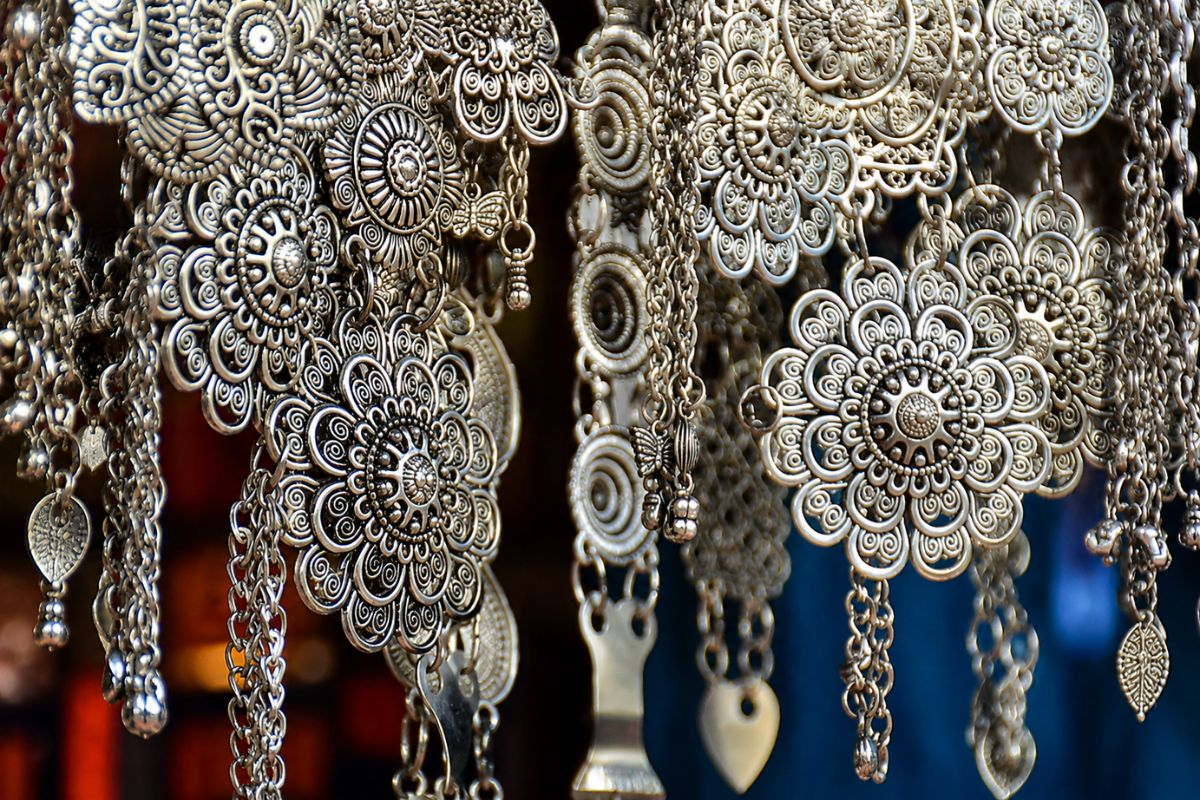
Where to buy in Siem Reap:
- Ammo Jewelry — Central Market area. High-end silver jewellery, contemporary designs.
- Artisans Angkor — traditional Khmer motif silver pieces.
- Old Market — silver jewellery from $10-30. Verify silver purity — 85-92.5% is standard; avoid the "silver-colour" plated pieces sold at some stalls.
6. Handmade paintings
Cambodian art is undergoing a revival, and Siem Reap is its centre. Oil paintings of Angkor Wat, monk processions, and Tonle Sap floating villages sell at every price point.
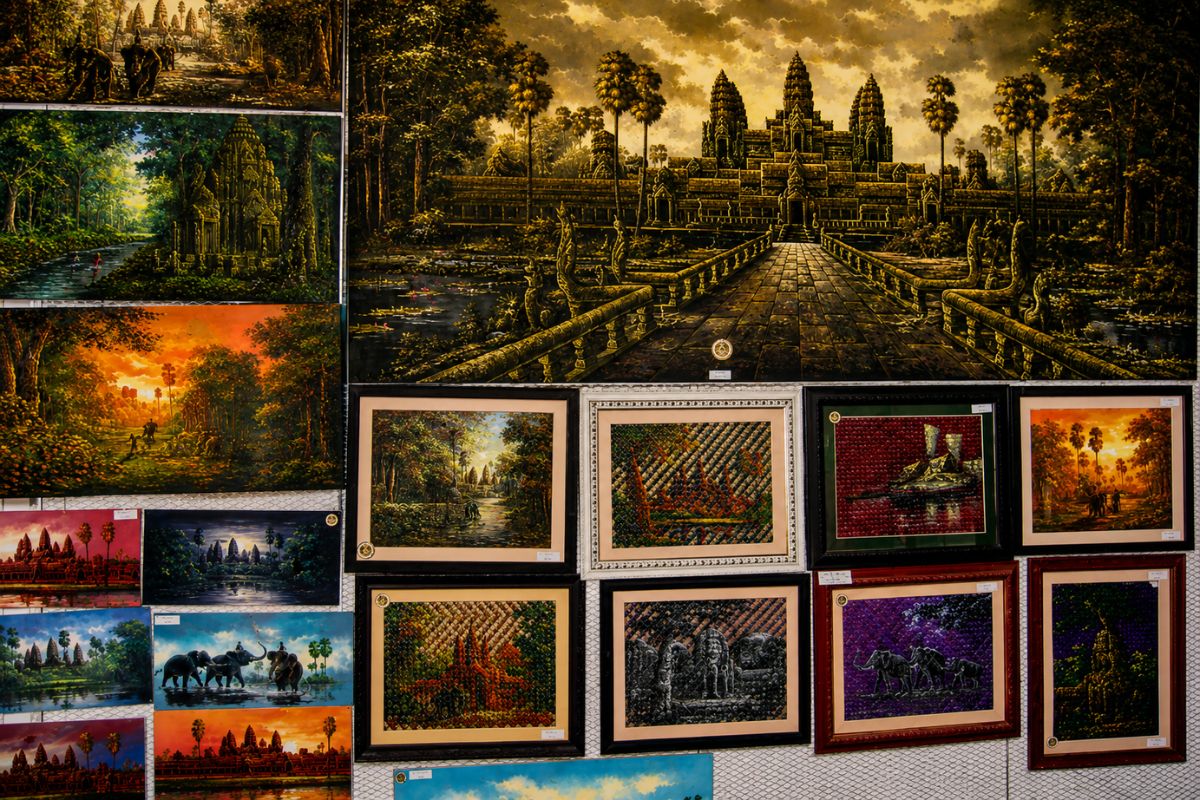
Where to buy in Siem Reap:
- Made in Cambodia Market — behind Shinta Mani hotel, King's Road area. Curated, higher-quality art from $30-200. Weekend markets have live artists working on-site.
- Old Market — bargain paintings from $10.
- Angkor Handicraft Association — supporting artisans with disabilities, quality pieces at fair prices.
7. Recycled bags
Cambodian recycling craft turns everyday materials — rice sacks, cement bags, motorcycle inner tubes — into stylish bags, wallets, and purses. Buying one supports both local artisans (often women's cooperatives) and Cambodia's waste-reduction initiatives.
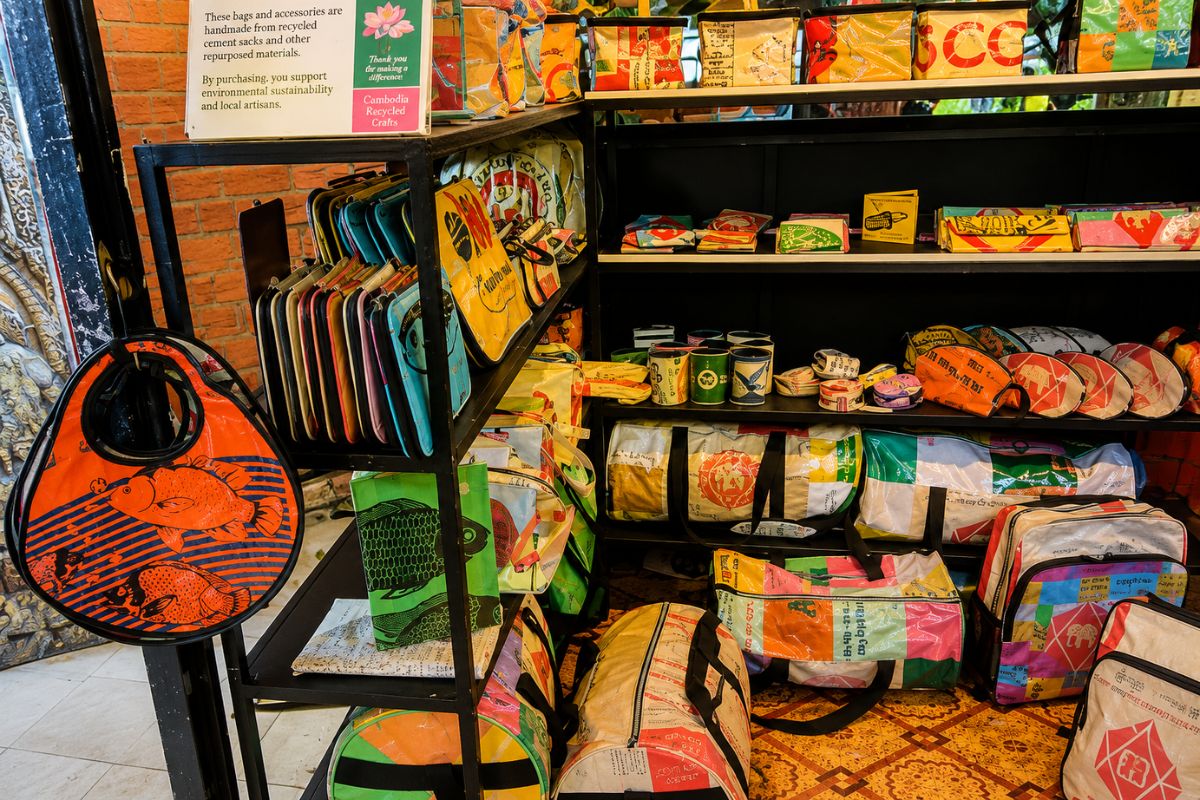
Where to buy in Siem Reap:
- Smateria — Sivatha Boulevard. Italian-Cambodian brand, high-quality upcycled bags from $25.
- Rehash Trash — at Made in Cambodia Market. Women's cooperative, bags from $15.
- Angkor Handicraft Association — student-made bags with community-impact stories attached.
8. Handmade organic skincare
Cambodian skincare uses local herbs, essential oils, and clays. Common ingredients: turmeric, lemongrass, mangosteen, and tamarind. Small-batch, paraben-free.
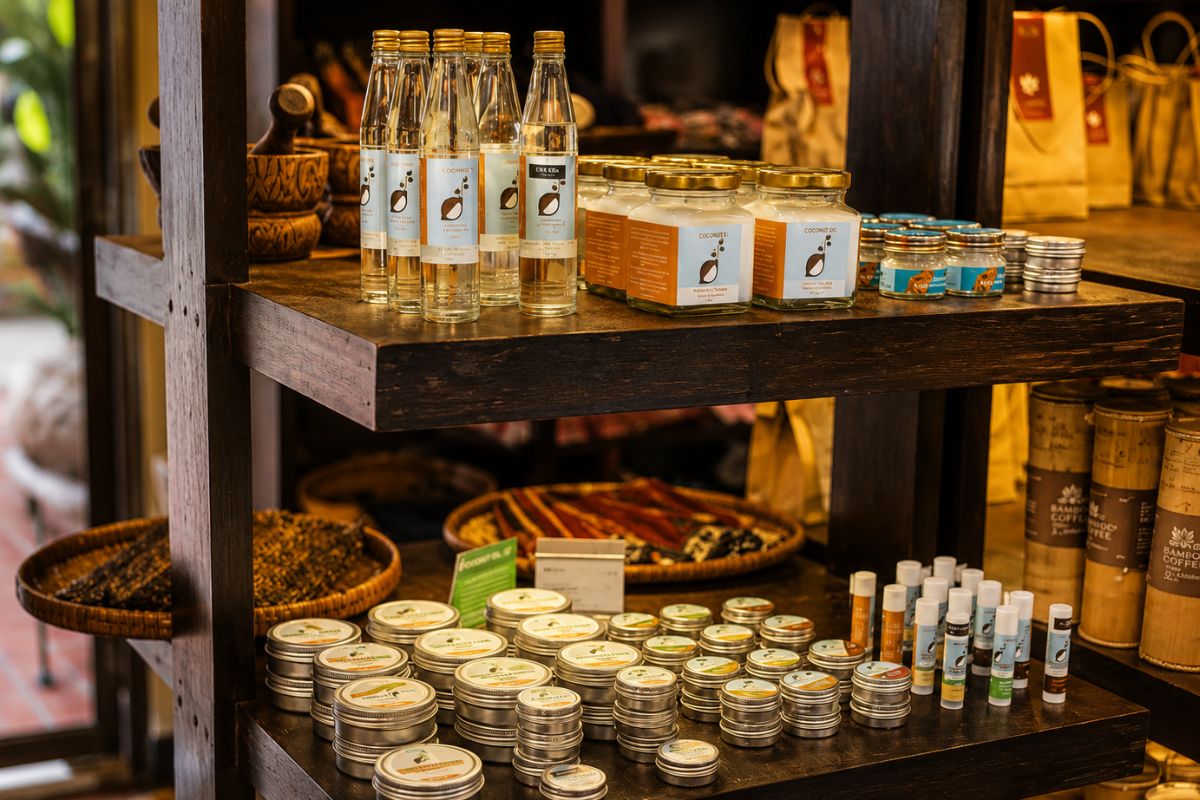
Where to buy in Siem Reap:
- Bodia Cambodia Apothecary — Sivatha Boulevard. The largest range, elegantly packaged, from $8 for balms.
- Senteurs d'Angkor — multiple outlets in Siem Reap. Organic products plus natural fragrances, tea, and coffee.
- Kunthai — Wat Bo road. Smaller boutique, lemongrass and tamarind specialities.
9. Kampot pepper
Kampot pepper has held EU Protected Geographical Indication (PGI) status since 2016 — one of the very few peppers in the world with a formal PGI registration. Grown in the mineral-rich soil of Kampot province, it comes in black, red, green, and white varieties. Chefs and food writers globally rank it in the top three peppers in the world.
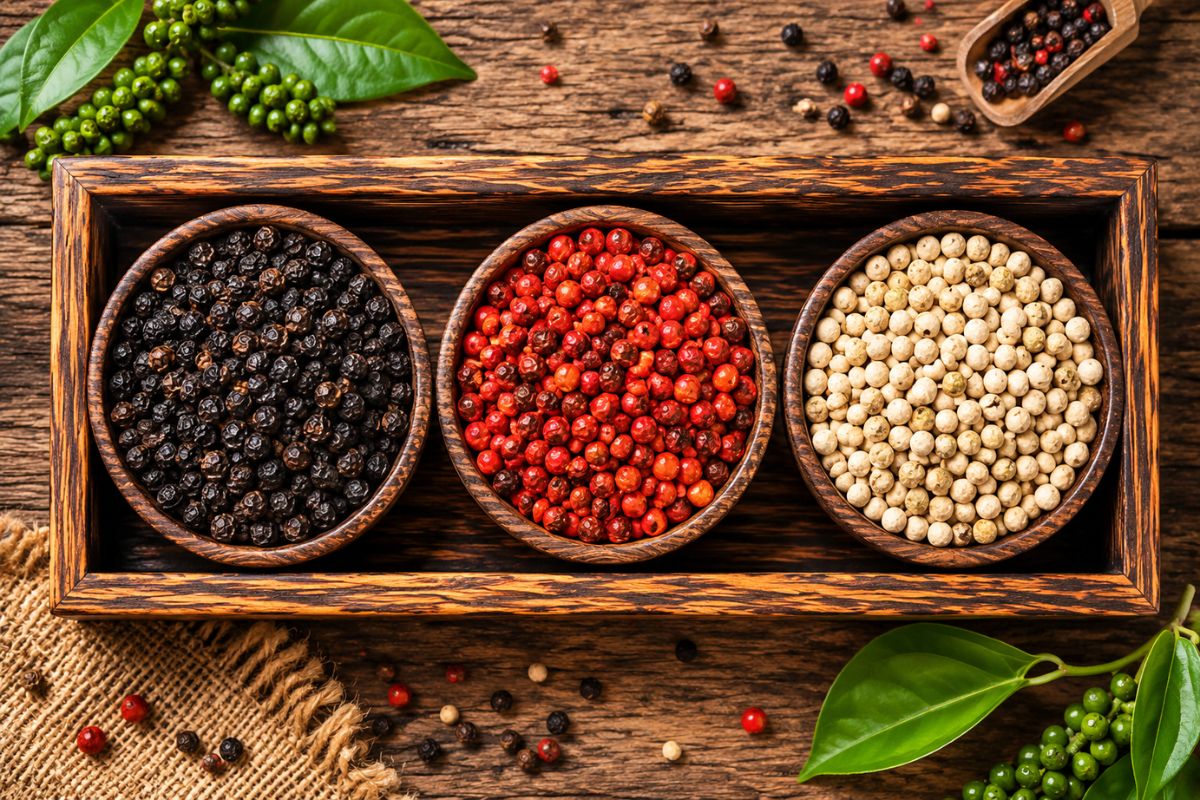
Where to buy in Siem Reap:
- Confirel — multiple outlets in Siem Reap, including at the airport. The certified Kampot pepper supplier.
- Made in Cambodia Market — smaller PGI-certified vendors.
- Old Market — cheaper non-certified "Kampot-style" pepper (fine for everyday cooking, but if you want the real PGI-certified item, buy at Confirel or Made in Cambodia Market).
Prices: certified Kampot pepper $6-12 for a 50 g jar; giftable packs $15-30.
10. Sombai infused rice liqueur
Sombai is a Siem Reap-based artisan distillery infusing traditional Cambodian rice liquor with fruits, herbs, and spices — anise-coffee, mango-green tea, pineapple-coconut, and lemongrass-ginger among their flagship flavours. Each bottle is hand-painted by Cambodian art students. It is one of the few genuinely Siem Reap-original products you can buy — Sombai is not sold in Phnom Penh, only here.
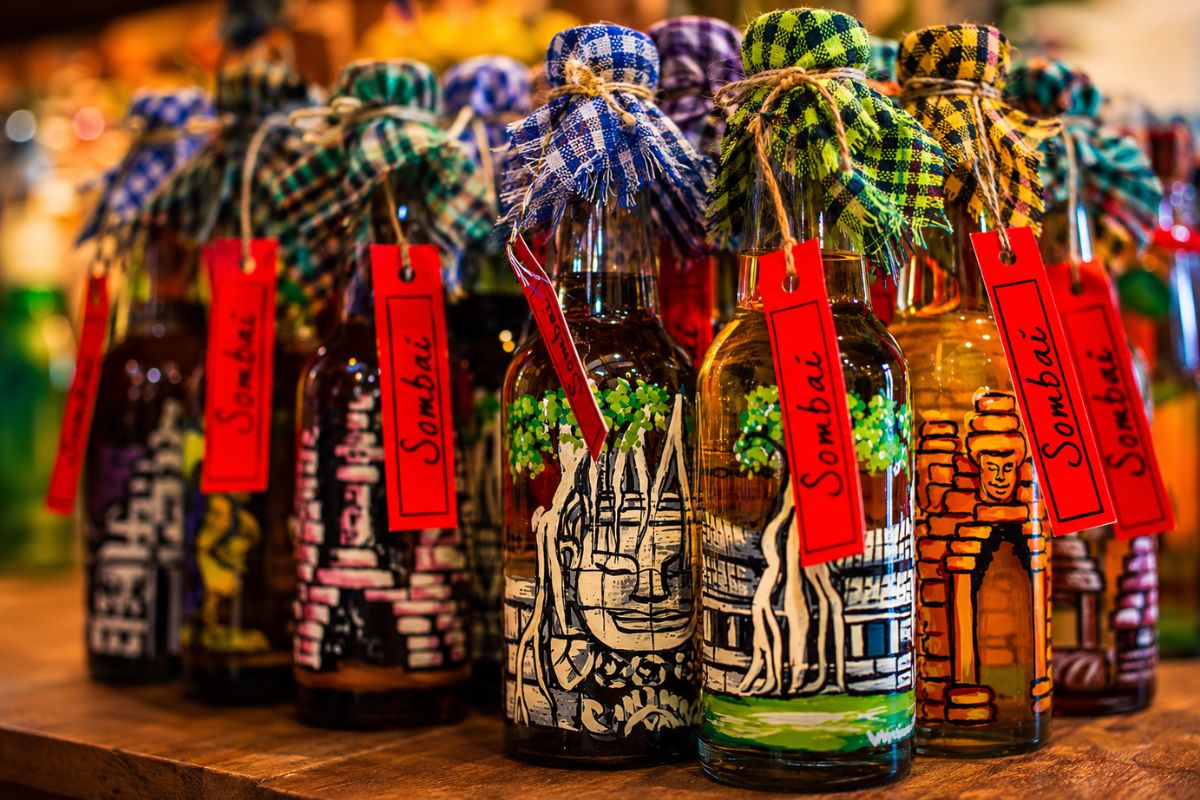
Where to buy in Siem Reap:
- Sombai Store — near Wat Damnak. The workshop and shop; free tastings on site.
- Siem Reap International Airport outlet — for a last-minute buy before flying.
Prices: $9-15 per 200 ml bottle.
Where to shop in Siem Reap — the four main markets
| Market | Hours | Best for | Bargaining? |
|---|---|---|---|
| Old Market (Psar Chas) | 06:00-22:00 | Kramas, sculpture reproductions, budget silverware, bulk-buy items | Yes — start at 40% of asking price |
| Angkor Night Market | 17:00-midnight | Evening browsing, similar goods to Old Market | Yes |
| Made in Cambodia Market | Weekends, day hours | Higher-quality art, ethical fashion, live artists on-site | No — fixed prices |
| Artisans Angkor Boutique | Daytime, daily | Museum-quality crafts, silk, silverware, lacquerware | No — fixed prices |
Old Market is in the Old Quarter, walkable from every downtown hotel. Angkor Night Market is on Sivatha Boulevard. Made in Cambodia Market is behind Shinta Mani hotel in the King's Road area. Artisans Angkor Boutique is on Achar Sva Street near the Old Market.
When to shop in Siem Reap
The markets run year-round. If you are visiting Angkor Wat between June and October (wet season), plan shopping for early morning or late afternoon — heavy rain can close the outdoor stalls. During peak season (November to March), the Made in Cambodia Market runs live-artist weekends, and the Angkor Night Market is at its busiest.
Most Siem Reap tour itineraries include an "own account" shopping afternoon between the two Angkor temple days, so you can shop where and when you want.
How to bargain politely in Siem Reap
Bargaining is expected at Old Market and Angkor Night Market. It is not expected — and can be considered rude — at Artisans Angkor, Theam's House, Bodia Apothecary, and Made in Cambodia Market. Those are fixed-price boutiques.
For the markets where bargaining is expected:
- Offer 40% of the asking price to start.
- Settle around 50-60% of the asking price.
- Smile throughout, and never raise your voice.
- If they refuse your final offer, walk away — often they will call you back at your price.
- Cash US dollars are universally accepted. Keep small bills (US$1, US$5, US$10) for easier change.
Frequently asked questions
What is the best souvenir to buy in Siem Reap?
For most travellers, the krama (traditional Khmer scarf, $1-8) offers the best value — culturally significant, easy to pack, and every recipient will actually use it. For a more premium gift, Kampot pepper from Confirel ($10-30) is the top choice — one of the very few peppers in the world with EU Protected Geographical Indication status, used by chefs worldwide.
Where is the best market in Siem Reap for shopping?
The Old Market (Psar Chas) has the largest selection at market prices — best for kramas, sculpture reproductions, and general shopping. For quality-controlled crafts, visit the Artisans Angkor Boutique. For weekend art and boutique shopping, head to Made in Cambodia Market behind Shinta Mani hotel. For evening browsing, the Angkor Night Market on Sivatha Boulevard runs from 17:00 to midnight.
What is Cambodian silk and where do I buy it in Siem Reap?
Cambodian silk is hand-dyed and hand-woven, taking weeks to produce a single formal piece. The premium variety is golden silk, from a rare heirloom silkworm. In Siem Reap, buy from the Artisans Angkor Boutique on Achar Sva Street, the Angkor Silk Farm in Puok village (15 km from town, free shuttle available), or the Institute for Khmer Traditional Textiles (IKTT). Prices range from $15 for small printed scarves to $150+ for formal hand-woven pieces.
Is Kampot pepper really the best pepper in the world?
Kampot pepper has held EU Protected Geographical Indication (PGI) status since 2016 and is consistently ranked in the top three peppers globally by chefs and food writers. In Siem Reap, Confirel is the certified Kampot pepper supplier with outlets in the city and at the airport. Certified Kampot pepper sells for $6-12 per 50 g jar; giftable packs run $15-30.
How much should I budget for souvenirs in Siem Reap?
For a set of thoughtful, market-priced Cambodian souvenirs — one krama, one silk scarf, a Kampot pepper gift pack, and a small silver piece — budget around $50-80. For higher-end items like a hand-woven silk piece or a lacquerware box from Theam's House, add $100-300.
Can I bring Cambodian silverware and silk through airport customs?
Yes for personal use. Cambodian silver, silk, and lacquerware are legal exports and pass customs in Cambodia and most destination countries without issue. Note: authentic Angkor-period antiquities are strictly forbidden to export — anything sold as a genuine antique at a market is either fake or illegal, so avoid those pieces.
How do I get to Theam's House from Siem Reap town?
Theam's House is in Veal Village, 3-4 km east of the Old Quarter. Take a tuk-tuk for around $3-5 each way, or arrange transport through your tour operator. The workshop is typically open Monday to Saturday, 08:00-18:00.
What is Sombai and where do I buy it?
Sombai is a Siem Reap-based artisan distillery producing rice liqueur infused with local fruits and spices, sold in hand-painted bottles. Buy from the Sombai Store near Wat Damnak (with free tastings) or at Siem Reap International Airport for a last-minute gift. Prices are $9-15 per 200 ml bottle.
Is bargaining expected in Siem Reap markets?
Bargaining is expected at Old Market and Angkor Night Market. It is not expected — and can be considered rude — at Artisans Angkor, Theam's House, Bodia Apothecary, and Made in Cambodia Market. Where bargaining is expected, start at 40% of the asking price and settle around 50-60%. Cash US dollars are universally accepted; keep small bills for change.
Contact us for a Siem Reap tour
For itinerary planning, private Angkor Wat tours with shopping stops, and multi-day Cambodia programmes, message us any time:
- Hotline / WhatsApp: +84 988 660 505 · +84 912 024 500
- Email: sales@worldmatetravel.com
- Website: worldmatetravel.com/cambodia-tours
World Mate Travel is a Hanoi-based Southeast Asia tour operator running Cambodia programmes since 2010 (International Tour Operator Licence No. 01-282/2010/TCDL-GP LHQT). We tailor Siem Reap itineraries with dedicated shopping windows so you can visit the workshops and markets above without rushing between temples.